Bach Google Doodle
Published August 15, 2026
Bach Google Doodle was Google's first AI-powered interactive doodle, launched March 21st, 2019 for J.S. Bach's 334th birthday. Players drew a short melody and a machine learning model harmonized it in the style of a Bach chorale, sparking a wave of playful compositions shared on Twitter.
Overview
Bach Google Doodle was Google's first AI-powered interactive doodle, built with Google Magenta and Google PAIR to mark the 334th birthday of composer Johann Sebastian Bach1. On the doodle, users drew two measures of melody onto a staff, hit harmonize, and a machine learning model filled in alto, tenor and bass lines around the tune to produce a four-part chorale in Bach's style1.
The model was trained on 306 Bach chorales so its output leaned on the same voice-leading patterns as the real composer's church music1. The finished piece could be played back or downloaded in four-part counterpoint, which is what turned the doodle from a one-off tribute into a Twitter game people shared for days1.
Origin & Background
On March 20th, 2019, Google published an introduction video previewing the doodle and explaining how the AI harmonization worked with Google Magenta and PAIR3. The playable doodle went live on March 21st, 2019 and stayed on the Google homepage through March 22nd, timed to the anniversary of Bach's birth in 16853.
How It Spread
How to Use This Meme
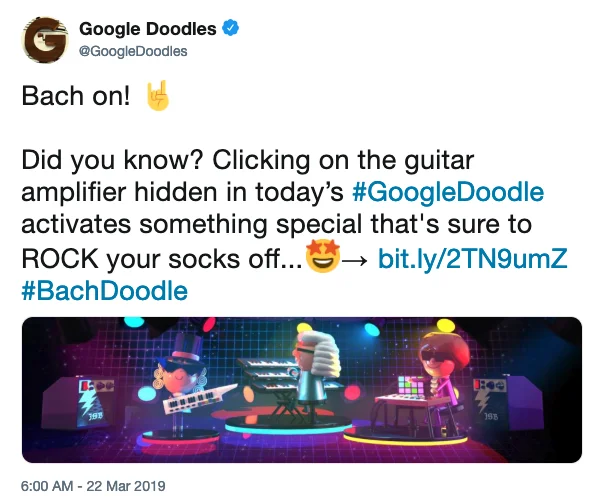
To play, users draw a short soprano melody across the two-measure staff and press the harmonize button, and the model fills in the three lower voices in a Bach chorale style1. Common tricks include sticking to notes that outline a clear key so the harmony sounds cleaner, downloading the MIDI to share the composition on Twitter, or clicking the guitar amp hidden in the background to switch the same harmony into a rock arrangement3.