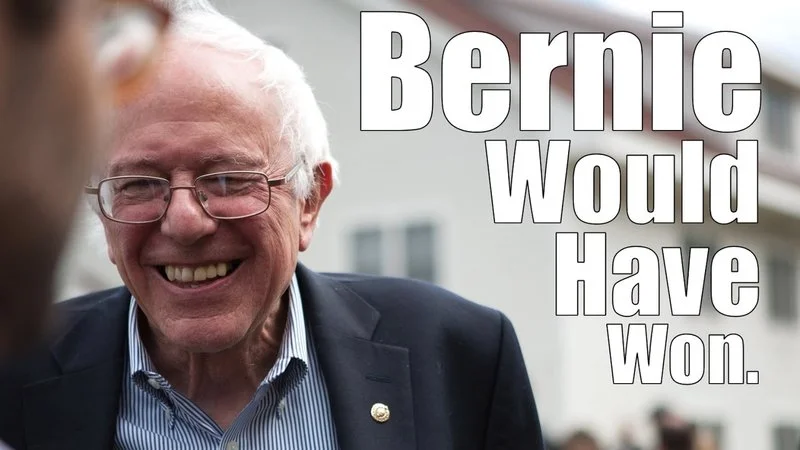
Bernie Would Have Won
Published March 24, 2026
Also known as: Bernie Would've Won · BWHW
"Bernie Would Have Won" is a phrase that spread across Twitter and social media after the 2016 United States presidential election, expressing the belief that Bernie Sanders would have defeated Donald Trump had he been the Democratic nominee instead of Hillary Clinton5. What started as a sincere political argument among frustrated Sanders supporters in November 2016 quickly mutated into a phrasal meme, used both earnestly and as a way to troll Clinton backers4. The phrase became a lasting flashpoint in the Democratic Party's internal debates about populism, electability, and the direction of progressive politics6.
Overview
"Bernie Would Have Won" is a catchphrase meme built on a political counterfactual. The core claim is simple: if the Democratic Party had nominated Bernie Sanders instead of Hillary Clinton for the 2016 presidential race, Sanders would have beaten Donald Trump. The phrase spread primarily as text posts on Twitter, often dropped into unrelated conversations or spliced into song lyrics and pop culture references for comedic effect4. It functions both as genuine political commentary and as a trolling device, depending on who's posting it and when.
The meme draws its power from a mix of real polling data, primary election results, and deep frustration among progressive voters who felt the Democratic establishment had sabotaged Sanders' candidacy5. It's one of the rare political memes that works on multiple levels: as data-driven argument, as emotional venting, and as pure shitpost.
Gallery
Origin & Background
How It Spread
How to Use This Meme
"Bernie Would Have Won" typically works in one of three ways:
Sincere political argument: Drop the phrase into discussions about Democratic Party strategy, electoral losses, or progressive politics. Usually accompanied by polling data or primary results.
Ironic trolling: Insert the phrase into completely unrelated contexts. Reply to someone's tweet about breakfast with "Bernie Would Have Won." The humor comes from the non sequitur.
Song lyric / pop culture insertion: Replace words in famous songs, movie quotes, or signs with the phrase or variations of it. The "Berniewood Have Won" Hollywood sign edit is the classic example4.
Cultural Impact
Full History
Fun Facts
The Gravis Marketing poll showing Sanders beating Trump 56-44 would have been the most decisive presidential victory since Reagan's 1984 landslide over Mondale2.
Bloomberg's Oxford speech confirming the premise was actually meant as a criticism of young voters who he believed supported Sanders because they thought "socialism" was related to social media9.
Sanders himself never publicly claimed he would have won, consistently deflecting the question with variations of "it doesn't do any good to Monday-morning-quarterback"3.
Jeff Weaver's book accused the Clinton campaign of "cheating" at debates and claimed photographic evidence of Clinton huddling with staff during a debate break10.
The phrase outlived its original context by nearly a decade, resurfacing during every subsequent Democratic electoral setback8.
Derivatives & Variations
"Berniewood Have Won"
— Photoshopped Hollywood sign edit by Twitter user @thefurlinator, posted January 1, 2017. Gained 5,000 retweets and 15,000+ likes[4].
Song lyric insertions
— Users replaced words in popular song lyrics with "Bernie Would Have Won," a format that peaked in late December 2016[4].
"Bernie Would've Won" bumper stickers and merchandise
— Physical versions of the meme sold through progressive online stores, turning the digital catchphrase into real-world signage[11].
Ironic counter-memes
— Clinton supporters and centrist Democrats created response memes mocking the counterfactual argument, often citing the Bloomberg factor or Sanders' "socialist" label[3].
Frequently Asked Questions
References (15)
- 1
- 2
- 3
- 4Bernie Would Have Won - Know Your Memeencyclopedia
- 5Bernie Sandersencyclopedia
- 6
- 7
- 8
- 9
- 10
- 11
- 12
- 13
- 14
- 15