Colorized History
Published March 30, 2026
Also known as: Colorized Photos · Photo Colorization · /r/ColorizedHistory
Colorized History refers to the practice of digitally adding color to historical black-and-white photographs, and the online communities built around sharing these restored images. The movement gained major traction on Reddit starting in 2010, with the dedicated /r/ColorizedHistory subreddit launching in December 2012 and growing to over 631,000 members2. What began as a niche Photoshop hobby became a globally recognized art form that sparked ongoing debate about historical authenticity and the ethics of altering archival images.
Overview
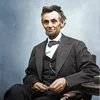
Colorized History images are historical monochrome photographs that have been digitally transformed into full-color versions using image manipulation software like Photoshop. The process involves painstaking research into the actual colors of clothing, uniforms, skin tones, and environments from the era depicted, then layering those colors onto the original image pixel by pixel1. A single complex image can take anywhere from a few hours to an entire month of work1.
The appeal is straightforward: color makes historical figures look like real people rather than distant icons frozen in faded silver prints. As one Reddit commenter put it about a colorized Civil War portrait, "I feel like I'm looking at the man, and not the legend"1.
Gallery
Origin & Background
How It Spread
How to Use This Meme
Traditional Colorized History images are created using Photoshop or similar software. Artists typically:
Select a high-resolution scan of a historical black-and-white photograph
Research the actual colors of clothing, uniforms, skin tones, flags, and environments from the era using historical texts, museum collections, and expert consultation1
Build up color layer by layer on separate Photoshop layers, adjusting opacity and blending modes
Focus on consistent hue, saturation, and brightness across the image to avoid an unnatural painted-on look6
Cultural Impact
Full History
Fun Facts
Mads Madsen was 17 years old, self-taught, and "couldn't draw a stick figure" when his first colorization went viral1.
Marina Amaral spent nearly a full month colorizing a single early 20th-century photo of New York's banana docks because of the sheer number of hats, faces, and fabric strips1.
The golden age of hand-colored photography in the West ran from 1900 to 1940, with Wallace Nutting becoming the best-selling hand-colored photographer of all time during that period3.
Japanese hand-colored photographs from the 1860s onward employed the refined skills of watercolorists and woodblock printmakers, creating some of the most technically accomplished colored photographs in history3.
Color images have a measurably greater impact on visual memory than monochrome ones, which partly explains why colorized photos feel so much more "real"1.
Derivatives & Variations
/r/colorization
— The broader Reddit community (launched December 27, 2011) where anyone can share colorized photos, unlike the curated /r/ColorizedHistory[5]
Dynamichrome by Jordan Lloyd
— Animated GIF project showing black-and-white-to-color transitions of celebrity portraits[11]
*The Colour of Time*
— Book by Marina Amaral and historian Dan Jones featuring over 200 restored historical photos[1]
AI Colorization Tools
— Automated services using machine learning to colorize photos instantly, popularized in the late 2010s[10]
"Colorized" joke captions
— A separate meme format where people caption random modern or absurd images with "[date], colorized" as a joke, satirizing the earnest colorization trend[10]
Frequently Asked Questions
References (14)
- 1
- 2
- 3
- 4Colorized History - Know Your Memeencyclopedia
- 5Memeencyclopedia
- 6Digital image processingencyclopedia
- 7Hand-colouring of photographs - Wikipediaencyclopedia
- 8
- 9
- 10
- 11
- 12
- 13
- 14