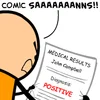
Comic Sans
Published March 23, 2026
Also known as: Comic Sans MS
Comic Sans MS is a comic book-inspired typeface designed by Vincent Connare at Microsoft in 1994, originally meant for a children's software program called Microsoft Bob1. The font became one of the most widely used and widely hated typefaces in computing history, sparking the "Ban Comic Sans" movement in 20023 and fueling decades of internet mockery every time it appeared in a serious context. From CERN's Higgs boson presentation to an NBA owner's angry open letter, Comic Sans turned typography into a spectator sport.
Overview
Comic Sans MS is a sans-serif typeface with rounded, irregular letterforms designed to mimic the hand-lettered text found in comic books1. The letters are intentionally uneven: `p` is not a mirror image of `q`, spacing varies, and the overall feel is loose and childlike4. Microsoft officially describes it as "casual and legible"7.
The font's informal appearance made it wildly popular with everyday computer users in the late 1990s, but it also made it a target for designers who considered it inappropriate for anything beyond birthday invitations and children's materials5. This tension between mass appeal and professional disdain turned Comic Sans into a cultural flashpoint, one of the few typefaces that can reliably start an argument on the internet.
Gallery
Origin & Background
How to Use This Meme
Comic Sans is typically deployed in one of two modes: sincere or ironic.
Sincere use follows the font's original purpose. People pick it for children's party invitations, classroom handouts, informal signs, and personal projects where a friendly, handwritten feel is appropriate. It works best in short bursts: headlines, speech bubbles, sticky-note reminders.
Ironic/meme use involves deliberately choosing Comic Sans for serious or formal contexts to provoke a reaction. Common applications include: - Writing corporate emails or professional documents in Comic Sans to annoy coworkers - Posting memes with Comic Sans text as a layer of anti-humor - Using it in presentations to signal that you don't take the format too seriously - Creating passive-aggressive office notes (a well-documented genre)
The meme value comes from the gap between the font's childlike tone and whatever serious content it's paired with. The more solemn the context, the funnier the Comic Sans.
Cultural Impact
Full History
Fun Facts
Connare originally had to name his test font "Times New Roman" just to get Microsoft Bob's team to try it, because the software only accepted that font name in its codebase1.
The "MS" in Comic Sans MS stands for Microsoft, not "manuscript" as some assume7.
An encrypted copy of Microsoft Bob (the program Comic Sans was designed for) was hidden on Windows XP installation CDs as anti-piracy bloat, consuming 30 MB to discourage dial-up users from downloading it illegally22.
Comic Sans is pre-installed on macOS and Windows but not on Android, iOS, or Linux7.
Connare's inspiration came from two of the most acclaimed graphic novels ever published: *Watchmen* and *The Dark Knight Returns*. The irony of a "childish" font born from grim, adult comics is not lost on typography nerds2.
Derivatives & Variations
"Ban Comic Sans" campaign (2002):
Dave and Holly Combs' satirical movement with merchandise, a manifesto, and a website that ran for nearly two decades before pivoting to "Use Comic Sans" in 2019[3].
"I'm Comic Sans, Asshole" (2010):
Mike Lacher's McSweeney's piece, a first-person rant from the font's perspective that went viral[9].
"Kill Comic Sans" game:
AgencyFusion created a browser game where players could destroy the font[3].
Google "Helvetica" Easter egg (2011):
Googling "Helvetica" on April Fools' Day 2011 rendered all results in Comic Sans[14].
Comic Sans Pro (2011):
Monotype's Terrance Weinzierl expanded the font with italics, small caps, and dingbats for Microsoft Office 2010[8].
Comic Sans Criminal website:
A parody documentation project collecting real-world examples of Comic Sans misuse[3].
The Face magazine issue (2023):
The British culture magazine printed an entire issue in a Comic Sans variation as a deliberate provocation[4].
Frequently Asked Questions
References (36)
- 1
- 2
- 3
- 4Comic Sans - Know Your Memeencyclopedia
- 5Comic Sansencyclopedia
- 6Comic Sans - Urban Dictionarydictionary
- 7Microsoft Bobencyclopedia
- 83D Movie Makerencyclopedia
- 9
- 10
- 11Comic Sans for Everyonearticle
- 12
- 13
- 14
- 15connarearticle
- 16
- 17
- 18
- 19
- 20
- 21
- 22
- 23
- 24
- 25
- 26
- 27
- 28Untitledarticle
- 29
- 30
- 31
- 32
- 33
- 34
- 35
- 36