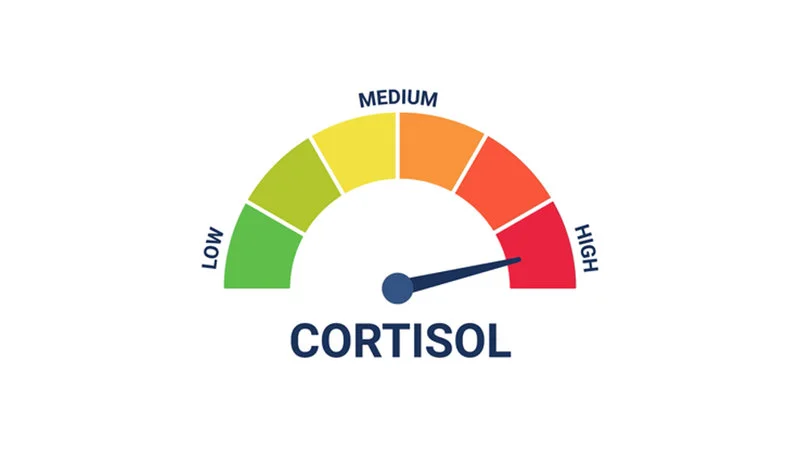
Cortisol Level Cortisol Spike
Published April 7, 2026
Also known as: High Cortisol Meme · Spike My Cortisol · Holy Cortisol Spike
Cortisol Level / Cortisol Spike is a slang phrase and reaction image format used to humorously describe moments of sudden stress, shock, or second-hand embarrassment by framing them as a biological cortisol response. The meme originated on X/Twitter in February 2025 after a model named Veronica accused her critics of "trying to spike my cortisol and make me less beautiful," then went viral in late 2025 when TikTok creators paired clips of YouTuber Goatis reacting intensely to videos with cortisol meter graphics3. By early 2026, the format had spread into looksmaxxing and blackpill communities, where cortisol is treated as both a genuine health concern and an ironic status marker.
Overview
The Cortisol Spike meme works on two levels. As a catchphrase, people use "cortisol spike" or "holy cortisol spike" to describe anything stressful, cringeworthy, or shocking, reframing an emotional reaction as an involuntary hormonal event3. As a visual format, creators overlay a cortisol level meter graphic (labeled from "Low" to "High") onto videos, with the needle swinging to match the stress level of whatever's on screen3.
The humor comes from treating everyday stress like a medical diagnosis. Instead of saying "that was stressful," you say "holy cortisol spike." The pseudo-scientific framing makes mundane annoyances sound like serious physiological events. In looksmaxxing communities, the joke goes further: high cortisol supposedly ages you, so getting stressed isn't just unpleasant, it's an attack on your appearance1.
Gallery
Origin & Background
How It Spread
How to Use This Meme
The Cortisol Spike meme typically takes one of three forms:
As a caption or reaction phrase: Drop "holy cortisol spike" or "cortisol levels through the roof" as a response to any stressful, cringeworthy, or shocking content. The joke works best when the reaction is disproportionate to what's happening.
As a video overlay: Take a clip of someone reacting intensely to something (Goatis clips are the classic choice) and overlay the cortisol meter graphic. The meter needle should match the intensity of the reaction, swinging toward "High" at peak stress moments.
As a looksmaxxing format: Label situations, behaviors, or media as "high cortisol" or "low cortisol" activities. The implication is that avoiding cortisol spikes will keep you looking better. Common pairings: doom-scrolling = high cortisol, morning sunlight = low cortisol.
The ironic version treats cortisol management as an extreme lifestyle choice, presenting total emotional detachment ("cortisol levels undetectable") as the ultimate achievement2.
Cultural Impact
Fun Facts
Veronica's original tweet included the phrase "the Slavic woman superiority lives on," which became a secondary meme in its own right1.
The Maxrotting Chrome extension transforms "The stressed employee was worried about the meeting with his boss" into "Da experiencing a cortisol spike wagecel was low-grade cortisol leaking about da wagecel assembly with his own self alpha"2.
Veronica's anti-cortisol advice included listening to Gregorian chants and eating marshmallows as part of the Ray Peat diet1.
The cortisol meter format went through two distinct viral phases separated by about seven months, with the TikTok revival in late 2025 far outpacing the original February 2025 Twitter trend in engagement3.
Having "low cortisol" or being "cortisol-immune" is presented in brainrot culture as the ultimate sigma state, where nothing affects you and "your face stays chiseled because stress can't touch you"2.
Derivatives & Variations
Goatis Cortisol Reactions:
Specific clips of YouTuber Goatis reacting to food videos became the default visual shorthand for cortisol spikes on TikTok, with his "crashing out" clip used as a standalone reaction template[3].
"You're Trying to Spike My Cortisol and Make Me Less Beautiful":
The original Veronica catchphrase functions as its own copypasta/text meme, separate from the meter format[1].
Cortisol Meter Overlay:
The visual gauge graphic (Low to High) became a reusable template applied to any video content, independent of Goatis clips[3].
Agartha/Never StreSS Crossover:
Late January 2026 fusion combining cortisol discourse with hollow earth conspiracy memes and AI-generated edits of public figures in Agartha, presenting total cortisol immunity as enlightenment[3].
Looksmaxxing Cortisol Labels:
A format where users label photos of themselves or activities as "high cortisol" vs "low cortisol," treating stress management as an appearance optimization tool[3].
Maxrotting Chrome Extension:
A browser extension that auto-replaces common English words with brainrot equivalents, including extensive cortisol-related terminology[2].