Hipster Glasses

2009Exploitable image / image macro accessoryclassic

Published March 30, 2026

Also known as: Hipster Shades · Wayfarer Glasses Meme

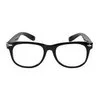
Hipster Glasses is an exploitable photoshop meme featuring thick-framed eyeglasses digitally added to images of people, animals, or fictional characters to portray them as hipsters2. The format emerged in 2009 alongside the Hipster Jesus and Hipster Kitty image macros and is almost always paired with captions mocking hipster stereotypes, most commonly "I was into X before it was mainstream"4. The glasses, modeled after Ray-Ban Wayfarers, function as a visual shorthand for pretentiousness in the same way Scumbag Steve's hat signals bad behavior2.

Overview

The Hipster Glasses format works as an add-on exploitable, meaning editors paste thick black Wayfarer frames onto any character to instantly code them as smug and taste-obsessed2. The joke rarely lives in the glasses alone. Captions usually pair the eyewear with lines like 'I was into (x) before it got too mainstream' or 'you've probably never heard of it,' with the frames doing the same characterization work as Scumbag Steve's backwards cap2.

Recognizable variants stick the glasses on famous fictional figures who become 'Hipster' versions of themselves, most often Hipster Ariel, Hipster Jesus and Hipster Kitty, plus the Hipster Disney Villains grouping that BuzzFeed helped popularize2. Tone stays mocking rather than celebratory, aimed at the taste-signaling behavior of subcultures more than the characters wearing them.

Origin & Background

Platform
Various imageboards and humor sites (advice animal community)
Creator
Unknown
Date
2009

The thick-rimmed glasses first appeared in meme culture in 2009 through two advice animal image macros: Hipster Jesus and Hipster Kitty4. Both formats used the glasses to signal a pretentious, counter-cultural attitude. Hipster Jesus would make claims like having liked his father's work before it went mainstream, while Hipster Kitty applied similar ironic one-upmanship to cat behavior1.

The glasses drew on a real-world fashion association. Ray-Ban Wayfarers, first designed by Raymond Stegeman in 1952, had been worn by beatniks, musicians, and counter-culture figures since the 1950s5. After nearly going extinct in the 1990s, the frames surged back when celebrities like Chloë Sevigny and Mary-Kate Olsen started wearing vintage pairs in the mid-2000s5. Hot Topic began selling non-prescription thick frames, and the style became so linked to indie subculture that Urban Dictionary entries from the period specifically define "hipster glasses" as thick black frames worn for "indie cred"3.

The Museu de Memes in Brazil traced the meme's origin to Hipster Jesus in 2009, noting that while Hipster Jesus eventually faded, the glasses themselves broke free as a standalone exploitable element that could be grafted onto any other meme1.

How It Spread

In 2010, the glasses format expanded significantly with the arrival of Hipster Ariel, which placed the thick frames on Disney's Little Mermaid4. Hipster Ariel became popular enough that it spread into other Disney characters, a trend BuzzFeed branded "Hipster Disney Villains"4.

On August 22, 2010, Brooklyn-based artists JC and APK launched Hipster Hitler, a webcomic that put the signature glasses on Adolf Hitler and reimagined him as a fashion-obsessed, music-snobbing hipster4. The comic attracted attention and controversy in equal measure.

By February 2011, Google search interest for "hipster glasses" and "Ray-Ban Wayfarers" began converging, reflecting how deeply the meme had embedded itself in the cultural conversation around the eyewear4. Derivatives spread across Memebase, Tumblr, and DeviantArt, with users applying the glasses to everything from religious figures to Richard Dawkins1. DeviantArt in particular became a hub for fan art incorporating the glasses, with users creating hipster-glasses versions of animals, original characters, and pop culture figures6.

The catchphrases "you've probably never heard of it" and "I was into X before it was mainstream" became inseparable from the visual format4. These phrases worked as a verbal version of the glasses themselves: instant hipster signifiers that could be dropped into any context.

The Museu de Memes analyzed the format as a case study in participatory culture, arguing that the glasses survived longer than Hipster Jesus because they were infinitely reappropriable1. Each new application created a fresh joke while reinforcing the same core gag. The museum noted this was a textbook example of how meme elements can outlive their original context through continuous community remixing (translated from Portuguese)1.

How to Use This Meme

To make a Hipster Glasses macro, editors typically drop thick black Ray-Ban style frames onto a character's face and pair the image with a caption in the 'I liked X before it got mainstream' or 'you've probably never heard of it' template2. Common conventions include picking figures whose personality clashes with hipster stereotypes for the humor, like Disney princesses, cartoon villains or historical dictators.

Frequently Asked Questions