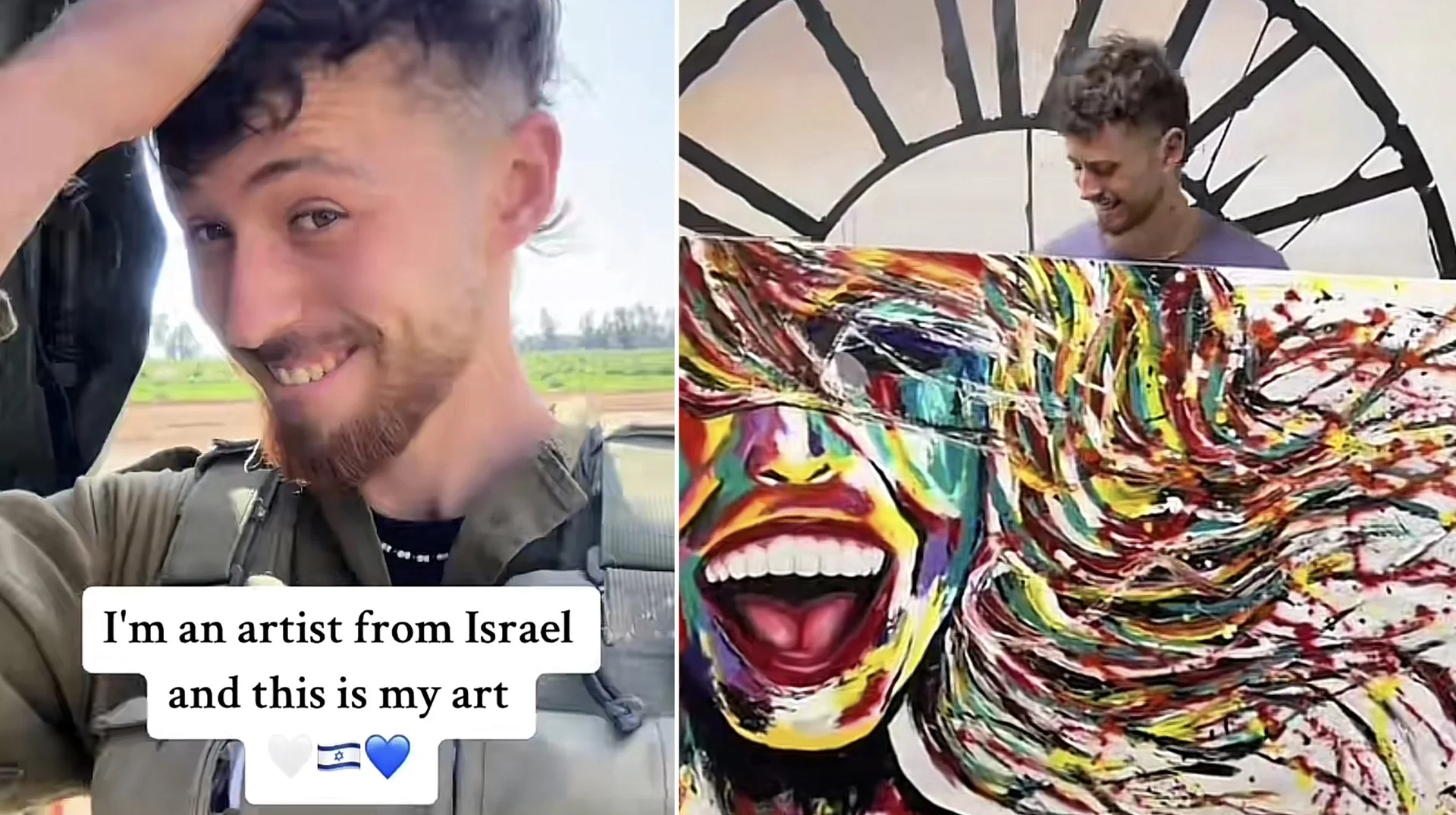
Im An Artist From Israel And This Is My Art
Published July 30, 2026
I'm an Artist From Israel and This Is My Art is a catchphrase and exploitable image macro originating from a January 2024 TikTok by Israeli artist Albert Levi. The meme format involves replacing his paintings with absurd or offensive images, while the phrase spawned nationality-based parodies.
Overview
I'm an Artist From Israel and This Is My Art is an exploitable image macro and catchphrase that originated from a TikTok video posted by Israeli pop artist Albert Levi in early 2024. In the original clip, Levi appears first in military attire before transitioning to his art studio, where he showcases several colorful paintings featuring subjects like a blue horse, a sports car, a lion, and a parrot1. The video's earnest presentation of his splatter-paint pop art style struck many viewers as unintentionally comedic.
The meme format took two primary directions. First, screenshots from the video became exploitable templates where users replaced Levi's paintings with absurd, offensive, or humorous images on his canvas3. Second, the catchphrase itself evolved into a phrasal template called "I Am a X From Y and This Is My Z," allowing creators to substitute different nationalities, professions, and products to play on cultural stereotypes4.
The timing of the video's spread coincided with heightened online discourse about Israel during the 2023-2025 Israel-Hamas Conflict, which contributed to the mocking tone many of the edits took. The combination of Levi's military appearance, his earnest artistic presentation, and the perceived quality of his work created fertile ground for parody4.
Gallery
Origin & Background
How It Spread
How to Use This Meme
The meme typically works in two formats. For the exploitable version, users take a screenshot of Albert Levi holding or standing next to his canvas and edit the painting to show something else, often absurd, offensive, or culturally specific content. The more outlandish the replacement art, the better the joke lands.
For the phrasal template version, users adapt the catchphrase structure "I'm a [profession] from [country] and this is my [product]" to create nationality-based jokes. Common variations play on stereotypes associated with different countries and their notable exports or cultural associations.