Japanese Soldier Who Kept Fighting 29 Years After Wwii
Published March 30, 2026
Also known as: Hiroo Onoda Meme · Japanese Soldier Meme
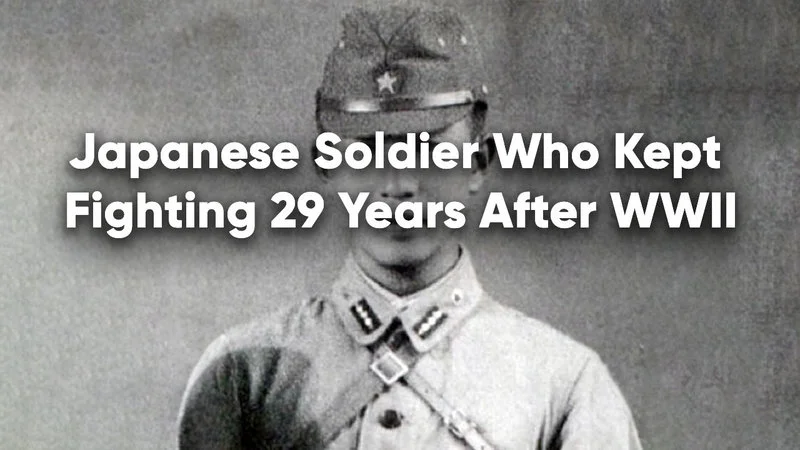
"Japanese Soldier Who Kept Fighting 29 Years After WWII" is a reaction image and catchphrase meme based on the true story of Lieutenant Hiroo Onoda, who refused to surrender on a Philippine island until 1974. The meme, built around a viral YouTube thumbnail showing Onoda's photo with highlighted yellow text, is used to mock people who persist in something long after it stopped being relevant. After first circulating as a joke format around 2015, it saw a major resurgence in 2024 on sports and pop culture Twitter/X.
Overview
The meme centers on a single image: a photo of Hiroo Onoda alongside bold yellow highlighted text reading "Japanese Soldier Who Kept Fighting 29 Years After WWII." That thumbnail, ripped from a YouTube history video, became shorthand for anyone refusing to give up on something that's clearly over. Whether it's a Drake fan defending his latest album, a COVID hardliner in 2024, or a soccer player returning from yet another injury, the punchline is always the same: you're fighting a war that ended decades ago.
The format works in two main ways. Sometimes people post the image as a standalone reaction to news or tweets about someone clinging to a lost cause. Other times they just write the phrase "japanese soldier who kept fighting 29 years after wwii" as a text-only reply, letting the reference speak for itself5.
Gallery
Origin & Background
How It Spread
How to Use This Meme
The meme typically works in two formats:
Image reaction: Post the Onoda thumbnail (yellow text, wartime photo) as a reply to any tweet, post, or headline about someone persisting in something that's clearly finished. No additional caption needed.
Text-only reply: Simply write "japanese soldier who kept fighting 29 years after wwii" (often lowercase, no punctuation) as a reply. The reference is widely enough known that the image isn't necessary.
The target is always someone who won't let go: a fan defending a washed artist, a person relitigating a settled argument, an athlete returning from their fifth comeback, or anyone still doing something the rest of the world moved on from years ago.
Cultural Impact
Full History
Fun Facts
Norio Suzuki, the adventurer who found Onoda, said he was searching for "Lieutenant Onoda, a panda, and the Abominable Snowman, in that order"6.
The Japanese government declared Onoda dead in 1959, 15 years before he actually emerged from the jungle2.
Onoda's commanding officer Taniguchi, who made the promise to come back for him, had become a bookseller by the time Suzuki tracked him down in 19747.
During his 29 years in the jungle, Onoda missed the Korean War, the Moon landing, the Beatles' entire career, the Cuban Missile Crisis, the 1964 Tokyo Olympics, the assassination of JFK, and most of the Vietnam War3.
The meme's viral thumbnail contains a typo: it reads "Japanese Solider" instead of "Japanese Soldier"5.
Derivatives & Variations
BBL Drizzy variant:
@LadPsycho's May 2024 use of the Onoda thumbnail to mock Drake's response to the BBL Drizzy beat became one of the meme's biggest individual posts at 50,000+ likes, spawning further Drake-specific uses[5].
Sports comeback template:
The Ansu Fati tweet established a sub-genre where the meme is specifically applied to injury-prone athletes who keep attempting returns[5].
Text-only catchphrase:
The image-free version, where users simply type the phrase as a reply, became its own distinct usage pattern distinct from the thumbnail reaction[5].
Frequently Asked Questions
References (9)
- 1
- 2
- 3
- 4
- 5
- 6
- 7
- 8
- 9