Memes
Published September 6, 2026
Memes are self-replicating units of cultural information, a concept coined by evolutionary biologist Richard Dawkins in his 1976 book The Selfish Gene. The term jumped from academic theory to describing image macros, catchphrases, and viral videos with the commercialization of the internet in the mid-1990s, eventually becoming the dominant vocabulary for how ideas spread online.
Overview
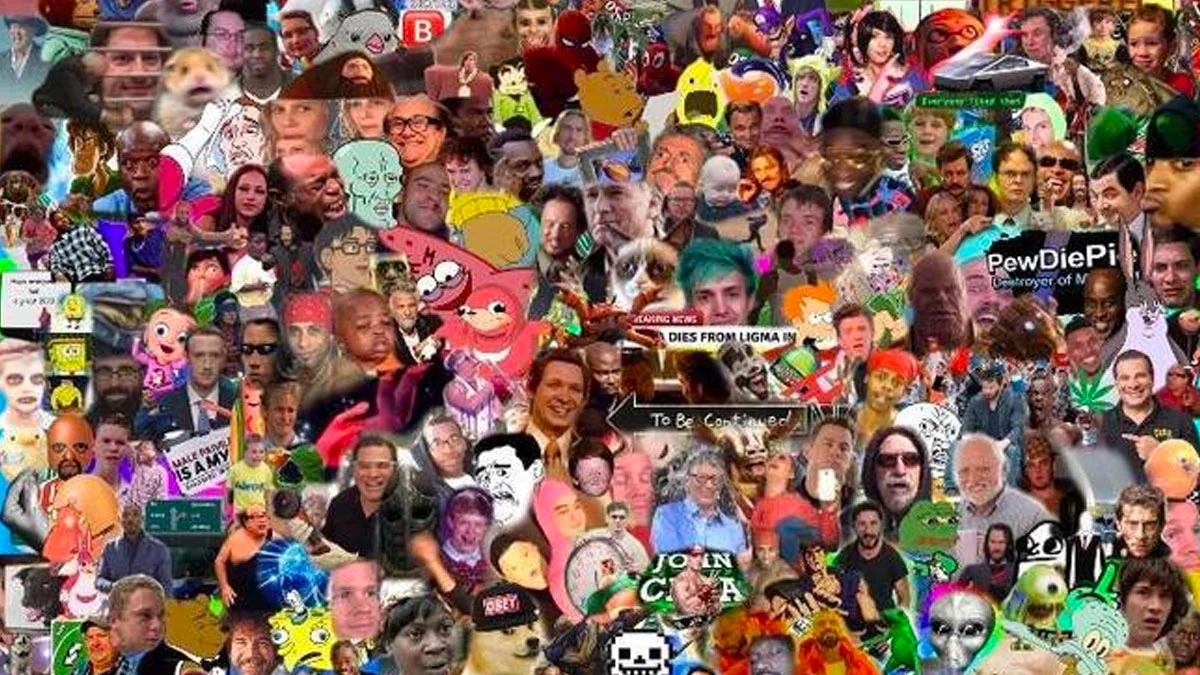
At its core, a meme is any piece of cultural information that copies itself from person to person and mutates as it travels, competing for attention the way genes compete for survival1. Dawkins framed the idea as a parallel to biological evolution, arguing that tunes, catchphrases, fashions, and beliefs all spread through a kind of natural selection1. Online, the word narrowed to describe formats built for fast remixing: image macros, reaction images, catchphrase templates, short videos, and running jokes that mutate every time someone reposts them2.
What makes something legibly a meme today is usually a recognizable shell (a stock image, a phrase, a video clip) filled with new content that only makes sense if you already know the reference2. Urban Dictionary entries capture the vernacular read: jokes with a shelf life of a couple of days, an inside language for people who spend a lot of time online3. The academic definition and the internet definition now coexist, with the second one doing most of the everyday work2.
Gallery
Origin & Background
How It Spread
How to Use This Meme
There is no single template for 'memes' as a whole, but the common convention is to take a recognizable format (an image macro, catchphrase, or short video) and swap in new context that speaks to a current joke, event, or subculture2. Users typically pair a familiar visual or line with fresh text or a new situation, trusting that the audience recognizes the original well enough to enjoy the twist3.