Pink Tax
Published March 30, 2026
Also known as: Gender pricing · gender tax · shrink it and pink it
The Pink Tax is a neologism describing the markup applied to products and services marketed toward women compared to nearly identical items sold to men. The concept traces back to a 1994 California government study that found women were routinely charged more for services like dry cleaning and haircuts3. It became a major internet talking point in the 2010s through YouTube explainers, hashtag campaigns like #AxThePinkTax, and heated online debates about whether the price gap is genuine discrimination or simple product differentiation5.
Overview
The Pink Tax isn't an actual tax. It's a colloquial term for the pricing pattern where products marketed to women cost more than equivalent products marketed to men2. The name comes from the common practice of making women's versions of products pink while charging a premium. Razors, shaving cream, deodorant, shampoo, and even children's toys have all been flagged as examples1.
The debate around the Pink Tax splits into two camps. One side argues it's straightforward price discrimination based on gender, with companies exploiting women's willingness to pay more7. The other side claims women's products genuinely cost more to manufacture due to different formulations, fragrances, and packaging1. Both sides have brought receipts, and the argument has played out across YouTube, Reddit, Twitter, and legislative chambers for over a decade.
Gallery
Origin & Background
How It Spread
How to Use This Meme
The Pink Tax isn't a meme template in the traditional sense. It typically shows up in online discourse through:
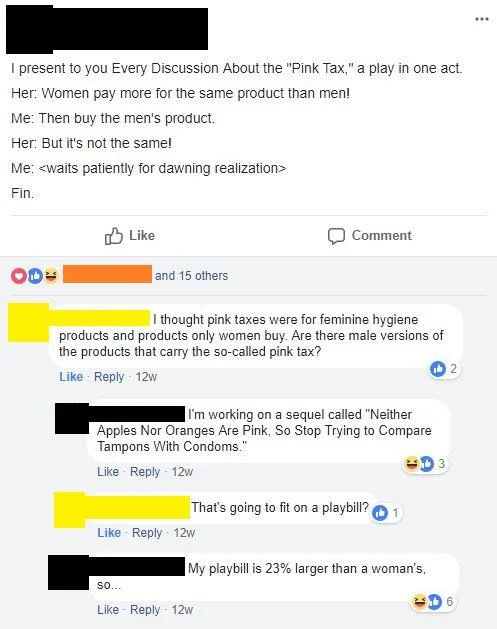
- Price comparison photos: Users photograph men's and women's versions of the same product side by side, showing the price difference. The more absurd the gap (like the $25 vs $50 Radio Flyer scooter), the more traction the post gets. - Hashtag campaigns: #PinkTax, #AxThePinkTax, and #GenderPricing are common tags on Twitter and Instagram for calling out specific examples. - "Just buy the men's version" debates: A recurring format where someone points out the price gap and someone else suggests women should simply buy men's products, sparking arguments about consumer choice vs. systemic pricing. - Screenshot compilations: Side-by-side screenshots from online retailers showing identical products at different prices based on gendered marketing.
The concept commonly appears in broader discussions about the gender pay gap, consumer rights, and corporate marketing tactics.
Cultural Impact
Full History
Fun Facts
Excedrin Extra Strength and Excedrin Complete Menstrual contain the exact same active ingredients (250mg aspirin, 250mg acetaminophen, 65mg caffeine), but the menstrual version cost 50 cents more at Walgreens. The manufacturer said it was Walgreens' pricing decision, not theirs1.
A Schick customer service representative admitted the basic blades for men's and women's razors are "virtually identical in performance and features," yet CVS charged 50 cents more for the four-pack marketed to women1.
Women in Singapore pay higher premiums for CareShield Life, a government-run long-term care insurance scheme, creating a state-level version of the Pink Tax4.
One estimate from 1994 calculated that women paid approximately $1,351 more per year than men for comparable goods and services2.
BIC's "Pens for Her" backlash was so intense it entered marketing textbooks as a cautionary tale about gendered product design2.
Derivatives & Variations
#AxThePinkTax campaign:
European Wax Center launched this hashtag in April 2018 with dedicated YouTube videos protesting gendered pricing in personal care[5].
Tampon Tax Back:
A refund campaign that started as a 2020 hashtag promoted by women-owned hygiene brands at Target, allowing shoppers in 21 states to claim sales tax refunds on feminine products[3].
"BIC Pens for Her" backlash:
BIC's pastel-colored pens at premium prices drew massive online mockery, with sarcastic Amazon reviews turning the product into a case study of marketing overreach[2].
"Just buy the men's version" meme:
A recurring online argument format, exemplified by a widely shared Reddit screenshot in 2018, where someone suggests women solve the price gap by purchasing men's products[5].
Billie brand identity:
A direct-to-consumer razor company that positioned itself as the "pink-tax-free" alternative, building its entire brand narrative around the discourse[2].
Frequently Asked Questions
References (8)
- 1
- 2
- 3
- 4Pink Tax - Know Your Memeencyclopedia
- 5List of Internet phenomenaencyclopedia
- 6Pink Tax - Urban Dictionarydictionary
- 7Pink taxencyclopedia
- 8