Stop Bullying Comics
Published March 31, 2026
Also known as: Stop Bullying: Speak Up Comics · Bitstrips Bullying Comics
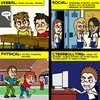
Stop Bullying Comics is an online comic series born from a 2011 anti-bullying campaign between Cartoon Network and Bitstrips for Schools that was quickly hijacked by internet users to create absurd, off-topic parody strips. What started as a well-meaning educational tool for students to illustrate bullying scenarios became a goldmine for joke comics, with users exploiting the drag-and-drop comic creator to produce intentionally ridiculous content that spread across Reddit, Tumblr, and YouTube Poop forums.
Overview
Stop Bullying Comics grew out of the "Stop Bullying: Speak Up!" Comic Challenge, a joint initiative between Cartoon Network and the online comic platform Bitstrips for Schools1. The campaign gave users access to a drag-and-drop comic creator where they could build their own avatar, drop it into pre-made bullying scenario templates, and finish each strip with custom dialogue, characters, and effects1. The tool was designed to let students in grades 3-8 role-play as bystanders, victims, or bullies facing consequences1.
Almost immediately, people discovered the comic creator could be used to make absolutely anything, and the results were rarely educational. The parody comics share DNA with Law For Kids PSA parodies, both being humorous takes on earnest educational content4.
Gallery
Origin & Background
How It Spread
How to Use This Meme
The original format worked like this: users would create a personalized avatar using Bitstrips' drawing tools, then drop that avatar into a pre-made comic template depicting a bullying situation. From there, they'd add dialogue bubbles, new characters, props from an extensive library, and special effects to complete the strip1.
The parody approach typically involved ignoring the anti-bullying premise entirely. Users would take the serious scenario setups and fill them with absurd dialogue, non-sequitur punchlines, or deliberately inappropriate responses to the situation. The comedy came from the contrast between the wholesome educational framing and whatever chaos the user injected into it.
Since Bitstrips for Schools has closed down3, the original comic creator is no longer accessible, making Stop Bullying Comics a relic of early 2010s internet humor.
Cultural Impact
Fun Facts
Bitstrips had over 100,000 teacher accounts and students had created six million original comics before the anti-bullying campaign launched1.
The unofficial Tumblr parody blog launched on October 10, 2011, just one week after the campaign started4.
Teachers could make class sets of students' avatars, creating what the platform called "a humorous alternative to school pictures"1.
Blackstock admitted he "got kicked out of class for drawing on my desk" as a kid, which he channeled into building Bitstrips1.
Frequently Asked Questions
References (5)
- 1Important Updatearticle
- 2
- 3
- 4Stop Bullying Comics - Know Your Memeencyclopedia
- 5List of Marvel Comics characters: Tencyclopedia