The Conspiracy Chart
Published March 30, 2026
Also known as: Conspiracy Theory Chart · Conspiracy Pyramid
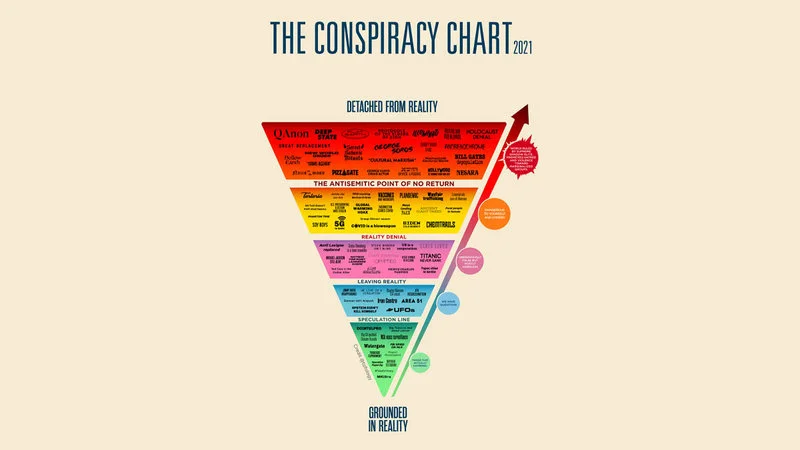
The Conspiracy Chart is an inverted pyramid infographic that ranks conspiracy theories from grounded-in-reality events at the bottom to dangerous, antisemitism-rooted beliefs at the top. Created by Abbie Richards in October 2020, the chart went viral on TikTok, Twitter, and Instagram before spawning an exploitable meme format in late 2021 where users replaced the conspiracy entries with jokes, fandom references, and absurdist humor.
Overview
The Conspiracy Chart arranges conspiracy theories in a color-coded inverted pyramid. At the base sit events that actually happened, like the Tuskegee Experiment and Big Tobacco's cover-ups2. Moving upward, the chart crosses a "speculation line" into territory where unanswered questions still exist, then past a "reality denial" line where believers start rejecting established science and medicine2. At the very top sits what Richards labeled the "antisemitic point of no return," populated by theories claiming a secret cabal of elites controls the world2.
The visual design made the concept immediately shareable. Rather than a wall of text debunking individual conspiracies, the pyramid format let viewers quickly locate where familiar theories landed on the spectrum. This simplicity drove its virality and made it ripe for parody, as users could easily swap in their own items while keeping the escalating structure intact3.
Gallery
Origin & Background
How It Spread
How to Use This Meme
The Conspiracy Chart works as an exploitable template where the pyramid structure and color-coded tiers stay intact but the entries get replaced. Creators typically:
Keep the inverted pyramid shape with its escalating tiers
Label the bottom tier with widely agreed-upon or harmless takes
Fill the middle tiers with increasingly niche, debatable, or absurd claims
Reserve the top tier for the most extreme or ridiculous positions
Optionally keep the dividing lines ("speculation line," "antisemitic point of no return") or rename them to fit the joke
Cultural Impact
Fun Facts
The chart was literally born from a Tinder conversation. Richards was chatting about conspiracies with a match and realized nobody had made a proper categorization system1.
Richards was living in the Netherlands pursuing a master's in climate studies with "twenty Dutch roommates" when the chart blew up1.
Her previous viral moment on TikTok was running a page entirely devoted to hating golf, which she stood by1.
The 2021 version got more engagement on Twitter in a single night than the 2020 version did in an entire year2.
When Richards was doxxed after her golf account went viral, police didn't know what doxxing was and told her it was "her fault for posting on the internet"1.
Derivatives & Variations
Fandom Conspiracy Charts:
Users filled the tiers with increasingly unhinged fan theories about specific media franchises, from mainstream takes at the bottom to deeply cursed headcanons at the top[3].
Food Opinion Pyramids:
Versions ranking food preferences from "normal" (pizza is good) to "concerning" (ketchup on steak) to "call the authorities"[3].
Meme Reference Versions:
@ComradeToguro's early parody replaced conspiracies with meme-world references, setting the template for ironic and absurdist versions[3].
Iceberg Tier Overlap:
The format shares DNA with Iceberg Tiers Parodies, another escalating knowledge/obscurity chart that was already popular before the Conspiracy Chart[3].