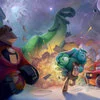
The Pixar Theory
Published March 24, 2026
Also known as: The Grand Unifying Theory of Pixar Movies · Pixar Universe Theory
The Pixar Theory is a fan hypothesis arguing that every Pixar Animation Studios film takes place within the same universe along a single continuous timeline. Blogger Jon Negroni published the fully formed theory on his personal website on July 11, 2013, connecting all fourteen Pixar films from *Toy Story* through *Monsters University* into one grand narrative spanning millennia1. The theory went viral almost immediately, sparking debate across Reddit, pop culture blogs, and mainstream news outlets, and Negroni later expanded it into a book and a regularly updated timeline that incorporated each new Pixar release2.
Overview
The Pixar Theory proposes that all Pixar movies, from *Brave* set in medieval Scotland to *Wall-E*'s post-apocalyptic future, take place in one shared universe where animals, machines, and humans exist in an escalating power struggle across time. The theory traces recurring elements like the megacorporation Buy-N-Large (BNL), increasingly intelligent animals, and sentient artificial intelligence to argue that Pixar's Easter eggs and cross-film references aren't just fun callbacks but evidence of a deliberate (or at least coherent) shared narrative1.
At its most ambitious, the theory claims that Boo from *Monsters, Inc.* grows up to become the witch in *Brave*, traveling through time via magical doors to search for her monster friend Sully7. A carved wooden figure of Sully visible in the witch's workshop and the recurring Pizza Planet truck serve as key pieces of evidence14.
Gallery
Origin & Background
How It Spread
How to Use This Meme
The Pixar Theory is typically referenced rather than formatted like a traditional image macro. People commonly use it by:
Pointing out a new Easter egg or cross-film reference in a Pixar movie and connecting it to the theory's timeline
Creating timeline infographics or flowcharts showing how each film fits into the shared universe
Posting "mind blown" reactions when a new Pixar film accidentally reinforces the theory
Using it as a template for similar "unified theory" arguments about other franchises (Disney, DreamWorks, etc.)
Cultural Impact
Full History
Fun Facts
Jay Ward, Pixar's *Cars* franchise guardian, compared the theory to 9/11 conspiracy theories when asked about it, but followed up by joking it was "all Steve Jobs' master plan" to sell the iPhone 68.
The hardest film for Negroni to fit into the theory was *Monsters, Inc.*, because it required explaining another dimension. His breakthrough was reinterpreting the monsters as mutated animals using time-traveling doors rather than interdimensional portals2.
Negroni spent a full year rewatching every Pixar film before publishing his theory, starting from a single comment he left on a Cracked video2.
*The Good Dinosaur* (2015) pushed the theory's timeline back by millions of years, as it was set in a world where the extinction asteroid missed Earth6.
A wooden carving of Sully and the Pizza Planet truck appear in the witch's workshop in *Brave*, serving as two of the theory's most cited pieces of visual evidence7.
Derivatives & Variations
The Pixar Theory Book:
Negroni expanded his blog post into a full-length book with additional connections, deeper analysis, and responses to criticism[11].
Super Carlin Brothers Videos:
The YouTube duo created a long-running video series applying and updating the theory with each new Pixar release, posting an updated summary as recently as 2022[11].
Disney's Official Connections Video:
Disney's YouTube channel produced a video in 2015 mapping cross-film references, later updated by the *Toy Story* Facebook page to include newer films[5].
Simplified Visual Timeline:
Negroni created a condensed timeline graphic in July 2013 to make the theory more accessible to casual fans[13].
Competing Theories:
Various creators offered alternative unified Pixar timelines, including lynxgriffin's earlier LiveJournal version which included Pixar shorts and proposed a "portaltech" mechanism instead of magic[12].
Frequently Asked Questions
References (20)
- 1
- 2
- 3
- 4The Pixar Theory - Know Your Memeencyclopedia
- 5Motion Theoryencyclopedia
- 6The Pixar TheoryâExplainedarticle
- 7
- 8
- 9
- 10
- 11
- 12
- 13The Pixar Theory | NeoGAFarticle
- 14
- 15
- 16
- 17
- 18
- 19
- 20