This Place Is Not A Place Of Honor
Published March 31, 2026
Also known as: "Nothing Valued Is Here · " "This Place Is a Message · " WIPP warning message · nuclear semiotics meme
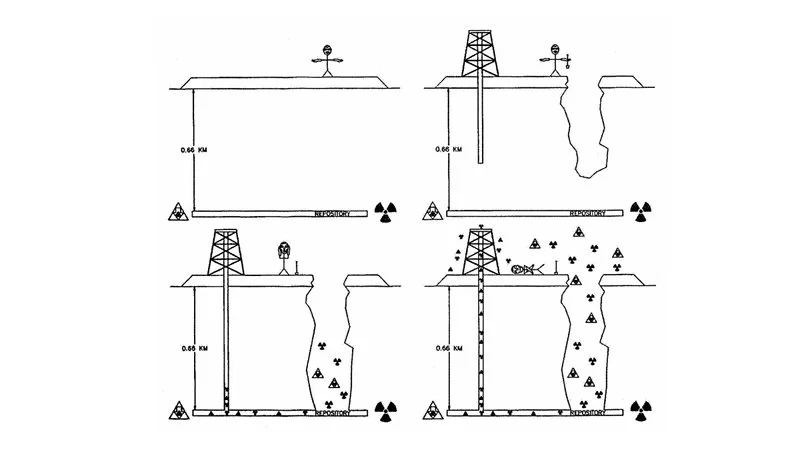
"This Place Is Not a Place of Honor" is a passage from a 1993 U.S. government report about warning future civilizations away from buried nuclear waste. The full text, written by experts at Sandia National Laboratories for the Waste Isolation Pilot Plant (WIPP) in New Mexico, went viral in the late 2010s after circulating on Reddit and Tumblr, where users found its ominous, poetic tone both haunting and oddly funny1. The message became a popular copypasta, reaction image source, and shorthand for anything that should be avoided, blending genuine existential dread with internet humor.
Overview
The meme centers on a specific passage from a U.S. Department of Energy report titled *Expert Judgment on Markers to Deter Inadvertent Human Intrusion into the Waste Isolation Pilot Plant*, published in November 19931. The key text reads:
> This place is a message... and part of a system of messages... pay attention to it! Sending this message was important to us. We considered ourselves to be a powerful culture. This place is not a place of honor... no highly esteemed deed is commemorated here... nothing valued is here. What is here was dangerous and repulsive to us. This message is a warning about danger.
The passage was designed to communicate danger across millennia to people who might not share any language or cultural framework with present-day humans3. Online, it found a second life as internet users latched onto its dramatic, almost poetic cadence. People use it as copypasta applied to mundane or absurd contexts, paste it over images of cursed locations, or reference it when describing anything ominous or forbidden.
Gallery
Origin & Background
How It Spread
How to Use This Meme
The most common use is as copypasta. People typically copy the full passage (or key phrases like "nothing valued is here" or "what is here was dangerous and repulsive to us") and apply it to images or situations where something looks cursed, forbidden, or deeply unpleasant. Common applications include:
Image overlay: Place the WIPP text over a photo of somewhere awful (a neglected bathroom, a weird room, a suburban eyesore).
Caption format: Post a photo with "This place is not a place of honor" as the caption, letting the image do the rest.
Quote reaction: Drop a fragment of the passage in reply to someone sharing something disturbing or inexplicable.
Self-deprecating humor: Apply the text to your own living space, browser history, or life choices.
Cultural Impact
Full History
Fun Facts
The Sandia report recommended markers made from materials with little recycle value so future scavengers wouldn't tear them apart for raw materials1.
A real earworm song was composed specifically to be catchy enough to survive 10,000 years of oral tradition, warning people about radiation through a tune about cats2.
The report acknowledged that no marker system could guarantee effectiveness for the full 10,000-year timeframe, noting that efficacy would decrease over time1.
Shastra Deo's poetry collection based on the passage was already in development before the text became a meme, making her one of the earliest serious artistic interpreters of the material4.
The $30 billion collected for the never-built Yucca Mountain repository was eventually halted by a court order after the Obama administration abandoned the project2.
Derivatives & Variations
Ray Cat memes:
The Bastide-Fabbri proposal to engineer color-changing cats spawned its own meme ecosystem, including fan art of glowing cats and remixes of the "10,000-Year Earworm" song[2][3].
Spike field edits:
The Sandia report's hostile monument concepts (fields of spikes, walls of thorns) became popular reaction images and are frequently compared to Brutalist architecture and video game environments[3].
Atomic Priesthood jokes:
Sebeok's concept of a nuclear knowledge cult inspired jokes about forming secretive groups to guard mundane knowledge, like the location of the good bathroom at work[2].
"Nothing valued is here" variants:
The phrase became a standalone caption applied to dorm rooms, fast food restaurants, and other spaces of dubious quality[3].
Frequently Asked Questions
References (5)
- 1
- 2
- 3
- 4List of Internet phenomenaencyclopedia
- 5