Tilt Shift Effect
Published October 3, 2026
Tilt Shift Effect is a photography technique that uses a specialized lens or digital filter to shrink real-world scenes into miniature, toy-like dioramas. Rooted in 1960s large-format camera gear, the look exploded online in the late 2000s thanks to Flickr groups, Vimeo short films and mobile apps that turned every skyline into a model railway.
Overview
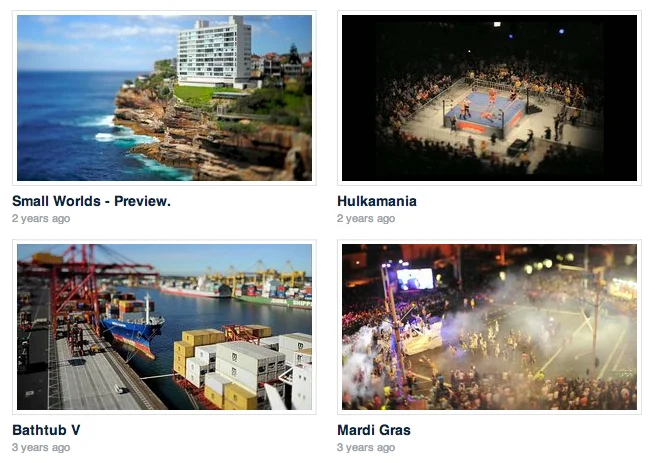
The Tilt Shift Effect shrinks real streets, stadiums and skylines into what looks like a hobby-shop diorama. The trick is a shallow depth of field aimed at a scene shot from a high angle, which fools the eye into reading full-sized buildings and people as plastic figurines on a tabletop1. Saturated colors and crisp focal strips sell the illusion further, so photographers often crank contrast and tweak hue to mimic bright miniature paint2.
Traditionally the look came from a tilt-shift lens, which rotates and slides relative to the sensor to warp the plane of focus. Online, almost all of the viral examples are faked in post with Photoshop's Lens Blur filter, Lightroom plugins or dedicated web apps, a workflow that let anyone with a landscape photo join in1. The format works best on aerials of ballparks, highway interchanges, parades and dense cityscapes, which is why sports and travel photography adopted it so quickly2.
Gallery
Origin & Background
How It Spread
Timeline
Frequently Asked Questions
References (6)
- 1
- 2
- 3
- 4
- 5
- 6