Virginity Auctioning
Published August 5, 2026
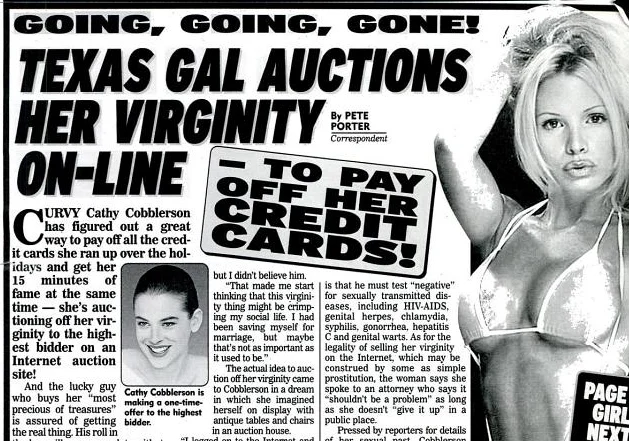
Virginity Auctioning is the online practice of listing one's claimed virginity for sale to the highest bidder, with the winning bidder promised sexual intercourse. The trend generated a decade of tabloid news cycles from 2004 through 2014, driven by dozens of high-profile listings on eBay, dating sites and escort agency pages, most of which ended in withdrawals, bans or publicity stunts.
Overview
Virginity Auctioning is the online practice of putting one's claimed virginity up for sale to the highest bidder, with the winning bidder promised sexual intercourse and listings appearing on eBay, Gumtree, dating sites, dedicated escort agency pages and even the Russian trading site 24au.ru through the late 2000s and early 2010s5.
The listings followed a similar arc across countries. Sellers were often young women, sometimes teenagers, who posted photos alongside a gynecologist's certificate and named a specific financial goal, such as university tuition or a family medical bill, before either withdrawing the offer, getting kicked off the host site or completing the deal privately1. Media attention drove most of the bids, and outlets like the Daily Mail turned individual sellers into repeat international news cycles that ran for months at a time4.
Gallery
Origin & Background
How It Spread
How to Use This Meme
The listings typically followed a common template. Sellers posed for glamour-style photos on a dating site, escort agency page or general auction platform, attached a gynecologist's certificate confirming virginity, set a starting bid in the low four figures and named a specific financial reason, most often university tuition, a family medical bill or debt1. Buyers were usually required to prove identity or wealth before the winning offer was accepted, and some sellers reserved a right of refusal or an unusual add-on such as dinner and a shopping trip written into the deal4. Actually going through with the sale was optional and rare; the majority of publicized auctions ended with a withdrawal, a platform ban or a media-driven cancellation.
Cultural Impact
Fun Facts
Alina Percea's winning bid started at just 90p and reached almost £4,400 within days before closing at £8,800 to a Bologna businessman she said "didn't look 45"2
Belgian seller Noelle was described on Yantra as 5ft 8in with a size 10 dress and a B cup, insisted the buyer take her shopping and to dinner and required sex to be with a condom4
Raffaella Fico, who left the Italian Grande Fratello house declaring she was a virgin, told Chi she was ready to "down a glass of wine" if the winning bidder turned out not to be her type (translated from Italian)3
The 1998 hoax site Our First Time predated the real auctions by six years and relied on a $5 age-verification paywall as its actual business model5
Alina Percea said she was inspired to run her auction after reading about American Natalie Dylan trying to sell her virginity for £2.5 million2
Derivatives & Variations
Virgins Wanted, a 2012 documentary and later reality show by Australian director Justin Sisely built around the parallel auctions of Brazilian Catarina Migliorini and Russian Alexander Stepanov[5]
Yantra Escort Agency's dedicated Belgian-student listing page, which promised to give five percent of Noelle's earnings to charity and included a mandatory dinner and shopping date[4]
Frequently Asked Questions
References (5)
- 1
- 2
- 3
- 4
- 5