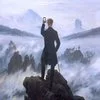
Wanderer Above The Sea Of Fog
Published March 30, 2026
Also known as: Wanderer above the Mist · Mountaineer in a Misty Landscape · Der Wanderer über dem Nebelmeer
Wanderer Above the Sea of Fog is a c. 1818 oil painting by German Romantic artist Caspar David Friedrich, depicting a man standing on a rocky peak with his back to the viewer, gazing over a fog-shrouded mountain landscape. The painting became one of the most widely reproduced images in Western art, appearing on everything from tote bags to video game artwork1. Online, it spread as an exploitable template where creators replace the foggy vista with modern landscapes, cityscapes, or absurd scenes, turning a 200-year-old masterpiece into a flexible meme format4.
Overview
The original painting shows a tall figure in a dark frock coat standing atop a craggy rock formation, his back turned toward the viewer. Below him stretches a vast sea of white fog punctuated by jagged mountain peaks. The composition places the viewer behind the wanderer, creating the sensation of sharing his vantage point over an immense, unknowable landscape1.
As a meme, the format works because of this exact framing. The wanderer's silhouette and the blank expanse of fog function like a built-in green screen. Creators swap out the foggy mountains for anything: city skylines, video game worlds, piles of dishes, social media feeds, or chaotic modern scenes. The figure's contemplative posture adds a layer of mock-seriousness to whatever absurd or mundane vista replaces the original4.
Gallery
Origin & Background
How It Spread
How to Use This Meme
The basic format involves placing the wanderer's silhouette (or a substitute figure) on the left side of the frame, looking out over a replaced background. Common approaches include:
Background swap: Keep the original wanderer but replace the foggy mountains with a new scene, anything from a messy bedroom to a stock market crash chart.
Character swap: Replace the wanderer with a different figure (anime character, public figure, cartoon character) while keeping the mountain backdrop or combining both swaps.
Mood contrast: The wanderer's contemplative pose paired with something mundane or ridiculous creates deadpan humor. The more serious the pose looks against the new context, the better the joke typically lands.
Cultural Impact
Fun Facts
Friedrich's brother drowned while ice-skating when Friedrich was thirteen, an event that likely shaped his lifelong fascination with sublime and dangerous natural landscapes1.
The painting's German title is *Der Wanderer über dem Nebelmeer*, which literally translates to "The Wanderer Over the Sea of Fog"4.
Friedrich didn't start painting in oils until his early thirties, unusually late for an artist of his era1.
Hitler loved Friedrich's work and used it to promote Nazi ideas of the German *Vaterland*, which tainted the painter's reputation for decades after World War II1.
The *Wanderer* has been at the Kunsthalle Hamburg since 1970, making it one of the museum's most visited works4.
Derivatives & Variations
City skyline edits:
The wanderer gazes over modern metropolises like Paris, New York, or Tokyo, swapping Romantic nature for urban sprawl[4].
Anime character swaps:
Artists replace Friedrich's wanderer with characters like Hatsune Miku, often timed to fandom anniversaries[4].
Absurdist versions:
The foggy mountains get replaced with piles of laundry, unread emails, or other modern sources of dread, played for deadpan comedy[4].
Video game references:
The composition has been mirrored in promotional art and fan edits for games like *The Legend of Zelda*, placing game protagonists in the wanderer's pose[1].
Frequently Asked Questions
References (5)
- 1
- 2
- 3
- 4Wanderer Above The Sea Of Fog - Know Your Memeencyclopedia
- 5Sinking of the RMS Lusitaniaencyclopedia