For a long time, memes were treated like the junk food of the internet.
Funny pictures. Inside jokes. Distractions passed between people who were supposed to be doing something else.
Then something changed.
Or maybe we just started noticing what had been happening all along.
Memes stopped simply reacting to culture. They started helping create it.
The phrases people use, the products they buy, the politicians they talk about, the celebrities they care about, the communities they join and even the assets they trade can now be influenced by ideas that began as jokes on the internet.
By the time the rest of culture notices, the meme has often already done its work.
The internet has its own language
Every community develops shortcuts.
Spend enough time with a group of friends and eventually a single word, image or facial expression can communicate an entire story.
The internet does the same thing at enormous scale.
A successful meme compresses an idea into something people immediately understand. The image is only part of it. What matters is the shared context behind it.
That is why explaining a meme to someone who doesn't understand it can feel strangely difficult. You aren't explaining a picture. You're explaining the culture surrounding it.
Biologist Richard Dawkins coined the term "meme" in 1976 to describe exactly this: a unit of culture that spreads and evolves the way a gene does, copied, mutated, selected for fitness. The internet didn't invent the concept. It just built the fastest transmission mechanism the idea has ever had.
A meme can become a new piece of language almost overnight.
Memes don't just spread. They mutate.
Traditional media is usually distributed in a finished form.
A movie is released. An advertisement airs. An article is published.
Memes work differently.
People are expected to change them.
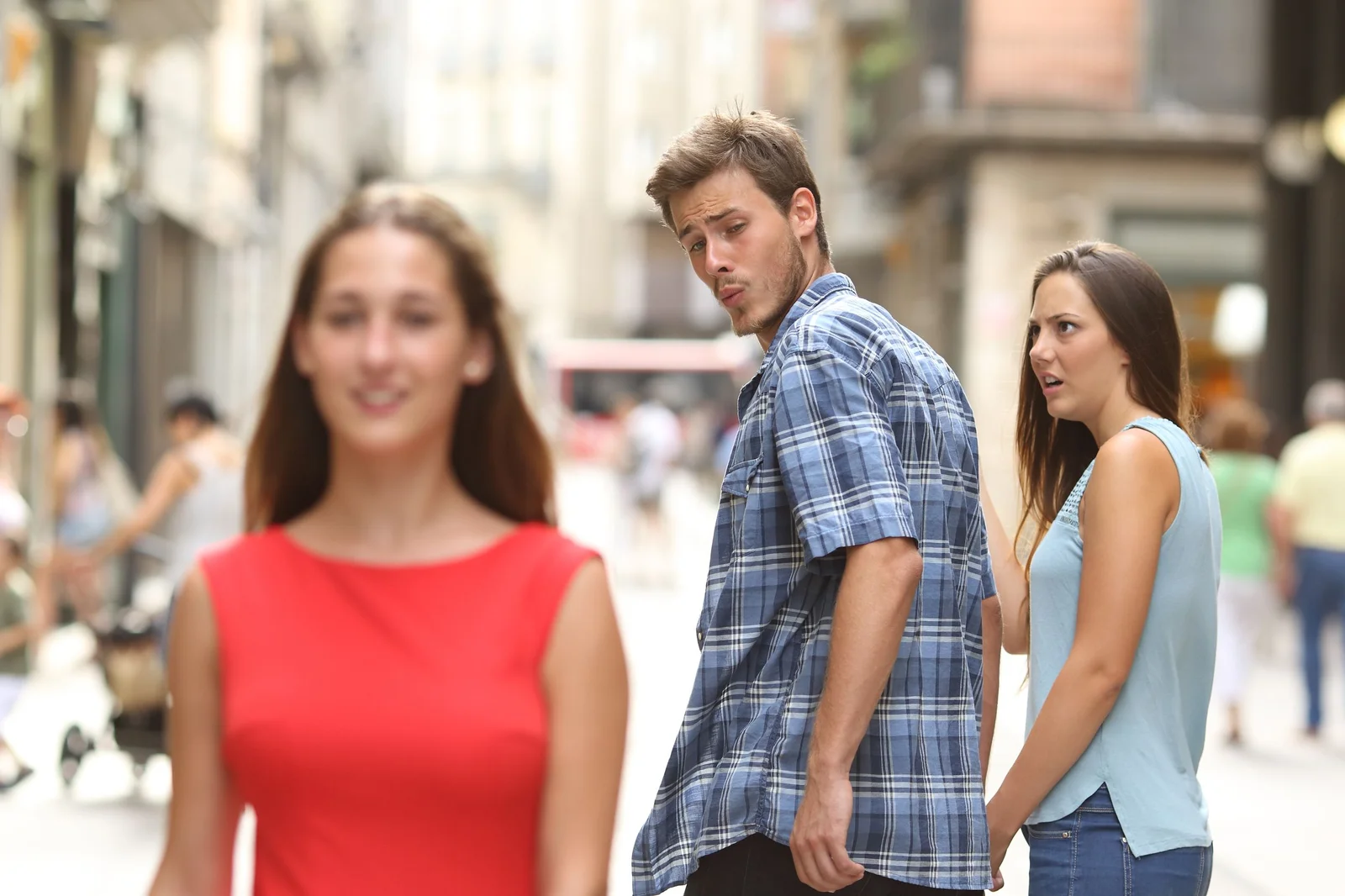
Someone makes the original joke. Someone else changes the caption. Another community adapts it to something completely different. Eventually thousands of versions may exist, and no single person controls what the meme means anymore.
That mutation isn't a flaw.
It's the mechanism.
The internet made copying nearly effortless, but people still choose to modify what they copy, and that choice is where the culture actually lives. The audience becomes part of the creative process. That makes memes unusually difficult to manufacture from the top down.
This is where brands usually arrive
Eventually, someone in a marketing department notices.
The meme is appearing everywhere. Engagement is exploding. People are speaking in a new language.
So the brand joins in.
Sometimes it works.
Often it feels like someone's dad walked into the group chat.
The problem isn't necessarily that brands are bad at memes. It's that by the time a cultural signal becomes obvious enough for a large organization to approve using it, the people who created it may already be moving on.
Memes operate at internet speed.
Companies operate at meeting speed.
That gap matters. A meme isn't simply an advertising format. It's something people feel ownership over, and participation, not distribution, is what makes it work. An institution borrowing the joke after the fact isn't joining the culture. It's referencing it.
Sometimes the joke escapes the internet
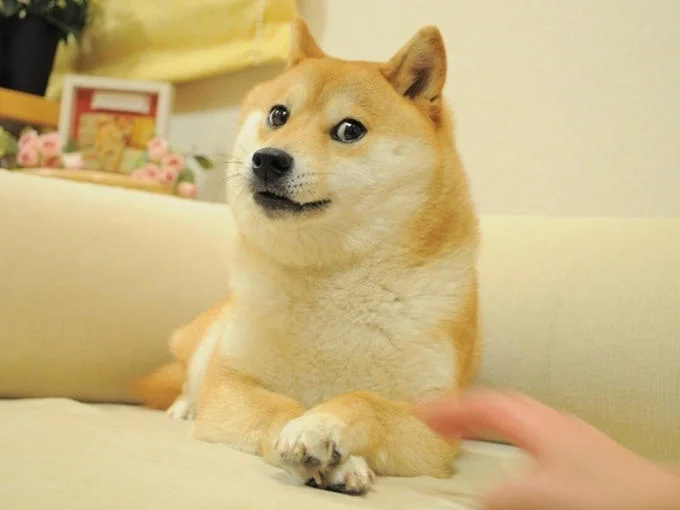
Doge is one of the clearest examples.
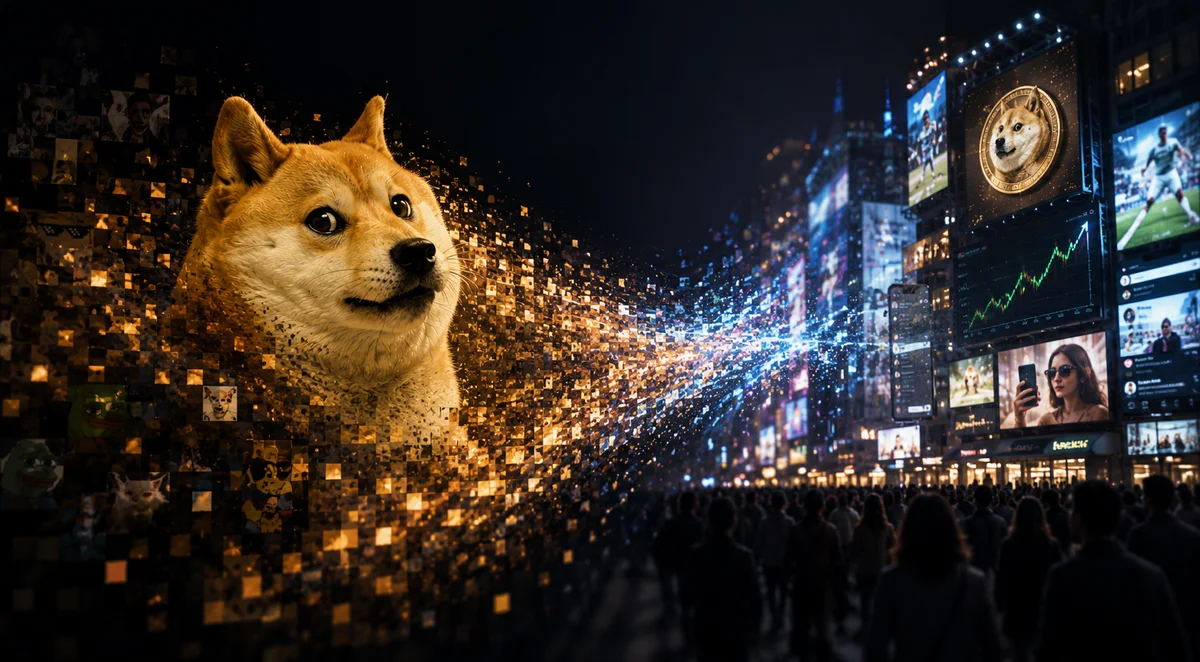
What began with photographs of a Shiba Inu became a recognizable meme language, then a cryptocurrency, then part of mainstream financial culture.
The path sounds absurd when written out.
That's exactly the point.
The cultural importance of Doge wasn't decided by a studio, publisher or advertising agency. Millions of people repeatedly reused and transformed an internet joke until it became something much larger than the original image.
And Doge isn't unique.
Memes have influenced political communication, entertainment, marketing, investing and the way online communities define themselves.
Not every meme changes the world.
Most disappear.
But the ones that survive can travel surprisingly far from where they started.
Culture can now move from the bottom up
For most of modern media history, culture had obvious gatekeepers.
Publishers decided what got printed.
Networks decided what got broadcast.
Record labels decided what got distributed.
Studios decided what reached theaters.
The internet didn't eliminate those institutions, but it created another route.
A teenager can make something ridiculous.
A small community can understand it.
Another community can remix it.
Millions of people can spread it.
And eventually the institutions that once decided what entered culture find themselves responding to something culture has already chosen.
That reversal is easy to underestimate.
It means some of the earliest signals of what people will care about tomorrow are hiding inside the things they're joking about today.
The joke is sometimes the signal
This doesn't mean every meme deserves a sociology paper.
Sometimes a funny picture is just a funny picture.
But collectively, memes create a record of what the internet notices. What frustrates people. What excites them. What they distrust. What they want. What they find ridiculous. And increasingly, what they believe.
By the time everyone else catches up, the internet may already be laughing at the next thing.