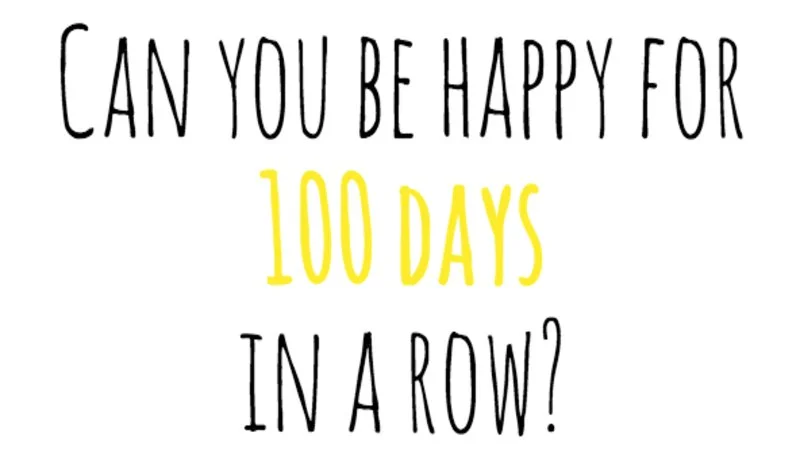
100 Happy Days Challenge
Published April 6, 2026
Also known as: #100HappyDays · 100 Happy Days
The 100 Happy Days Challenge is a social media experiment that dares participants to photograph one thing that makes them happy every single day for 100 consecutive days and share it online. Launched on December 30, 2013 by Zurich-based Dmitry Golubnichy, the challenge spread rapidly across Instagram, Twitter, and Facebook in early 2014, racking up over 9.2 million Instagram posts within five months3. Its most quoted stat: 71% of participants who signed up failed to finish, most claiming they didn't have time to be happy5.
Overview
The 100 Happy Days Challenge is straightforward: sign up on the project's website, then post one photo per day of something that made you happy. You pick your platform (Instagram, Twitter, Facebook) and tag it #100HappyDays. The challenge explicitly isn't a competition or a bragging exercise. The official site warns that if you're trying to make others jealous with your photos, "you lose without even starting"5.
Participants could also create a private hashtag known only to the organizers, or simply email their photos directly9. After completing all 100 days, the site offered to print participants' collected photos into a physical book10. The whole thing was pitched as a personal mindfulness exercise wrapped in a social media format, designed to train your brain to notice small daily joys rather than chase big Instagram-worthy moments.
Gallery
Origin & Background
How It Spread
How to Use This Meme
Visit 100happydays.com and register for the challenge
Choose your platform: Instagram, Twitter, Facebook, or email-only
Every day for 100 consecutive days, take a photo of something that made you happy
Post it with the hashtag #100HappyDays (or create a private hashtag and share it with the organizers)
Photos typically capture everyday moments: a good meal, time with friends, a pet, a sunset, a nap1
After completing all 100 days, request a printed book of your collected photos from the website10
Cultural Impact
Full History
Fun Facts
The challenge's official website let you submit photos via three methods: public hashtag, secret personal hashtag, or direct email. The secret hashtag option meant you could participate on social media without anyone knowing why you were posting9.
Participants who completed all 100 days could receive an official certificate and a printed photo book of their collected happy moments5.
The challenge predates the Ice Bucket Challenge by about seven months, making it one of the first major sustained social media challenges of the 2014 era4.
Psychology professor Sonja Lyubomirsky warned that the challenge could actually backfire, making some participants feel worse by highlighting gaps between their expected and actual happiness levels8.
One blogger who completed the challenge admitted to forgetting only twice in 100 days and simply extended the challenge by two extra days to compensate11.
Derivatives & Variations
Photo-A-Day Projects:
While George Taylor McKnight's 2004 daily photo initiative predated and likely influenced the format, the 100 Happy Days Challenge popularized the concept of daily photo documentation as a social media activity[3].
Group Challenges:
Some participants organized collective versions, completing the challenge in friend groups with shared Facebook threads or mailing lists[11].
Extended Challenges:
At least one participant continued past 100 days, reaching over 1,000 consecutive days of daily happiness photos on Tumblr[10].
Happiness Organization:
Golubnichy used the project's momentum to create an organization promoting happiness, funded by participant donations[10].
Frequently Asked Questions
References (15)
- 1
- 2Instagram Hashtagsarticle
- 3
- 4100 Happy Days Challenge - Know Your Memeencyclopedia
- 5List of Internet challengesencyclopedia
- 6
- 7
- 8Top Content on LinkedInarticle
- 9
- 10
- 11
- 12
- 13
- 14
- 15