Home›Memes›1000 Degree Knife Videos

Contents

  • Overview
  • Gallery
  • Origin
  • How It Spread
  • How to Use
  • Cultural Impact
  • Fun Facts
  • Derivatives
  • FAQ
  • References
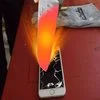
1000 Degree Knife Videos — A red-hot glowing knife cuts through a smartphone, demonstrating extreme heat with bright orange and red coloring.

1000 Degree Knife Videos

2016Video trend / challenge formatdead

Published April 6, 2026

Also known as: Glowing Knife Challenge · 1000 Degree Knife Challenge · EXPERIMENT Glowing 1000 Degree Knife

1,000 Degree Knife Videos were a YouTube trend that exploded in late 2016 and early 2017, where creators heated kitchen knives until they glowed red-hot and then sliced through various everyday objects on camera. The format turned basic thermal physics into hypnotic content, racking up hundreds of millions of views across dozens of channels before the novelty wore thin2.

youtube viral participatory video memes sensory content memes 2016 memes

Overview

The format was simple: heat a cheap stainless steel knife with a blowtorch until the blade glows bright orange, then press it against an object and film what happens. Bananas, Coca-Cola bottles, lighters, crayons, stress balls, phones. The appeal came from the unpredictability of each object's reaction to extreme heat. Some items melted cleanly, others hissed and sputtered, and a few produced dramatic smoke and char2.

Titles followed a rigid formula: "EXPERIMENT: Glowing 1000 Degree Knife VS [Object]." The thumbnail always featured the glowing blade next to whatever was about to be destroyed1. This consistency made the format instantly recognizable in YouTube recommendations, which helped fuel its algorithmic spread.

Origin & Background

Platform
YouTube
Key People
MrGear, various YouTube creators
Date
2016

The trend built on a longer tradition of destruction-based YouTube content, following in the wake of "Will It Blend?" and the Finnish Hydraulic Press Channel. By late 2016, creators like MrGear began uploading videos specifically branded around the "1000 degree knife" concept. The format caught fire quickly because it was cheap to produce (a kitchen knife, a blowtorch, and household items) and delivered immediate visual payoff2.

The "1000 degrees" claim was often approximate. According to analysis of the knife coloring, a bright orange glow typically indicates temperatures between 1,200°F and 1,500°F, while a dull red might only be around 900°F. The round number made for better titles2.

How It Spread

The trend spread rapidly through YouTube's recommendation algorithm during the winter of 2016-2017. Once a few videos hit millions of views, dozens of copycat channels appeared, each trying increasingly bizarre objects. The format also circulated as clips on platforms like 9GAG1.

At its peak, individual 1000 degree knife videos were pulling tens of millions of views. The content crossed over into compilation culture, with "best of" supercuts collecting the most dramatic reactions. The trend also sparked safety debates, as many creators filmed without proper protective equipment. A heated knife contacting moisture-rich food can spit boiling liquid and hot sugar, which sticks to skin on contact2.

The science behind the videos added a layer of fascination for some viewers. When the superheated blade touches something with high water content like a banana, the moisture flash-converts to steam before the knife even makes full contact, creating a pocket of vapor through the Leidenfrost effect. The sugars in the food undergo rapid thermal decomposition rather than normal caramelization, producing thick smoke and black carbon residue2.

By mid-2017, the trend had largely burned itself out. There are only so many objects to cut before the formula gets stale. But the format helped establish "experimental destruction" as a permanent YouTube genre, paving the way for later content in the product-testing and oddly satisfying categories2.

How to Use This Meme

The 1000 degree knife format typically follows a template:

1

Select a cheap stainless steel kitchen knife (high-quality carbon steel knives are ruined by this process, as the heat destroys the blade's temper)2

2

Heat the blade with a blowtorch until it glows orange

3

Place the target object on a heat-safe surface

4

Slowly press or slice the hot blade into the object while filming

5

Title the video "EXPERIMENT: Glowing 1000 Degree Knife VS [Object]"

Cultural Impact

The 1000 degree knife trend represented a specific moment in YouTube history when raw, unpolished experimentation drove massive viewership. Before the platform's shift toward polished, personality-driven content, audiences were drawn to simple "what happens when X meets Y" premises2.

The trend also drew criticism from the knife-making and blacksmithing community. Professional bladesmiths pointed out that heating a finished blade to these temperatures destroys the grain structure of the steel, rendering it permanently soft and useless once cooled2.

The format contributed to broader conversations about dangerous YouTube trends and creator responsibility, as the combination of open flames, superheated metal, and explosive steam presented real burn risks that many videos glossed over2.

Fun Facts

The knives used were almost always cheap stainless steel because the process permanently ruins the blade. Once cooled, the metal is too soft to hold an edge2.

Burning bananas don't smell like banana bread. They produce an acrid smoke from rapid sugar decomposition that can linger for days and set off smoke alarms2.

The "glow" of the knife is black-body radiation, meaning the metal is literally emitting visible light due to its temperature2.

The high-pitched whistling sound in many videos comes from water inside plant cells converting to steam so fast it tears the cell walls apart2.

Derivatives & Variations

1000 Degree Knife vs. Bananas

— One of the most popular specific matchups, notable for the dramatic carbonization and steam effects produced by the fruit's high water content[2]

1000 Degree Knife vs. Coca-Cola

— Another widely-viewed variant that circulated on YouTube and 9GAG[1]

1000 Degree Ball

— A spinoff format replacing the knife with a glowing metal ball (nickel ball), following similar destruction premises[2]

Frequently Asked Questions

It's a YouTube video trend from 2016-2017 where creators heated knives to extreme temperatures and filmed themselves cutting through everyday objects like bananas, Coca-Cola bottles, and other household items2.

The trend originated on YouTube in late 2016, popularized by channels like MrGear, building on the existing tradition of destruction-based content like "Will It Blend?" and hydraulic press videos2.

The videos don't carry symbolic meaning. They're straightforward experimental destruction content, driven by curiosity about how different materials react to extreme heat2.

Heat a cheap knife with a blowtorch until it glows, then film it slicing into an object. Title the video "EXPERIMENT: Glowing 1000 Degree Knife VS [Object]"2.

No. The trend peaked in early 2017 and died out by mid-2017 as the novelty wore off. It's now a nostalgic reference to a specific era of YouTube content2.

References (3)

  1. 1
    Best Funny video Memes - 9GAGarticle
  2. 2
    Zineencyclopedia
  3. 3
    Why the 1000 Degree Knife vs Bananas Challenge Still Fascinates Us - Snomotoarticle

Quick Info

Year
2016
Origin
YouTube
Type
Video trend / challenge format
Status
dead
Key People
MrGearearly popularizervarious YouTube creators
Popularity
Niche0/100Viral

More YouTube Viral Videos Memes

  • Double Rainbow
  • Chocolate Rain
  • Leave Britney Alone
  • Charlie Bit My Finger
  • 30 Dollar Particle Accelerator
  • Why I Hate Religion But I Love Jesus
  • Angels Grapefruit Technique
  • History of Japan
  • Kelly's "Shoes"
  • Kung Fury
  • Musical Tesla Coil
  • Nintendo 64 Kids
View all YouTube Viral Videos memes →
Browse MemesTopicsCreatorsTrendingPlayAboutLegalPrivacy

© 2026 meme.com