Commencement Speeches

2005Viral video / speech genreactive

Also known as: Graduation Speeches · Commencement Addresses

Commencement Speeches are graduation addresses that became viral YouTube content since Steve Jobs' 2005 Stanford talk, spawning an annual tradition of celebrities delivering quotable, shareable life advice to cap-and-gown audiences.

Commencement speeches are graduation addresses delivered at high school and college ceremonies that, since the mid-2000s rise of YouTube, have become a recurring source of viral content online1. From Steve Jobs' 2005 Stanford address to Kermit the Frog speaking at the University of Maryland in 2025, these speeches go viral for their mix of humor, inspiration, and occasionally brutal honesty3. The format peaked as an annual internet tradition where celebrities, politicians, and public figures compete to deliver the most quotable, shareable life advice to a captive audience of cap-and-gown-wearing graduates.

TL;DR

Commencement speeches are graduation addresses delivered at high school and college ceremonies that, since the mid-2000s rise of YouTube, have become a recurring source of viral content online.

Overview

Commencement speeches are formal addresses given as parting words of wisdom to graduating classes at schools and universities5. While the tradition stretches back centuries, the internet age turned these speeches into a seasonal content genre. Every May and June, a fresh crop of speeches by actors, politicians, comedians, tech moguls, and the occasional Muppet floods YouTube and social media feeds3.

The appeal is straightforward: famous people dispensing life advice in a high-stakes emotional setting, often with humor, sometimes with tears, and occasionally with takes so bizarre they become memes in their own right4. The best ones get clipped, quoted, turned into motivational graphics, and shared millions of times. The worst ones get roasted.

The commencement speech tradition dates back to Harvard's first commencement in 1642, when Massachusetts Governor John Winthrop attended a ceremony for just nine graduates1. Early commencements weren't about guest speakers at all. Students themselves gave orations in Hebrew, Greek, and Latin, plus formal academic debates called "disputations"1. Anthony Grafton, a professor of intellectual history at Princeton, noted that "oratory was one of the central things that students were learning, and one of the central skills of the university"1.

As oratory lost its place as a core academic skill over the centuries, student performances shrank and guest speakers filled the gap1. At first, these were mostly academics and statesmen. By the 2000s, schools like Harvard featured speakers with celebrity backgrounds (J.K. Rowling, Bill Gates) about as often as world leaders and professors1.

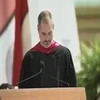
The first commencement speech to break through as viral online content was Apple co-founder Steve Jobs' address to Stanford University's graduating class on June 12, 20055. The video was first uploaded to YouTube via Apple History's channel on March 6, 2006, with Stanford University's own channel posting another version on March 7, 20085. Jobs' speech received the bulk of its online attention after his death in October 2011, with both versions racking up more than 27 million combined views by May 20145.

Origin & Background

Platform
YouTube (viral distribution), universities (original venue)
Key People
Various speakers; Steve Jobs
Date
2005 (first major viral instance)

The commencement speech tradition dates back to Harvard's first commencement in 1642, when Massachusetts Governor John Winthrop attended a ceremony for just nine graduates. Early commencements weren't about guest speakers at all. Students themselves gave orations in Hebrew, Greek, and Latin, plus formal academic debates called "disputations". Anthony Grafton, a professor of intellectual history at Princeton, noted that "oratory was one of the central things that students were learning, and one of the central skills of the university".

As oratory lost its place as a core academic skill over the centuries, student performances shrank and guest speakers filled the gap. At first, these were mostly academics and statesmen. By the 2000s, schools like Harvard featured speakers with celebrity backgrounds (J.K. Rowling, Bill Gates) about as often as world leaders and professors.

The first commencement speech to break through as viral online content was Apple co-founder Steve Jobs' address to Stanford University's graduating class on June 12, 2005. The video was first uploaded to YouTube via Apple History's channel on March 6, 2006, with Stanford University's own channel posting another version on March 7, 2008. Jobs' speech received the bulk of its online attention after his death in October 2011, with both versions racking up more than 27 million combined views by May 2014.

How It Spread

On January 8, 2006, YouTuber Braddma uploaded Will Ferrell's 2003 Harvard commencement speech in five parts. The speech landed on multiple "best commencement speeches" lists, including ones published by Rolling Stone and AOL Jobs, and the first clip surpassed 1.4 million views by 2014. That same year, YouTuber Espank9 posted Seth MacFarlane's 2006 Harvard address, which made news because MacFarlane delivered portions in the voices of Family Guy characters Stewie, Peter, and Quagmire. The Stewie clip alone hit 2.9 million views.

Oprah Winfrey's 2008 Stanford commencement address went up on YouTube via the university's channel and pulled over 1.2 million views. But the format really exploded into broader internet culture in June 2012, when Wellesley High School English teacher David McCullough delivered his now-famous "You're Not Special" speech. McCullough told graduates: "Contrary to what your u9 soccer trophy suggests, your glowing seventh grade report card, despite every assurance of a certain corpulent purple dinosaur, that nice Mister Rogers and your batty Aunt Sylvia... you're nothing special". The speech was covered by The Huffington Post, The Daily Beast, and dozens of other outlets, collecting over 2.2 million YouTube views.

Also in 2012, the vlogger duo Rhett & Link uploaded a commencement speech to their alma mater, Harnett Central High School, where they performed part of the address as a musical number, earning over 860,000 views.

How to Use This Meme

Commencement speeches aren't a traditional meme template with a fixed format. Instead, they function as a recurring viral genre with a few common patterns:

People typically share clips or quotes from commencement speeches in a few ways:

1

The motivational screenshot — A still frame of the speaker at the podium with an overlaid quote, shared on Instagram, LinkedIn, or Twitter as inspirational content.

2

The "best commencement speeches" listicle — Roundup articles and YouTube compilations that rank speeches, often resurfacing annually during graduation season.

3

The reaction clip — Short video excerpts of the funniest or most shocking moments (Will Ferrell's jokes, McCullough's "you're not special" line) shared as standalone reaction content.

4

The counter-narrative — Speeches like McCullough's get shared specifically because they subvert the expected platitudes, used as a commentary on participation trophies and entitlement culture.

Cultural Impact

NPR built an entire archive of 354 of the best commencement speeches, with almost half delivered after 2010. The imbalance reflects not just better recording technology but "changes in which jobs are considered important, whose advice is considered valuable, where we find counsel and who we most admire".

A satirical guide published in the New York Times as early as 1970 outlined the formula (opening joke, thank the parents, reference Socrates, mention crossroads and life's disappointments), showing that even half a century ago the genre was recognizable enough to parody.

The commencement speech format has spawned hit books and viral videos as its own advice-filled genre. Scott Jaschik, editor of Inside Higher Ed, noted that "students expect somebody who is reasonably famous and who will inspire them in some way" and that "some people really make an industry out of it and give five or six speeches a year".

Google Trends data shows search queries for "commencement speech" spiked notably in October 2011 after Steve Jobs' death, well outside the typical May-June graduation season. This confirmed that viral commencement speeches have a shelf life far beyond their original delivery date.

The tradition also became a reflection of institutional prestige. The caliber of the speaker is "often viewed as a reflection on the universities themselves," with schools competing for the most high-profile bookings.

Full History

The annual cycle of viral commencement speeches solidified between 2014 and 2017, when each graduation season produced multiple breakout moments. In May 2014, Sandra Bullock surprised the graduating class of Warren Easton Charter High School in New Orleans with an unannounced commencement address. Bullock had donated money to the school after Hurricane Katrina in 2005 and told graduates that the advice she gives her four-year-old son daily is exactly what she wished someone had told her when she was young. That same week, Charlie Day of *It's Always Sunny in Philadelphia* gave the commencement at his alma mater Merrimack College, earning 400,000 views within 48 hours. Day called the graduation robes something that made everyone look like "some sort of medieval pastry chef" before pivoting to earnest advice: "You do not have to be fearless. Just don't let fear stop you".

The 2015 season ramped up the star power. Kanye West addressed the Art Institute of Chicago graduates and received an honorary Doctorate of Art on May 11, with a SoundCloud recording of his speech pulling over 87,000 plays within days. That same day, First Lady Michelle Obama delivered the commencement at Tuskegee University, encouraging graduates to stay strong when people "make assumptions about who they think you are based on their limited notion of the world". Maya Rudolph spoke at Tulane, Jimmy Buffett at the University of Miami, and Neil deGrasse Tyson at UMass Amherst.

By 2016, the commencement speech had become an annual arms race among universities, with schools one-upping each other and often announcing bookings months in advance. Facebook COO Sheryl Sandberg spoke at UC Berkeley, Mitt Romney at Trine University, Elizabeth Warren at Bridgewater State, and Hamilton creator Lin-Manuel Miranda at the University of Pennsylvania, all on May 14 alone. President Barack Obama gave his commencement address at Rutgers the following day.

The 2017 class saw an even wider range of speakers, from politicians like Joe Biden and Hillary Clinton to business leaders like Mark Zuckerberg and Howard Schultz, to actors like Robert De Niro and Helen Mirren, to comedians like Hannibal Buress and Will Ferrell making his second appearance.

Several themes run through the most-shared speeches. Steve Jobs told Stanford graduates, "Your time is limited, so don't waste it living someone else's life". J.K. Rowling spoke about the liberating power of failure: "I was set free". Stephen Colbert offered a lesson from improv comedy: "You are not the most important person in the scene. Everybody else is". Denzel Washington urged graduates not to fear thinking outside the box. These quotes became standalone content, stripped from their speeches and shared as image macros, text posts, and short clips across every platform.

The tradition kept evolving. In 2019, Morehouse College speaker and billionaire investor Robert Smith pledged to pay off the student loan debt of his entire audience of over 400 graduates, donating $34 million to the historically Black college. That moment went viral for a completely different reason than any speech before it.

In 2025, the most talked-about commencement speaker wasn't even human. Kermit the Frog addressed the University of Maryland in a tiny cap and gown, joking, "You're all here to listen to a frog in a very tiny cap and gown give a commencement speech" before advising graduates to "leap together". Jennifer Coolidge told Emerson College graduates to "frigging go for it," while Jane Fonda urged USC Annenberg graduates to "vote all the way down the ballot," and LeVar Burton spoke about resilience at Howard University.

Fun Facts

Harvard's first commencement in 1642 was such a hit that historian Samuel Eliot Morison described the audience as "suitably impressed and exceedingly fatigued" after students proved their skills in "three learned tongues," with dinner following at eleven o'clock.

Early Harvard commencements were open to the public and served as "the great gala day of the colony" for nearly two centuries, drawing not just alumni but the general populace.

Some universities still maintain the tradition of having a speech delivered in Latin, though these days a translation is usually provided, along with instructions about when to laugh.

McCullough's "you're not special" speech wasn't his first viral commencement moment. In 2006, he told Wellesley graduates to "carpe the heck out of every diem," a line he referenced again in his 2012 address.

Charlie Day described his own speaking voice as sounding like "a ten-year-old with a smoking problem" during his Merrimack College address.

Derivatives & Variations

"You're Not Special" meme

— David McCullough's 2012 Wellesley speech became its own standalone meme, with the "you're not special" line used as a reaction to participation trophy culture and helicopter parenting discourse[6].

Motivational quote graphics

— Steve Jobs' "stay hungry, stay foolish" and other commencement one-liners are stripped from their speeches and circulated as standalone image macros across Pinterest, Instagram, and LinkedIn[9].

Commencement speech parodies

— Will Ferrell's 2003 Harvard speech set the template for comedic commencement addresses that are more performance than advice, including Key & Peele sketches and other comedy takes on the genre[4].

"Best of" compilations

— YouTube compilations and listicles ranking the greatest commencement speeches are a recurring content format, with outlets like NPR, Rolling Stone, CNN, and TIME all publishing definitive lists[2][4].

Frequently Asked Questions

CommencementSpeeches

2005Viral video / speech genreactive

Also known as: Graduation Speeches · Commencement Addresses

Commencement Speeches are graduation addresses that became viral YouTube content since Steve Jobs' 2005 Stanford talk, spawning an annual tradition of celebrities delivering quotable, shareable life advice to cap-and-gown audiences.

Commencement speeches are graduation addresses delivered at high school and college ceremonies that, since the mid-2000s rise of YouTube, have become a recurring source of viral content online. From Steve Jobs' 2005 Stanford address to Kermit the Frog speaking at the University of Maryland in 2025, these speeches go viral for their mix of humor, inspiration, and occasionally brutal honesty. The format peaked as an annual internet tradition where celebrities, politicians, and public figures compete to deliver the most quotable, shareable life advice to a captive audience of cap-and-gown-wearing graduates.

TL;DR

Commencement speeches are graduation addresses delivered at high school and college ceremonies that, since the mid-2000s rise of YouTube, have become a recurring source of viral content online.

Overview

Commencement speeches are formal addresses given as parting words of wisdom to graduating classes at schools and universities. While the tradition stretches back centuries, the internet age turned these speeches into a seasonal content genre. Every May and June, a fresh crop of speeches by actors, politicians, comedians, tech moguls, and the occasional Muppet floods YouTube and social media feeds.

The appeal is straightforward: famous people dispensing life advice in a high-stakes emotional setting, often with humor, sometimes with tears, and occasionally with takes so bizarre they become memes in their own right. The best ones get clipped, quoted, turned into motivational graphics, and shared millions of times. The worst ones get roasted.

The commencement speech tradition dates back to Harvard's first commencement in 1642, when Massachusetts Governor John Winthrop attended a ceremony for just nine graduates. Early commencements weren't about guest speakers at all. Students themselves gave orations in Hebrew, Greek, and Latin, plus formal academic debates called "disputations". Anthony Grafton, a professor of intellectual history at Princeton, noted that "oratory was one of the central things that students were learning, and one of the central skills of the university".

As oratory lost its place as a core academic skill over the centuries, student performances shrank and guest speakers filled the gap. At first, these were mostly academics and statesmen. By the 2000s, schools like Harvard featured speakers with celebrity backgrounds (J.K. Rowling, Bill Gates) about as often as world leaders and professors.

The first commencement speech to break through as viral online content was Apple co-founder Steve Jobs' address to Stanford University's graduating class on June 12, 2005. The video was first uploaded to YouTube via Apple History's channel on March 6, 2006, with Stanford University's own channel posting another version on March 7, 2008. Jobs' speech received the bulk of its online attention after his death in October 2011, with both versions racking up more than 27 million combined views by May 2014.

Origin & Background

Platform
YouTube (viral distribution), universities (original venue)
Key People
Various speakers; Steve Jobs
Date
2005 (first major viral instance)

The commencement speech tradition dates back to Harvard's first commencement in 1642, when Massachusetts Governor John Winthrop attended a ceremony for just nine graduates. Early commencements weren't about guest speakers at all. Students themselves gave orations in Hebrew, Greek, and Latin, plus formal academic debates called "disputations". Anthony Grafton, a professor of intellectual history at Princeton, noted that "oratory was one of the central things that students were learning, and one of the central skills of the university".

As oratory lost its place as a core academic skill over the centuries, student performances shrank and guest speakers filled the gap. At first, these were mostly academics and statesmen. By the 2000s, schools like Harvard featured speakers with celebrity backgrounds (J.K. Rowling, Bill Gates) about as often as world leaders and professors.

The first commencement speech to break through as viral online content was Apple co-founder Steve Jobs' address to Stanford University's graduating class on June 12, 2005. The video was first uploaded to YouTube via Apple History's channel on March 6, 2006, with Stanford University's own channel posting another version on March 7, 2008. Jobs' speech received the bulk of its online attention after his death in October 2011, with both versions racking up more than 27 million combined views by May 2014.

How It Spread

On January 8, 2006, YouTuber Braddma uploaded Will Ferrell's 2003 Harvard commencement speech in five parts. The speech landed on multiple "best commencement speeches" lists, including ones published by Rolling Stone and AOL Jobs, and the first clip surpassed 1.4 million views by 2014. That same year, YouTuber Espank9 posted Seth MacFarlane's 2006 Harvard address, which made news because MacFarlane delivered portions in the voices of Family Guy characters Stewie, Peter, and Quagmire. The Stewie clip alone hit 2.9 million views.

Oprah Winfrey's 2008 Stanford commencement address went up on YouTube via the university's channel and pulled over 1.2 million views. But the format really exploded into broader internet culture in June 2012, when Wellesley High School English teacher David McCullough delivered his now-famous "You're Not Special" speech. McCullough told graduates: "Contrary to what your u9 soccer trophy suggests, your glowing seventh grade report card, despite every assurance of a certain corpulent purple dinosaur, that nice Mister Rogers and your batty Aunt Sylvia... you're nothing special". The speech was covered by The Huffington Post, The Daily Beast, and dozens of other outlets, collecting over 2.2 million YouTube views.

Also in 2012, the vlogger duo Rhett & Link uploaded a commencement speech to their alma mater, Harnett Central High School, where they performed part of the address as a musical number, earning over 860,000 views.

How to Use This Meme

Commencement speeches aren't a traditional meme template with a fixed format. Instead, they function as a recurring viral genre with a few common patterns:

People typically share clips or quotes from commencement speeches in a few ways:

1

The motivational screenshot — A still frame of the speaker at the podium with an overlaid quote, shared on Instagram, LinkedIn, or Twitter as inspirational content.

2

The "best commencement speeches" listicle — Roundup articles and YouTube compilations that rank speeches, often resurfacing annually during graduation season.

3

The reaction clip — Short video excerpts of the funniest or most shocking moments (Will Ferrell's jokes, McCullough's "you're not special" line) shared as standalone reaction content.

4

The counter-narrative — Speeches like McCullough's get shared specifically because they subvert the expected platitudes, used as a commentary on participation trophies and entitlement culture.

Cultural Impact

NPR built an entire archive of 354 of the best commencement speeches, with almost half delivered after 2010. The imbalance reflects not just better recording technology but "changes in which jobs are considered important, whose advice is considered valuable, where we find counsel and who we most admire".

A satirical guide published in the New York Times as early as 1970 outlined the formula (opening joke, thank the parents, reference Socrates, mention crossroads and life's disappointments), showing that even half a century ago the genre was recognizable enough to parody.

The commencement speech format has spawned hit books and viral videos as its own advice-filled genre. Scott Jaschik, editor of Inside Higher Ed, noted that "students expect somebody who is reasonably famous and who will inspire them in some way" and that "some people really make an industry out of it and give five or six speeches a year".

Google Trends data shows search queries for "commencement speech" spiked notably in October 2011 after Steve Jobs' death, well outside the typical May-June graduation season. This confirmed that viral commencement speeches have a shelf life far beyond their original delivery date.

The tradition also became a reflection of institutional prestige. The caliber of the speaker is "often viewed as a reflection on the universities themselves," with schools competing for the most high-profile bookings.

Full History

The annual cycle of viral commencement speeches solidified between 2014 and 2017, when each graduation season produced multiple breakout moments. In May 2014, Sandra Bullock surprised the graduating class of Warren Easton Charter High School in New Orleans with an unannounced commencement address. Bullock had donated money to the school after Hurricane Katrina in 2005 and told graduates that the advice she gives her four-year-old son daily is exactly what she wished someone had told her when she was young. That same week, Charlie Day of *It's Always Sunny in Philadelphia* gave the commencement at his alma mater Merrimack College, earning 400,000 views within 48 hours. Day called the graduation robes something that made everyone look like "some sort of medieval pastry chef" before pivoting to earnest advice: "You do not have to be fearless. Just don't let fear stop you".

The 2015 season ramped up the star power. Kanye West addressed the Art Institute of Chicago graduates and received an honorary Doctorate of Art on May 11, with a SoundCloud recording of his speech pulling over 87,000 plays within days. That same day, First Lady Michelle Obama delivered the commencement at Tuskegee University, encouraging graduates to stay strong when people "make assumptions about who they think you are based on their limited notion of the world". Maya Rudolph spoke at Tulane, Jimmy Buffett at the University of Miami, and Neil deGrasse Tyson at UMass Amherst.

By 2016, the commencement speech had become an annual arms race among universities, with schools one-upping each other and often announcing bookings months in advance. Facebook COO Sheryl Sandberg spoke at UC Berkeley, Mitt Romney at Trine University, Elizabeth Warren at Bridgewater State, and Hamilton creator Lin-Manuel Miranda at the University of Pennsylvania, all on May 14 alone. President Barack Obama gave his commencement address at Rutgers the following day.

The 2017 class saw an even wider range of speakers, from politicians like Joe Biden and Hillary Clinton to business leaders like Mark Zuckerberg and Howard Schultz, to actors like Robert De Niro and Helen Mirren, to comedians like Hannibal Buress and Will Ferrell making his second appearance.

Several themes run through the most-shared speeches. Steve Jobs told Stanford graduates, "Your time is limited, so don't waste it living someone else's life". J.K. Rowling spoke about the liberating power of failure: "I was set free". Stephen Colbert offered a lesson from improv comedy: "You are not the most important person in the scene. Everybody else is". Denzel Washington urged graduates not to fear thinking outside the box. These quotes became standalone content, stripped from their speeches and shared as image macros, text posts, and short clips across every platform.

The tradition kept evolving. In 2019, Morehouse College speaker and billionaire investor Robert Smith pledged to pay off the student loan debt of his entire audience of over 400 graduates, donating $34 million to the historically Black college. That moment went viral for a completely different reason than any speech before it.

In 2025, the most talked-about commencement speaker wasn't even human. Kermit the Frog addressed the University of Maryland in a tiny cap and gown, joking, "You're all here to listen to a frog in a very tiny cap and gown give a commencement speech" before advising graduates to "leap together". Jennifer Coolidge told Emerson College graduates to "frigging go for it," while Jane Fonda urged USC Annenberg graduates to "vote all the way down the ballot," and LeVar Burton spoke about resilience at Howard University.

Fun Facts

Harvard's first commencement in 1642 was such a hit that historian Samuel Eliot Morison described the audience as "suitably impressed and exceedingly fatigued" after students proved their skills in "three learned tongues," with dinner following at eleven o'clock.

Early Harvard commencements were open to the public and served as "the great gala day of the colony" for nearly two centuries, drawing not just alumni but the general populace.

Some universities still maintain the tradition of having a speech delivered in Latin, though these days a translation is usually provided, along with instructions about when to laugh.

McCullough's "you're not special" speech wasn't his first viral commencement moment. In 2006, he told Wellesley graduates to "carpe the heck out of every diem," a line he referenced again in his 2012 address.

Charlie Day described his own speaking voice as sounding like "a ten-year-old with a smoking problem" during his Merrimack College address.

Derivatives & Variations

"You're Not Special" meme

— David McCullough's 2012 Wellesley speech became its own standalone meme, with the "you're not special" line used as a reaction to participation trophy culture and helicopter parenting discourse[6].

Motivational quote graphics

— Steve Jobs' "stay hungry, stay foolish" and other commencement one-liners are stripped from their speeches and circulated as standalone image macros across Pinterest, Instagram, and LinkedIn[9].

Commencement speech parodies

— Will Ferrell's 2003 Harvard speech set the template for comedic commencement addresses that are more performance than advice, including Key & Peele sketches and other comedy takes on the genre[4].

"Best of" compilations

— YouTube compilations and listicles ranking the greatest commencement speeches are a recurring content format, with outlets like NPR, Rolling Stone, CNN, and TIME all publishing definitive lists[2][4].

Frequently Asked Questions