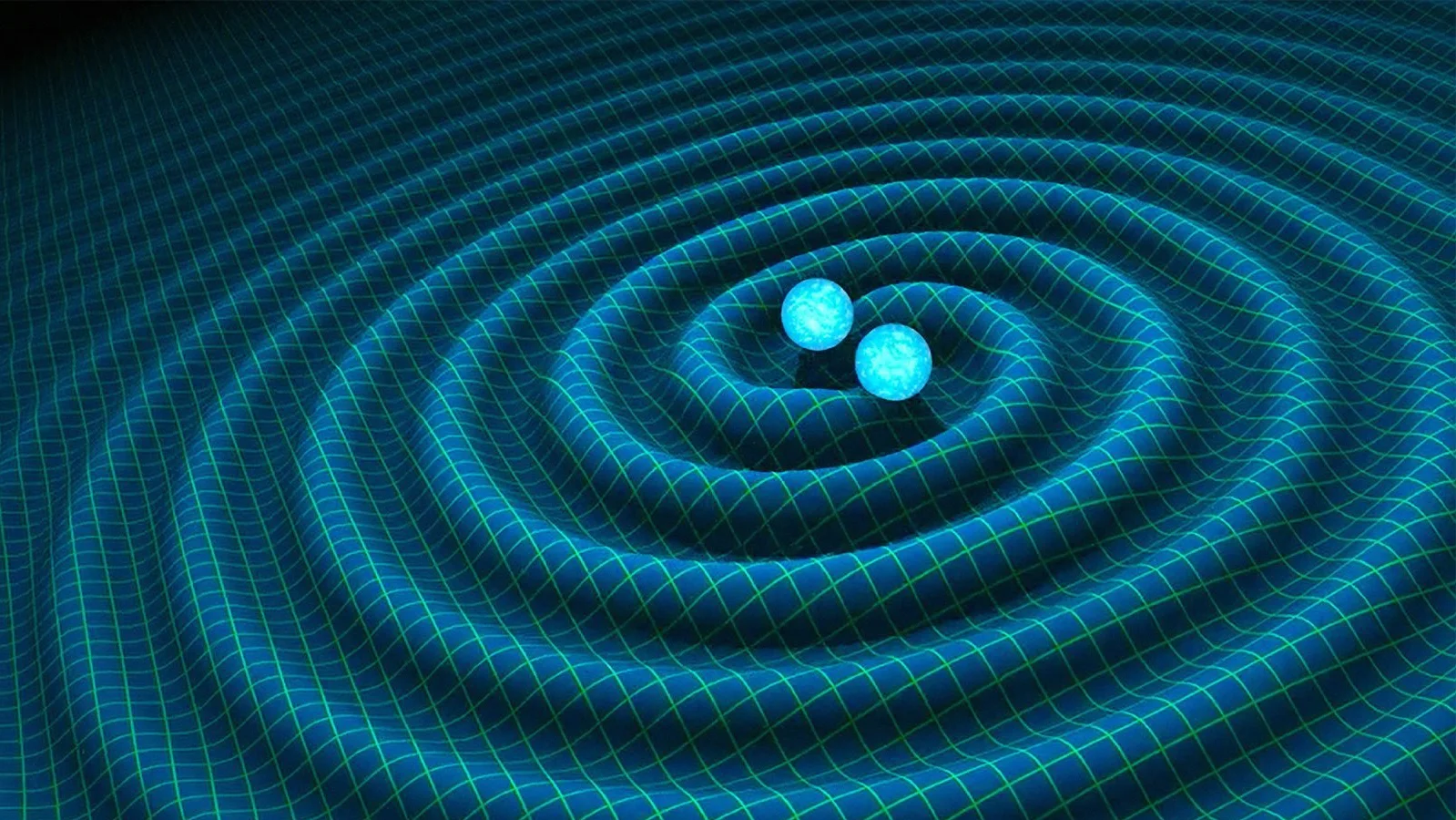
2016 Gravitational Wave Observation
Published August 15, 2026
The 2016 Gravitational Wave Observation is the first direct detection of gravitational waves, announced by LIGO on February 11, 2016 from a signal picked up in September 2015. The finding confirmed Einstein's century-old prediction and set off a wave of coverage across Reddit, Twitter, xkcd, and mainstream news.
Overview
The 2016 Gravitational Wave Observation refers to the first direct detection of gravitational waves, announced by the Laser Interferometer Gravitational-Wave Observatory (LIGO) on February 11, 20161. Massive dense objects like black holes and neutron stars send ripples through the fabric of spacetime as they accelerate, and LIGO exists specifically to measure those ripples2. The signal that made history came from two black holes colliding and merging into one, releasing about three solar masses of matter as gravitational wave energy in roughly a tenth of a second3.
LIGO's twin observatories in Livingston, Louisiana and Hanford, Washington each have 2.5 mile long laser arms sensitive enough to detect a change in length smaller than the width of a proton4. When the signal was decoded, the two black holes turned out to be 26 and 39 times the mass of the Sun, merging into a single black hole with 62 solar masses about 1.3 billion light-years away1. LIGO reported the detection with 99.99994 percent statistical confidence, and LIGO spokesperson Gabriela Gonzalez told Wired that scientists would not only see the universe now, but "listen" to it1.
The announcement was covered by major newspapers, cable news, and science-focused YouTube channels the same day, with Wired framing the moment as "the inauguration of the era of gravitational wave astronomy"1. Xkcd creator Randall Munroe published a comic titled "Gravitational Waves" on his own site the same day, poking fun at social media notifications during the historic moment7.
Gallery
Origin & Background
How It Spread
How to Use This Meme
The gravitational wave story sparked its own micro-genre of physics jokes online, from cartoons about spacetime wobbling to remixes of the audible "chirp" the two black holes made as they spiraled together3. LIGO's official audio rendering of the merger, a rising chirp that ends in a pop, was looped in explainer videos and remixed into music tracks in the days after the announcement6. The line about scientists "listening to" the universe rather than only seeing it caught on as a natural caption for reaction posts and explainer threads on science Twitter1.
Cultural Impact
Fun Facts
The signal was picked up on September 14, 2015 but stayed under embargo for nearly five months while the LIGO team ran verifications, though the discovery had already become an open secret among the 900 LIGO collaborators3
The two black holes had 26 and 39 solar masses respectively and merged into a single hole of 62 solar masses, with the missing three solar masses converted directly into gravitational wave energy1
LIGO's detectors are sensitive enough to measure a change in length smaller than a proton across their 2.5 mile arms, which USA Today compared to measuring the width of a human hair over the distance to the nearest star4
MIT physicist Scott Hughes described LIGO as behaving "a whole lot more like an ear than an eye" because gravitational waves carry sound-like information about their sources3
The Advanced LIGO upgrade cost about $200 million and was funded almost entirely by the U.S. National Science Foundation, which had backed gravitational wave research for nearly 50 years before the detection4
The event was formally cataloged by LIGO as GW150914, with the numeric suffix encoding the September 14, 2015 detection date directly into the designation8
Derivatives & Variations
Xkcd comic 1642 titled "Gravitational Waves" made fun of intrusive phone notifications interrupting the historic announcement[7]
Audio renderings and musical remixes of the black hole merger chirp appeared on YouTube in the days after LIGO's press conference[6]
Frequently Asked Questions
References (8)
- 1
- 2
- 3
- 4
- 5
- 6
- 7
- 8