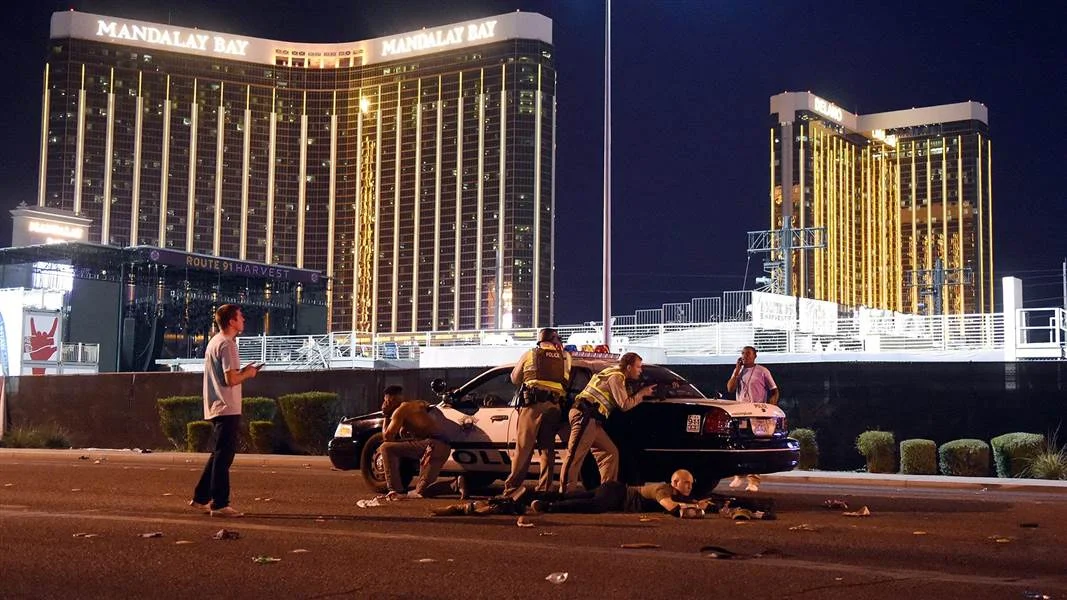
2017 Las Vegas Strip Shooting
Published August 15, 2026
The 2017 Las Vegas Strip Shooting was a mass shooting at the Route 91 Harvest country music festival on October 1, 2017 that killed 58 people and wounded more than 500. Online, it was defined by a fast wave of hoax photos falsely naming Sam Hyde and TheReportOfTheWeek as shooters, and by MGM Resorts' 2018 lawsuits against victims that sparked boycott calls on Twitter.
Overview
The 2017 Las Vegas Strip Shooting was a mass shooting at the Route 91 Harvest country music festival on October 1, 2017, in which 64-year-old Nevada resident Stephen Paddock opened fire from a Mandalay Bay hotel room and killed 58 people while wounding more than 5001. It was the deadliest mass shooting in modern U.S. history at the time1.
Online, the 2017 Las Vegas Strip Shooting is remembered for a fast misinformation cycle: within hours, hoax photos falsely named comedian Sam Hyde and YouTuber TheReportOfTheWeek as either shooters or victims, following a template internet users had already run after previous mass casualty events4. Nearly a year afterward, the story returned as a corporate PR problem when Mandalay Bay owner MGM Resorts filed preemptive federal lawsuits against more than 1,000 victims to shield itself from liability2.
Gallery
Origin & Background
How It Spread
Frequently Asked Questions
References (4)
- 1
- 2
- 3
- 4