A Pretty Good Litmus Test For Politics
Published August 2, 2026
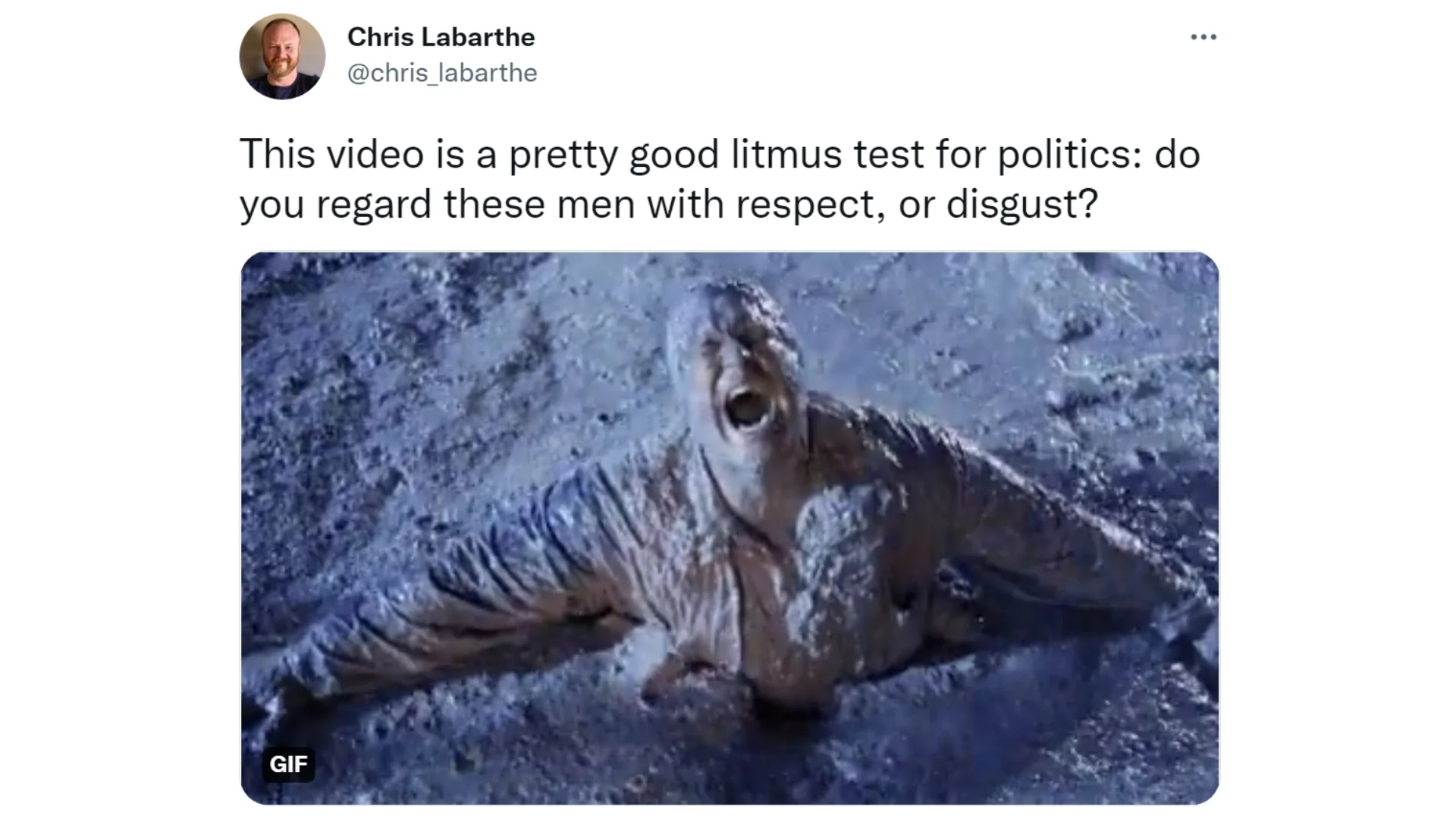
A Pretty Good Litmus Test For Politics is a Twitter catchphrase from November 2022 that pairs the question 'do you regard these men with respect, or disgust?' with images or videos of people doing various activities. It started with an oil well worker clip and quickly turned into a parody format across Twitter and Reddit.
Overview
A Pretty Good Litmus Test For Politics is a catchphrase built around a single question, 'do you regard these men with respect, or disgust?' paired with photos, GIFs, or video clips of people doing something1. The joke leans on the framing that your gut reaction to a rugged, mundane, or completely absurd image supposedly says something about your politics3.
The setup stays the same across every version. A clip or picture, plus a variant of the original wording. Parodies swap in film characters, historical photos, video game screenshots, and cartoon frames while keeping the deadpan phrasing intact2.
Gallery
Origin & Background
On November 18th, 2022, Twitter user @erichhartmann posted a short clip of two oil well workers operating machinery, originally uploaded by TikTok user @oilfeildoutlaw, and captioned it, 'This video is a pretty good litmus test for politics: do you regard these men with respect, or disgust?'1. The tweet pulled in more than 1,700 retweets and 16,500 likes within four days3.
How It Spread
How to Use This Meme
Grab an image or short video of a person, group, or character doing an activity, then post it with a variant of 'This [image/video] is a pretty good litmus test for politics: do you regard [these men / this man / etc.] with respect, or disgust?' The joke typically lands when the subject is either mundane, absurd, or deliberately ridiculous, since the caption's earnest framing clashes with what you actually see2.