Better Names For Things
Published August 1, 2026
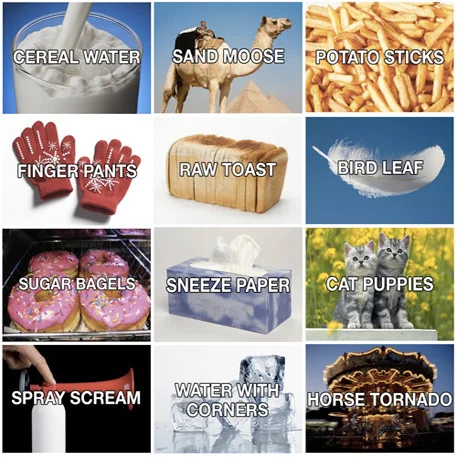
Better Names For Things is an image macro joke where photos of everyday objects, animals, and food get relabeled with plain, made-up names that describe what the thing does or looks like. Comedy blogger Jeff Wysaski popularized the format on Pleated Jeans in late 2011, and the naming gag later spread to store-prank videos, YouTube compilations, and Twitter hashtag rounds like #TheInternetNamesSpace.
Overview
Better Names For Things is an image macro joke where a photo of an object, animal, or food is captioned with a made-up name that plainly describes what the thing does or looks like. A cat might be labeled 'furry mouse hunter,' a stapler 'paper pinch pinch,' and so on, with the humor sitting in how flatly literal each replacement is2.
Entries are usually posted in sets of ten to twenty photo panels per gallery, following the layout Jeff Wysaski used on his blog Pleated Jeans2. Over time the joke broke out of blog listicles into store-prank videos, YouTube compilations, and Twitter hashtag rounds3.
Gallery
Origin & Background
How It Spread
How to Use This Meme
The typical format is a photograph of an ordinary object, animal, or food with an oversized caption naming it based on what it visibly does or looks like. Common conventions include childlike or onomatopoeic words for animals, texture-based names for food, and posting entries as a batch of ten to twenty per gallery so the joke escalates across the set.
Frequently Asked Questions
References (4)
- 1
- 2
- 3
- 4