Home›Memes›Botnet

Contents

  • Overview
  • Gallery
  • Origin
  • How It Spread
  • How to Use
  • FAQ
  • References
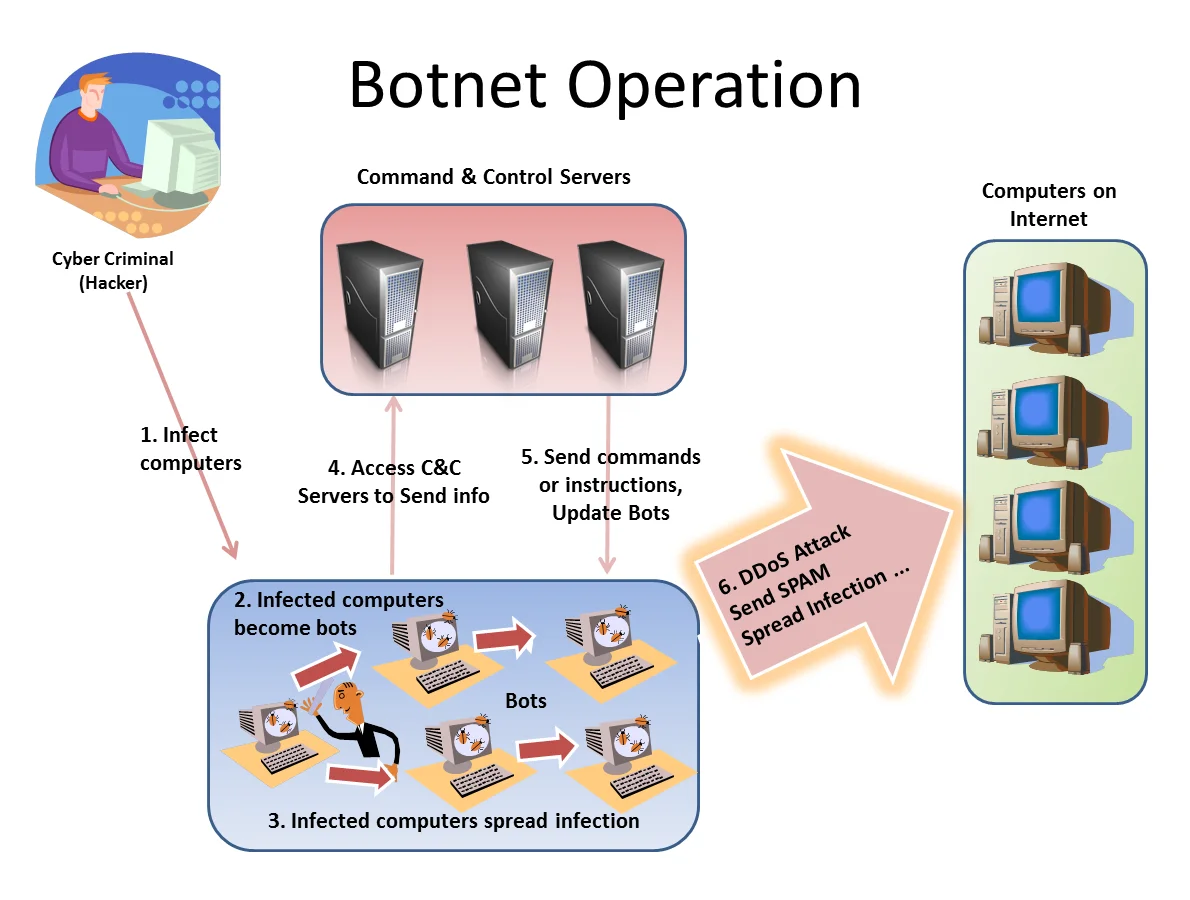
Diagram illustrating how a botnet operation works, from infection to DDoS attack via command and control servers

Botnet

2007internet slangclassic

Published August 16, 2026

Botnets are networks of hijacked computers or IoT devices controlled remotely by attackers to run automated tasks like spam floods, DDoS attacks, and credential theft. The word became widely known through cases like the 2007 Storm Worm and the 2016 Mirai attack that briefly knocked major sites offline.

hacking memes cybersecurity memes tech humor memes surveillance memes conspiracy memes

Overview

A botnet is a network of internet-connected machines secretly compromised by malware and controlled by a single operator to run automated tasks like sending spam, launching DDoS attacks, or harvesting credentials3. In hacker slang, individual infected devices are called "zombies," and the operator directs them remotely, historically through IRC channels or dedicated command and control servers4.

The word botnet also became internet shorthand for anything sketchy that quietly phones home to a central operator, including jokes about Windows 10 telemetry or free VPN apps that resell users' bandwidth4. Threat researchers have tracked dozens of major botnets since the mid-2000s, and names like Storm, Zeus, and Mirai are still widely referenced in security circles.

Gallery

Origin & Background

Platform
IRC (early jargon) / HackForums (Mirai source leak)
Date
2007

While IRC bot networks were around in the 1990s, one of the earliest heavily reported botnets was the Storm Botnet, which appeared around 2007 and infected millions of Windows machines through a Trojan Horse spread by email spam claiming to carry news about a deadly European windstorm3. At its peak, Storm was estimated to account for roughly ten percent of all malware circulating on the internet, cementing the word botnet in mainstream tech coverage.

How It Spread

Later families like the Zeus Botnet shifted the focus toward bank fraud and government data theft, and its author eventually sold the source code to the group behind the SpyEye malware kit3. On August 31, 2016, whitehat research group MalwareMustDie published the first public analysis of a new Linux worm called Mirai that was hijacking routers, DVRs, and IP cameras through weak Telnet passwords2. Weeks later, on September 22, 2016, KrebsOnSecurity was knocked offline for nearly four days by a massive Mirai-powered DDoS attack1.

On September 30, 2016, Mirai's author, using the handle Anna-Senpai, dumped the full source code on HackForums, which spawned dozens of copycat attack armies almost overnight1. In a January 17, 2017 investigation, Brian Krebs identified Anna-Senpai as Paras Jha, a Rutgers University student and co-owner of DDoS mitigation firm ProTraf Solutions, and reported that the name Mirai was taken from the anime "Mirai Nikki"1. Later that year, Jha, Josiah White, and Dalton Norman pled guilty to authoring Mirai, admitting they had originally built it to knock rival Minecraft server hosts offline for competitive advantage1.

How to Use This Meme

Outside of security papers, people often use "botnet" loosely online to accuse any piece of software of being creepy or spyware-like, common convention being to sarcastically label heavy telemetry, background analytics, or free tools that mine user data as "literally a botnet"4. In technical contexts, the word typically refers to a specific tracked family such as Mirai variants, Emotet, or Zeus descendants.

Frequently Asked Questions

A botnet is a network of internet-connected devices infected with malware and controlled remotely by a single operator, typically used for DDoS attacks, spam, or credential theft3.

The concept grew out of IRC bot networks in the 1990s, but the term hit mainstream tech coverage with the 2007 Storm Botnet, which spread through fake storm-news emails3.

Literally, a network of "bots" or zombie computers running scripts under a shared command server; casually online, it also means any software people suspect of quietly reporting back to a central operator4.

Security researchers use it as a technical label for a specific malware network, while regular users often deploy it as slang to mock invasive telemetry or shady free apps4.

Botnets are still a major DDoS and cybercrime vector; the 2016 Mirai source code leak alone kept variants active for years and led to guilty pleas in federal court1.

References (4)

  1. 1
    https://krebsonsecurity.com/2017/01/who-is-anna-senpai-the-mirai-worm-author/
  2. 2
    https://blog.malwaremustdie.org/2016/08/mmd-0056-2016-linuxmirai-just.html
  3. 3
    https://knowyourmeme.com/memes/botnet
  4. 4
    https://www.urbandictionary.com/define.php?term=Botnet

Quick Info

Year
2007
Origin
IRC (early jargon) / HackForums (Mirai source leak)
Type
internet slang
Status
classic

Tags

cybersecuritymalwareddosmiraihacker-slangiot

More Hacking & Cybercrime Memes

  • Ddos
  • Hack 127.0.0.1
  • Hacktivism
  • Lizard Squad
  • LulzSec Hacks
  • Operation Darknet
  • Operation Facebook
  • Operation Israel
  • Operation Save the Arctic
  • Script Kiddie
  • Ransomware
  • August 2026 Gta 6 Leaks 2026 Grand Theft Auto Vi Leak
View all Hacking & Cybercrime memes →
Browse MemesTopicsCreatorsTrendingPlayAboutLegalPrivacy

© 2026 meme.com