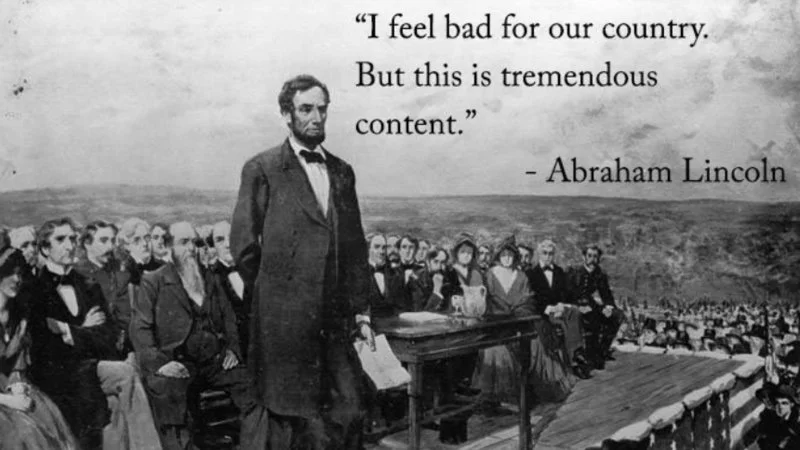
But This Is Tremendous Content

2016Catchphrase / Snowclonesemi-active

Also known as: Tremendous Content · I Feel Bad For Our Country

But This Is Tremendous Content is a 2016 snowclone originating from sports analyst Darren Rovell's tweet, expressing guilty pleasure at chaotic events that generate compelling entertainment.

"But This Is Tremendous Content" is a snowclone meme originating from a tweet by sports business analyst Darren Rovell during the 2016 United States presidential election. Rovell posted "I feel bad for our country. But this is tremendous content" on October 19, 2016, and the phrase immediately became a template for expressing guilty pleasure at chaotic or unfortunate events that happen to produce great entertainment4. The format found its most durable home in sports commentary before spreading to political and cultural disaster reactions.

TL;DR

"But This Is Tremendous Content" is a snowclone meme originating from a tweet by sports business analyst Darren Rovell during the 2016 United States presidential election.

Overview

The meme follows a simple two-part structure: acknowledge that something is bad, then pivot to noting how entertaining it is. The original tweet captured a very specific type of detached media-brain thinking where content value overrides human empathy, and that tension is what makes the format work. People use the "I feel bad for [X]. But this is tremendous content" template whenever a situation is clearly awful but undeniably entertaining, from sports collapses to political scandals to interpersonal drama4.

What makes it stick is how cleanly it distills a feeling most chronically online people recognize in themselves. You know you shouldn't be enjoying this. You are anyway. Rovell just said it out loud.

On October 19, 2016, during the heated final weeks of the presidential race between Donald Trump and Hillary Clinton, ESPN sports business reporter Darren Rovell posted a tweet that read: "I feel bad for our country. But this is tremendous content"4. The tweet implied that while the election was harming the country, it was producing great material for media consumption. It picked up over 2,200 retweets and 5,000 likes4.

The reaction was swift and brutal. Deadspin published a piece titled "ESPN's Darren Rovell: I'm A Robot, I Pity The Humans," writing that Rovell had "reached his terrifying final form" and would "never put anything that more purely distills his essence online again"1. Twitter user @summerbrennan riffed on T.S. Eliot, posting "This is the way the world ends. Not with a bang but with 'tremendous content,'" earning over 220 retweets and 460 likes4. Another user, @DAlgonquin, joked that this would have been Rovell's take following 9/114.

Origin & Background

Platform
Twitter
Creator
Darren Rovell
Date
2016

On October 19, 2016, during the heated final weeks of the presidential race between Donald Trump and Hillary Clinton, ESPN sports business reporter Darren Rovell posted a tweet that read: "I feel bad for our country. But this is tremendous content". The tweet implied that while the election was harming the country, it was producing great material for media consumption. It picked up over 2,200 retweets and 5,000 likes.

The reaction was swift and brutal. Deadspin published a piece titled "ESPN's Darren Rovell: I'm A Robot, I Pity The Humans," writing that Rovell had "reached his terrifying final form" and would "never put anything that more purely distills his essence online again". Twitter user @summerbrennan riffed on T.S. Eliot, posting "This is the way the world ends. Not with a bang but with 'tremendous content,'" earning over 220 retweets and 460 likes. Another user, @DAlgonquin, joked that this would have been Rovell's take following 9/11.

How It Spread

The initial mockery gave way to something more useful: a template. In the years after 2016, the phrase evolved into a snowclone that people adapted for their own purposes, particularly in sports contexts where teams and players generate spectacular disasters.

In May 2018, Twitter user @clubtrillion applied the format while discussing baseball's Cincinnati Reds. By November of the same year, Ringer writer @PaoloUggeti used it in reference to NBA star Carmelo Anthony's career troubles.

The format also crossed into broader internet culture. When YouTuber iDubbbz confronted Tana Mongeau at a meet-and-greet in early 2017, creating a firestorm of drama and memes, the Daily Dot cited Rovell's tweet directly, calling it "a very bad tweet about Donald Trump" while acknowledging the situation fit the template perfectly: terrible behavior, irresistible content.

The phrase saw a major resurgence in March 2025 during the Signal group chat leak, when The Atlantic's editor-in-chief Jeffrey Goldberg was accidentally added to a U.S. government Signal chat discussing imminent military strikes on Houthi targets in Yemen. The chat included Vice President JD Vance, Secretary of Defense Pete Hegseth, Secretary of State Marco Rubio, and National Security Advisor Michael Waltz. Mashable explicitly invoked Rovell's original tweet in their coverage, framing the leak as a national security nightmare that was, nonetheless, tremendous content. The internet responded with memes tying the scandal to JD Vance big head memes, Partiful invitations, copypasta messages, and morning routine content.

How to Use This Meme

The format is straightforward:

1

Identify a situation that is genuinely bad, harmful, embarrassing, or chaotic for someone.

2

Write "I feel bad for [affected party]."

3

Follow with "But this is tremendous content."

Cultural Impact

Rovell's tweet tapped into a growing anxiety about the "content brain" era of media consumption, where everything from elections to personal tragedy gets filtered through the lens of engagement and entertainment value. The phrase became a shorthand for that specific kind of detachment.

The 2025 Signal leak proved the format's durability. Nearly a decade after the original tweet, journalists and posters still reached for "tremendous content" as the instinctive response to a situation that was simultaneously terrifying and absurd. Former U.S. Secretary of Transportation Pete Buttigieg called the leak "the highest level of fuckup imaginable," while online creators rolled up their sleeves and got to work making memes. The phrase had become the unofficial motto for the feeling of watching institutional failure unfold in real time.

Rovell himself became somewhat inseparable from the tweet. His reputation as a reporter who viewed everything through a content and brand value lens made the tweet feel less like a one-off bad take and more like an inadvertent self-portrait.

Fun Facts

The Deadspin article about the tweet was published the same evening Rovell posted it, suggesting the reaction was nearly instantaneous.

User @summerbrennan's T.S. Eliot parody ("not with a bang but with 'tremendous content'") became almost as quotable as the original tweet.

The format is disproportionately popular in sports media circles, where team collapses and player drama regularly provide the perfect "bad situation, great content" dynamic.

The tweet was posted at 10:21 PM EDT, during what was presumably a presidential debate or election event.

During the 2025 Signal leak coverage, the chat reportedly contained celebratory emoji after airstrikes that killed 53 people, which multiple commentators noted "feels weird" in a way Rovell's tweet format was built for.

Frequently Asked Questions

ButThisIsTremendousContent

2016Catchphrase / Snowclonesemi-active

Also known as: Tremendous Content · I Feel Bad For Our Country

But This Is Tremendous Content is a 2016 snowclone originating from sports analyst Darren Rovell's tweet, expressing guilty pleasure at chaotic events that generate compelling entertainment.

"But This Is Tremendous Content" is a snowclone meme originating from a tweet by sports business analyst Darren Rovell during the 2016 United States presidential election. Rovell posted "I feel bad for our country. But this is tremendous content" on October 19, 2016, and the phrase immediately became a template for expressing guilty pleasure at chaotic or unfortunate events that happen to produce great entertainment. The format found its most durable home in sports commentary before spreading to political and cultural disaster reactions.

TL;DR

"But This Is Tremendous Content" is a snowclone meme originating from a tweet by sports business analyst Darren Rovell during the 2016 United States presidential election.

Overview

The meme follows a simple two-part structure: acknowledge that something is bad, then pivot to noting how entertaining it is. The original tweet captured a very specific type of detached media-brain thinking where content value overrides human empathy, and that tension is what makes the format work. People use the "I feel bad for [X]. But this is tremendous content" template whenever a situation is clearly awful but undeniably entertaining, from sports collapses to political scandals to interpersonal drama.

What makes it stick is how cleanly it distills a feeling most chronically online people recognize in themselves. You know you shouldn't be enjoying this. You are anyway. Rovell just said it out loud.

On October 19, 2016, during the heated final weeks of the presidential race between Donald Trump and Hillary Clinton, ESPN sports business reporter Darren Rovell posted a tweet that read: "I feel bad for our country. But this is tremendous content". The tweet implied that while the election was harming the country, it was producing great material for media consumption. It picked up over 2,200 retweets and 5,000 likes.

The reaction was swift and brutal. Deadspin published a piece titled "ESPN's Darren Rovell: I'm A Robot, I Pity The Humans," writing that Rovell had "reached his terrifying final form" and would "never put anything that more purely distills his essence online again". Twitter user @summerbrennan riffed on T.S. Eliot, posting "This is the way the world ends. Not with a bang but with 'tremendous content,'" earning over 220 retweets and 460 likes. Another user, @DAlgonquin, joked that this would have been Rovell's take following 9/11.

Origin & Background

Platform
Twitter
Creator
Darren Rovell
Date
2016

On October 19, 2016, during the heated final weeks of the presidential race between Donald Trump and Hillary Clinton, ESPN sports business reporter Darren Rovell posted a tweet that read: "I feel bad for our country. But this is tremendous content". The tweet implied that while the election was harming the country, it was producing great material for media consumption. It picked up over 2,200 retweets and 5,000 likes.

The reaction was swift and brutal. Deadspin published a piece titled "ESPN's Darren Rovell: I'm A Robot, I Pity The Humans," writing that Rovell had "reached his terrifying final form" and would "never put anything that more purely distills his essence online again". Twitter user @summerbrennan riffed on T.S. Eliot, posting "This is the way the world ends. Not with a bang but with 'tremendous content,'" earning over 220 retweets and 460 likes. Another user, @DAlgonquin, joked that this would have been Rovell's take following 9/11.

How It Spread

The initial mockery gave way to something more useful: a template. In the years after 2016, the phrase evolved into a snowclone that people adapted for their own purposes, particularly in sports contexts where teams and players generate spectacular disasters.

In May 2018, Twitter user @clubtrillion applied the format while discussing baseball's Cincinnati Reds. By November of the same year, Ringer writer @PaoloUggeti used it in reference to NBA star Carmelo Anthony's career troubles.

The format also crossed into broader internet culture. When YouTuber iDubbbz confronted Tana Mongeau at a meet-and-greet in early 2017, creating a firestorm of drama and memes, the Daily Dot cited Rovell's tweet directly, calling it "a very bad tweet about Donald Trump" while acknowledging the situation fit the template perfectly: terrible behavior, irresistible content.

The phrase saw a major resurgence in March 2025 during the Signal group chat leak, when The Atlantic's editor-in-chief Jeffrey Goldberg was accidentally added to a U.S. government Signal chat discussing imminent military strikes on Houthi targets in Yemen. The chat included Vice President JD Vance, Secretary of Defense Pete Hegseth, Secretary of State Marco Rubio, and National Security Advisor Michael Waltz. Mashable explicitly invoked Rovell's original tweet in their coverage, framing the leak as a national security nightmare that was, nonetheless, tremendous content. The internet responded with memes tying the scandal to JD Vance big head memes, Partiful invitations, copypasta messages, and morning routine content.

How to Use This Meme

The format is straightforward:

1

Identify a situation that is genuinely bad, harmful, embarrassing, or chaotic for someone.

2

Write "I feel bad for [affected party]."

3

Follow with "But this is tremendous content."

Cultural Impact

Rovell's tweet tapped into a growing anxiety about the "content brain" era of media consumption, where everything from elections to personal tragedy gets filtered through the lens of engagement and entertainment value. The phrase became a shorthand for that specific kind of detachment.

The 2025 Signal leak proved the format's durability. Nearly a decade after the original tweet, journalists and posters still reached for "tremendous content" as the instinctive response to a situation that was simultaneously terrifying and absurd. Former U.S. Secretary of Transportation Pete Buttigieg called the leak "the highest level of fuckup imaginable," while online creators rolled up their sleeves and got to work making memes. The phrase had become the unofficial motto for the feeling of watching institutional failure unfold in real time.

Rovell himself became somewhat inseparable from the tweet. His reputation as a reporter who viewed everything through a content and brand value lens made the tweet feel less like a one-off bad take and more like an inadvertent self-portrait.

Fun Facts

The Deadspin article about the tweet was published the same evening Rovell posted it, suggesting the reaction was nearly instantaneous.

User @summerbrennan's T.S. Eliot parody ("not with a bang but with 'tremendous content'") became almost as quotable as the original tweet.

The format is disproportionately popular in sports media circles, where team collapses and player drama regularly provide the perfect "bad situation, great content" dynamic.

The tweet was posted at 10:21 PM EDT, during what was presumably a presidential debate or election event.

During the 2025 Signal leak coverage, the chat reportedly contained celebratory emoji after airstrikes that killed 53 people, which multiple commentators noted "feels weird" in a way Rovell's tweet format was built for.

Frequently Asked Questions