Cat
Published July 27, 2026
Cats fill an outsized share of the internet in the form of image macros, YouTube clips, single-topic blogs, and named feline celebrities. From Usenet's rec.pets.cats FAQ in 1992 to LOLcats, Caturday, and the Walker Art Center's 2012 cat video festival, cat content shaped how viral image sharing works.
Overview
Cats are small domesticated carnivorous mammals whose photos and videos take up an outsized share of internet attention. From captioned kitten pictures to YouTube compilations, cat content built up through the mid-2000s until major outlets like Salon started openly asking why the web was so fixated on them1. The pattern spans everything from LOLcats and Caturday threads on 4chan to prestige video screenings at modern art museums5.
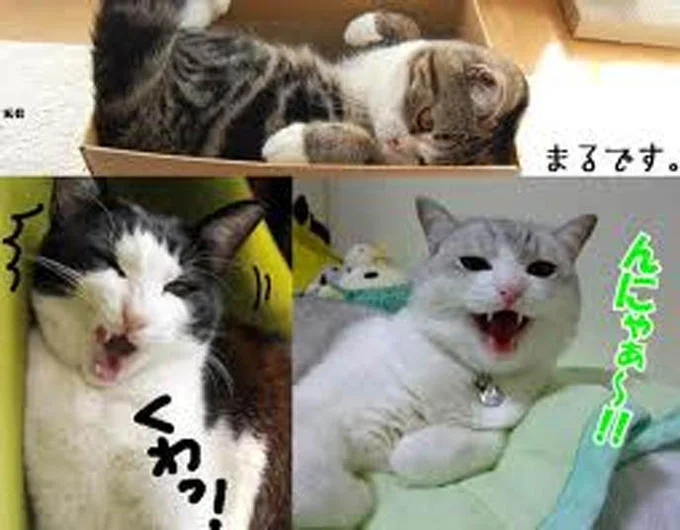
Recognizable forms include image macros with intentionally misspelled English (LOLcats), reaction shots of specific pet cats, YouTube clips of household antics, and character-driven feline celebrities like Maru and Nyan Cat3. Cat content spread from image boards and chan forums to single-topic blogs, then Tumblr and Reddit, giving cats a bigger online footprint than any other pet species4. The New York Times' Ideas blog once floated the theory that cats dominate the web because there is a heavy overlap between cat people and internet pioneers2.
Gallery
Origin & Background
How It Spread
How to Use This Meme
The umbrella of "cats on the internet" isn't a single template but a set of habits that people mix and match. Common conventions include: captioning a cat photo in LOLspeak (the intentionally misspelled kitten-voice style behind "I can has cheezburger?"), posting cat photos to Saturday threads on chan boards for Caturday, running a single-topic blog dedicated to one specific cat or one specific cat behavior, and sharing short pet clips repeatedly enough that a specific feline becomes a named celebrity like Maru or Henri6. The BBC identified the underlying format as the image macro, in which text is superimposed on a photograph, which is the mechanical part most cat memes share3.
Cultural Impact
Fun Facts
- Google's cat-recognizing neural network in 2012 used 16,000 processors and more than a billion connections, and it beat a list of 20,000 other objects at self-identification7
- Walker Art Center curators picked the 2012 festival's 70 videos from roughly 10,000 submissions5
- Harry Pointer was captioning cat photos on cartes de visite in the 1870s, well before the word "meme" existed4
- A 2011 Bitly data analysis of its own search results actually found dogs beat cats in sharing volume, despite the web's cat reputation7
- The rec.pets.cats FAQ was written in 1992 and released online in four parts over nearly three years7
Derivatives & Variations
LOLcats and I Can Has Cheezburger, captioned kitten photos in "lolspeak" that broke into mainstream web traffic from early 2007[6]
Caturday, the Saturday LOLcat posting tradition originating on 4chan in the mid-2000s[8]
Nyan Cat, an animated pop-tart cat character featured as a People's Choice finalist at the Walker festival[5]
Maru, the Japanese box-loving cat, one of the People's Choice finalists in 2012[5]
Infinite Cat Project, the chain of cats looking at cats running since 2004[7]
Keyboard Cat, the piano-playing cat clip cited by the Walker Art Center as a shared festival favorite[5]
Henri, the melancholic French-narrated cat and Walker festival finalist[5]
Frequently Asked Questions
References (8)
- 1
- 2
- 3
- 4
- 5
- 6
- 7
- 8