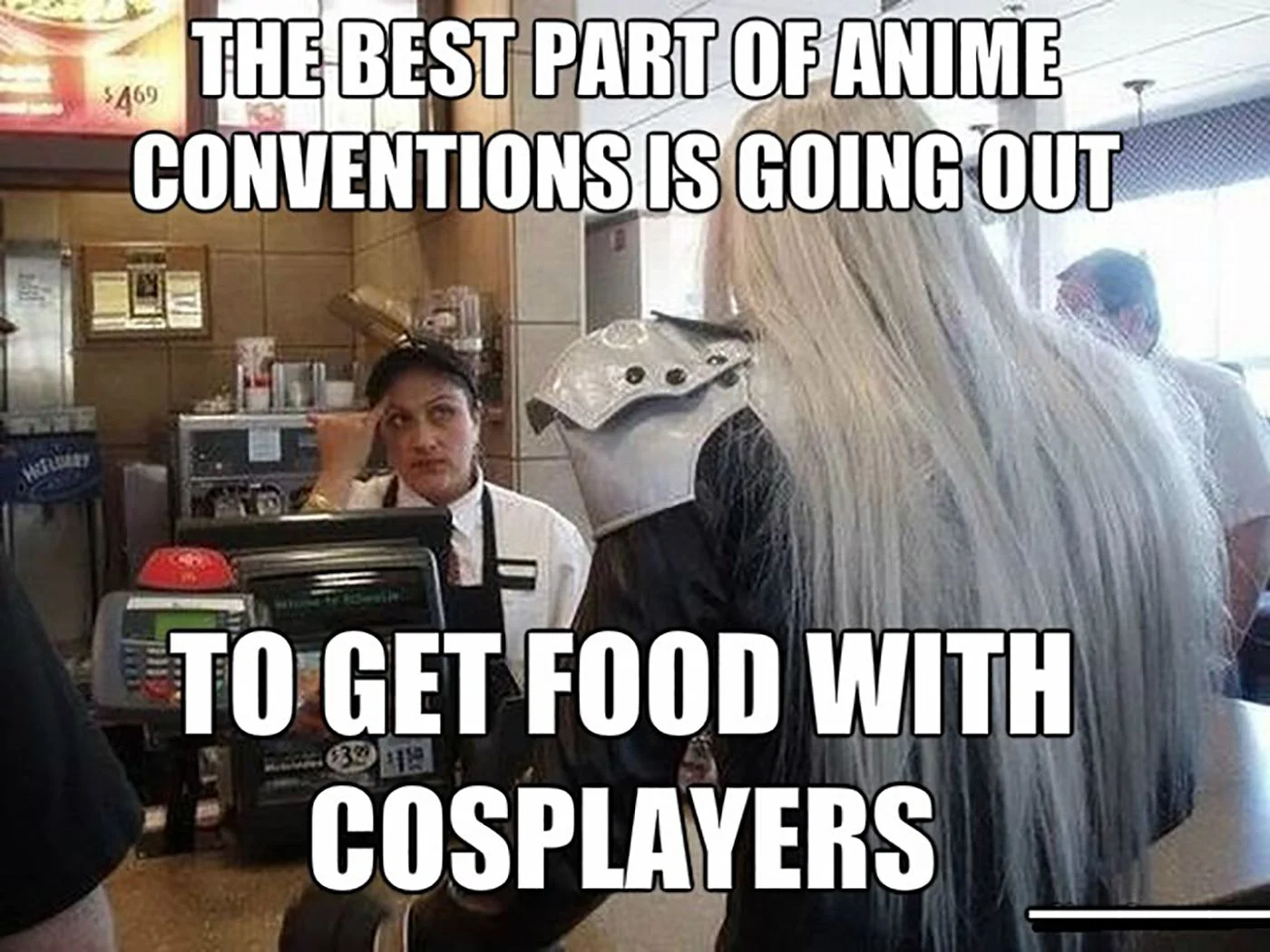
Convention Cosplay Meme

2023Photo fad / image series / reaction imageactive

Published March 10, 2026 · Updated March 23, 2026

Also known as: Con cosplay memes · cosplay memes · hallway cosplay

Convention cosplay memes are the broad category of internet humor built around photos, videos, and moments captured at fan conventions like Comic-Con, Anime Expo, and similar events. Rooted in a tradition stretching back to 1939, convention cosplay became a staple of online meme culture in the 2000s as digital cameras and social media made it easy to share standout costumes, awkward encounters, and creative mashups from convention floors1. The format ranges from impressive craftsmanship showcases to low-budget joke costumes, all unified by the convention hallway as their stage.

Overview

Convention cosplay memes draw from the decades-old practice of wearing costumes to fan conventions, transformed into shareable internet content. The meme format typically features photos or videos taken on convention floors, capturing everything from screen-accurate replica costumes to intentionally absurd low-effort interpretations. Common subtypes include side-by-side "cosplay vs. character" comparisons, group cosplay photo ops, candid reaction shots, mashup costumes blending two unrelated franchises, and the classic hallway pose photo.

What makes convention cosplay memetic isn't just the costumes themselves. It's the collision of fictional characters with mundane convention center settings, the unexpected creativity of cosplayers, and the communal experience of thousands of fans gathered in one place1.

The roots of convention cosplay trace back to the very first World Science Fiction Convention in 1939, when Forrest J Ackerman and Myrtle R. Douglas (known as Morojo) showed up in "futuristicostumes" based on pulp magazine artwork and the 1936 film *Things to Come*1. Ackerman later said he assumed everyone was supposed to wear a costume, though only he and Douglas actually did1.

Fan costuming caught on quickly. By the 2nd Worldcon in 1940, the event had both an unofficial and official masquerade, with attendees dressing as characters from science fiction novels and comics1. The Japanese term "cosplay" (コスプレ) was coined in 1983 by Nobuyuki Takahashi of Studio Hard, who combined the English words "costume" and "play" using a common Japanese abbreviation method1. Takahashi chose to create a new term rather than use the Japanese translation of "masquerade," which he felt sounded old-fashioned and implied nobility1.

As an internet meme format, convention cosplay took off in the early-to-mid 2000s when digital cameras became common at conventions and photo-sharing platforms gave attendees a way to broadcast their hallway encounters to a global audience.

Origin & Background

Platform
Fan convention floors (source material), forums and social media (viral spread)
Creator
Unknown
Date
Early 2000s (as internet meme format)

The roots of convention cosplay trace back to the very first World Science Fiction Convention in 1939, when Forrest J Ackerman and Myrtle R. Douglas (known as Morojo) showed up in "futuristicostumes" based on pulp magazine artwork and the 1936 film *Things to Come*1. Ackerman later said he assumed everyone was supposed to wear a costume, though only he and Douglas actually did1.

Fan costuming caught on quickly. By the 2nd Worldcon in 1940, the event had both an unofficial and official masquerade, with attendees dressing as characters from science fiction novels and comics1. The Japanese term "cosplay" (コスプレ) was coined in 1983 by Nobuyuki Takahashi of Studio Hard, who combined the English words "costume" and "play" using a common Japanese abbreviation method1. Takahashi chose to create a new term rather than use the Japanese translation of "masquerade," which he felt sounded old-fashioned and implied nobility1.

As an internet meme format, convention cosplay took off in the early-to-mid 2000s when digital cameras became common at conventions and photo-sharing platforms gave attendees a way to broadcast their hallway encounters to a global audience.

How It Spread

The spread of convention cosplay memes followed the growth of internet photo culture. Early convention photos circulated on forums like Something Awful, 4chan's /cgl/ (Cosplay & EGL) board, and dedicated cosplay websites in the mid-2000s. As conventions grew in size and mainstream appeal through the 2010s, platforms like Tumblr, Reddit (particularly r/cosplay and r/gaming), Instagram, and TikTok became primary distribution channels.

The rapid growth in cosplay participation since the 1990s turned convention cosplay into a significant slice of popular culture in Japan, East Asia, and the Western world1. Social networks, websites, and dedicated conventions centered on cosplay activities pushed convention photos into mainstream internet discourse1. Key annual events like San Diego Comic-Con, New York Comic-Con, Anime Expo, and PAX became reliable sources of viral cosplay content, with media outlets publishing "best cosplay" roundups after each major convention.

The meme format expanded beyond simple photo shares into structured templates: "expectation vs. reality" cosplay comparisons, "low-budget cosplay" humor where creators replicate characters using household items, and candid hallway encounter videos set to dramatic or comedic music on TikTok.

Platforms

InstagramTwitterReddit

Timeline

2023-01-15

First appears

2023-06-01

Goes viral

2024-01-01

Continues in use

2025-01-01

Convention Cosplay Meme is still actively used and shared across platforms

View on Google Trends

How to Use This Meme

Convention cosplay memes take several common forms:

Photo shares: Post a striking, funny, or creative cosplay photo from a convention floor. Typically works best when the costume is either impressively accurate or hilariously off-base.

Cosplay vs. Character: Place a photo of the cosplayer next to the original character for comparison. Used to highlight both impressive accuracy and comedic departures.

Low-budget cosplay: Recreate a character using cardboard, tape, household items, or food. The humor comes from the gap between the recognizable character and the deliberately cheap materials.

Group cosplay: Coordinate with friends to cosplay an entire cast. Often photographed in character poses that recreate iconic scenes.

Convention encounter videos: Film a brief interaction with a cosplayer on the convention floor, often featuring an in-character bit or a crowd reaction.

The format is flexible. Most convention cosplay memes work because the audience recognizes the source character, and the convention setting provides built-in context that the photo is meant to be fun rather than a serious attempt at deception.

Create Your Own

Cultural Impact

Convention cosplay moved from niche hobby to mainstream entertainment over several decades. Cosplay competitions at major conventions now offer significant prize money, and professional cosplayers build careers through sponsorships and social media followings. The term "cosplay" itself expanded beyond conventions into broader slang, particularly in politics, where it describes someone pretending to play a role disingenuously1.

Media coverage of convention cosplay memes helped normalize both convention attendance and costume culture. Major news networks now send camera crews to Comic-Con specifically to capture cosplay content, and "best cosplay" listicles are a reliable traffic driver for entertainment publications. The crossplay (gender-bending cosplay) subgenre became a visible form of gender expression within convention spaces1.

Fun Facts

The first known fan costume at a convention was worn in 1939 by Forrest J Ackerman and Myrtle R. Douglas, who were the only two people in costume at the entire event1.

The word "cosplay" wasn't coined until 1983, over 40 years after the practice began at conventions1.

One of the earliest fictional characters people dressed as was Mr. Skygack, from Mars, a comic strip alien, with costumes appearing at masquerade events as early as 19081.

David Kyle won the first official convention masquerade in 1940 wearing a Ming the Merciless costume1.

Derivatives & Variations

Low-Budget Cosplay:

A dedicated subgenre where creators recreate characters using everyday objects, popularized by creators like Lonelyman (Anucha Saengchart) on social media[1].

Cosplay vs. Character compilations:

YouTube and TikTok video compilations comparing cosplayers to their source characters, often set to music[1].

Convention proposal memes:

Viral videos of couples proposing in cosplay at conventions, blending fandom and personal milestones[1].

"Cosplay is not consent" awareness posts:

Memes and infographics addressing harassment at conventions, turning a serious issue into shareable advocacy content[1].

Frequently Asked Questions

References (1)

  1. 1
    Cosplayencyclopedia