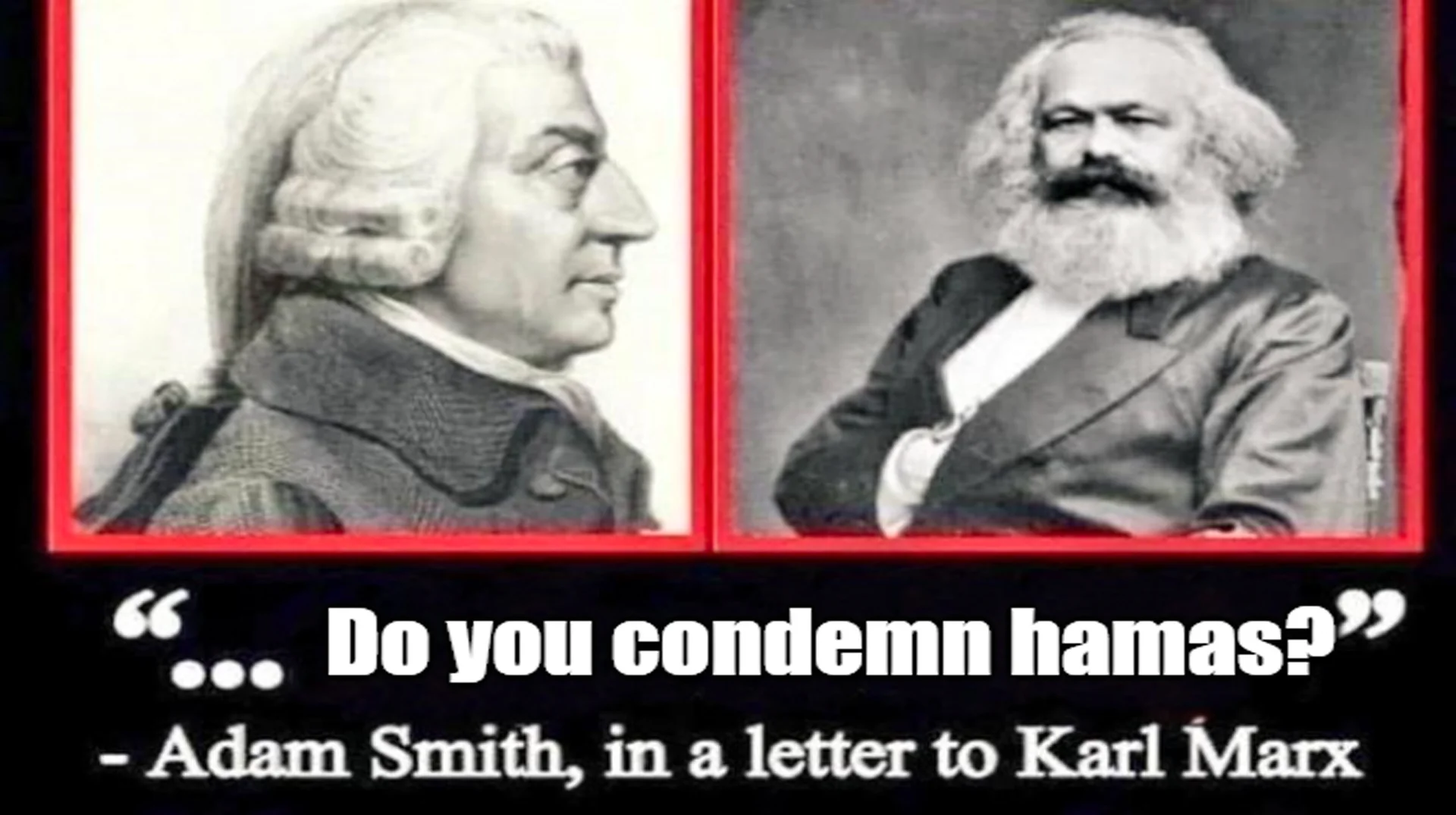
Do You Condemn Hamas
Published August 11, 2026
"Do You Condemn Hamas?" is a catchphrase and rhetorical question frequently posed by journalists and commentators to pro-Palestinian voices, particularly during the 2023 Israel-Hamas conflict. The question originated in a 2010 viral video and became widely mocked online for being perceived as a bad-faith trap rather than genuine inquiry.
Overview
"Do You Condemn Hamas?" is a rhetorical question posed to supporters of Palestine, typically by journalists or political commentators seeking to frame their subjects as terrorist sympathizers. The question gained notoriety for its perceived function as a conversational trap: answering "yes" can be seen as legitimizing the framing, while answering "no" or deflecting appears evasive3. Critics argue the question oversimplifies a complex regional conflict into a binary loyalty test.
The catchphrase became a meme through repetition in broadcast media, particularly during flare-ups of the Israel-Palestine conflict. News clips featuring the question were shared widely on social media, often accompanied by mockery of the interviewer's insistence on a direct answer2. The format inspired satirical content where the question was absurdly applied to unrelated topics.
Urban Dictionary entries defined the phrase as a "codeword" used to signal support for one political position while pretending to ask a neutral question1. This interpretation fueled the meme's spread among those who viewed the question as inherently biased rather than journalistically rigorous.
Gallery
Origin & Background
How It Spread
How to Use This Meme
The phrase typically appears in memes satirizing rhetorical traps or bad-faith questioning. Users often apply "Do You Condemn Hamas?" to absurd contexts, such as asking historical figures, fictional characters, or people discussing entirely unrelated topics. The format mocks the insistence on binary answers to complex geopolitical situations. Common variations include screenshots of news interviews with captions highlighting the question's repetition, or image macros where the question is posed inappropriately to emphasize its perceived absurdity as a conversational tactic.
Frequently Asked Questions
References (5)
- 1
- 2
- 3
- 4
- 5