Doctor Who

1963TV series / fandomclassic

Published August 17, 2026

Doctor Who is a British science fiction TV series that first aired on the BBC on November 23rd, 1963, following a time-travelling alien called The Doctor and their companions across space and time in a blue police box called the TARDIS. The show built one of the largest cult fandoms online, with fans self-identifying as Whovians and gathering on Tumblr, Twitter and Reddit around each new regeneration.

Overview

Doctor Who is a long-running British science fiction show about a nameless alien known only as The Doctor, a Time Lord from the planet Gallifrey who travels through time and space in the TARDIS, a ship stuck in the shape of a 1960s London blue police box3. The Doctor is almost always paired with a human companion, and when the lead actor leaves, the character regenerates into a new body, letting the show recast without ending2.

Online, the appeal is less about any one episode and more about the fandom that grew around 60 years of continuity, catchphrases like "Allons-y" and running jokes about crying at Donna Noble's exit2. Fans call themselves Whovians and cluster on Tumblr, Reddit's r/DoctorWho and Twitter, where every regeneration announcement turns into a days-long trending event3.

Origin & Background

Platform
BBC television (broadcast origin) / Tumblr and Twitter (fandom spread)
Key People
Sydney Newman, C. E. Webber and Donald Wilson
Date
1963

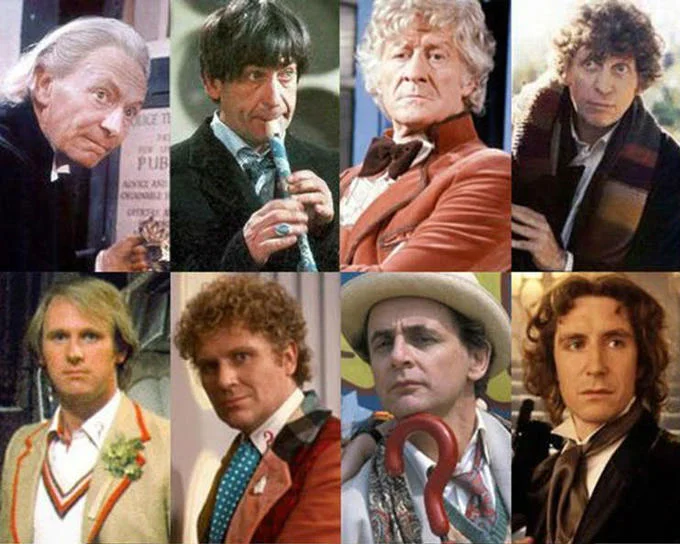
The first Doctor Who episode, "An Unearthly Child," aired on BBC television on November 23rd, 1963, with William Hartnell as the First Doctor3. The original run lasted until 1989, cycled through eight lead actors, and by 2006 was recognised by Guinness World Records as the longest-running science fiction TV show3.

After a 1996 TV movie starring Paul McGann, the series was revived in 2005 with Christopher Eccleston as the Ninth Doctor, followed by David Tennant, Matt Smith, Peter Capaldi and, in 2017, Jodie Whittaker as the first woman cast in the lead role3.

How It Spread

Doctor Who's early archive is famous for what's missing: the BBC wiped tapes to reuse them in the 1960s, erasing 106 episodes from the first two seasons, and fans have been hunting for surviving prints ever since3. In December 2011, two lost episodes, "Galaxy 4 part three" with William Hartnell and "The Underwater Menace part two" with Patrick Troughton, were shown at the British Film Institute's "Missing Believed Wiped" event after former TV engineer Terry Burnett found them at a school fete1.

Casting news is when the fandom really lights up. When Matt Smith announced on June 1st, 2013 that he was leaving after four years as the Eleventh Doctor, Twitter filled with rumoured replacements including Benedict Cumberbatch, David Harewood and Helen Mirren before Peter Capaldi was unveiled on a live BBC special on August 4th, 20132.

The pattern repeated on July 16th, 2017, when the @bbcdoctorwho account posted a short teaser revealing Jodie Whittaker as the Thirteenth Doctor4; the tweet passed 114,000 likes and 71,300 retweets in 24 hours3. Official BBC accounts kept the fandom centralised on social media, with the Doctor Who Facebook page passing 2.5 million likes by August 20123.

How to Use This Meme

Whovian in-jokes typically pull from a fixed set of references: quoting each Doctor's catchphrase ("Allons-y," "Fantastic," "Geronimo"), reacting to sad companion exits with Donna Noble memes, and using the TARDIS or Daleks as visual shorthand for time travel or extermination jokes5. Reaction images of specific Doctors, especially Tennant and Smith, are a common way to mark regeneration announcements or new-series trailers on Tumblr and Twitter3.

Frequently Asked Questions