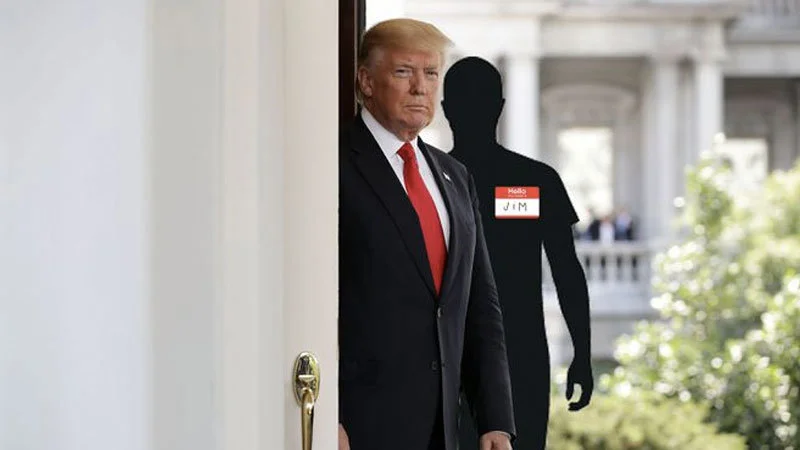
Donald Trumps Imaginary Friend Jim
Published March 24, 2026
Also known as: Trump's Friend Jim · The Curious Case of Jim · #WhoIsJim
Donald Trump's "Imaginary" Friend "Jim" is a political meme based on President Donald Trump's repeated references to a mysterious friend named "Jim" who allegedly stopped visiting Paris due to terrorism. The anecdote, first widely noticed during Trump's February 2017 CPAC speech, sparked widespread mockery after multiple investigations by The New Yorker, the Associated Press, and others failed to identify who Jim actually was3. The mystery turned into a running joke about the President having an imaginary friend.
Overview
The meme revolves around a simple question: does Donald Trump have a friend named Jim, or did he make him up? According to Trump, Jim is "a very, very substantial guy" who loved visiting Paris every summer with his wife and family but stopped going because "Paris is no longer Paris"1. Trump used Jim's story as a rhetorical device to criticize European immigration policies and warn about terrorism in France.
The problem? Trump never gave Jim a last name. The White House never confirmed Jim's identity. And when reporters went looking for him, they came up empty3. The New Yorker contacted Jim Kelly, Jim Dolan, Jim Furyk, Jim Davis, Jim Inhofe, Jim McNerney, and even wondered about Jim Mattis (who doesn't have a wife, ruling him out). None of them were the Jim in question12. The whole thing read like a mystery novel where the detective never finds the suspect, and the internet loved it.
What made the meme stick was the contrast between the gravity of a sitting president using a friend's testimony to shape foreign policy and the absurdity that said friend might be completely fictional5. People compared Jim to Trump's known history of invented personas, including "John Barron" and "John Miller," fake names Trump had used in the 1980s and 1990s to pose as his own spokesperson when calling reporters1.
Gallery
Origin & Background
How It Spread
How to Use This Meme
The Jim meme typically works in a few formats:
The imaginary friend joke: Reference someone having a "very, very substantial" friend who conveniently validates their opinion but can never be produced. Common pattern: "My friend Jim said [obvious self-serving claim]."
The Paris format: Adapt the "Paris is no longer Paris" template to any city or situation. "How's [place] doing?" / "[Place] is no longer [place]."
The investigation format: Pretend to search for Jim, listing increasingly unlikely candidates and having each one deny being Trump's friend.
Missing person parodies: Create fake missing-person posters or "Have You Seen This Man?" flyers for Jim.
Cultural Impact
Full History
Fun Facts
The New Yorker's Lauren Collins even considered whether "Jim" might be James Comey, asking "does anybody know if he goes by Jim?"12
Jim Mattis, Trump's own Secretary of Defense, was ruled out as a candidate because the Jim in Trump's story travels with "his wife and his family," and Mattis doesn't have a wife12
A YouTuber set Trump's Jim speeches to the Phish song "Runaway Jim," creating a mashup that Relix magazine praised6
Former New Jersey Governor Jim McGreevey responded to The New Yorker's inquiry with "I only wish!" and signed off with "Vive la France, Jim"12
Trump biographer Michael D'Antonio noted that the practice of using fake personas may have been inherited from Trump's father Fred, who sometimes posed as "Mr. Green"5
Frequently Asked Questions
References (19)
- 1
- 2
- 3
- 4
- 5QAnonencyclopedia
- 6
- 7
- 8
- 9
- 10
- 11
- 12
- 13
- 14
- 15
- 16
- 17
- 18
- 19