Doomer Thought Chains

2020Multi-panel comic / exploitable templatedead

Also known as: Doomer Inception Memes · Doomer Dream Chains

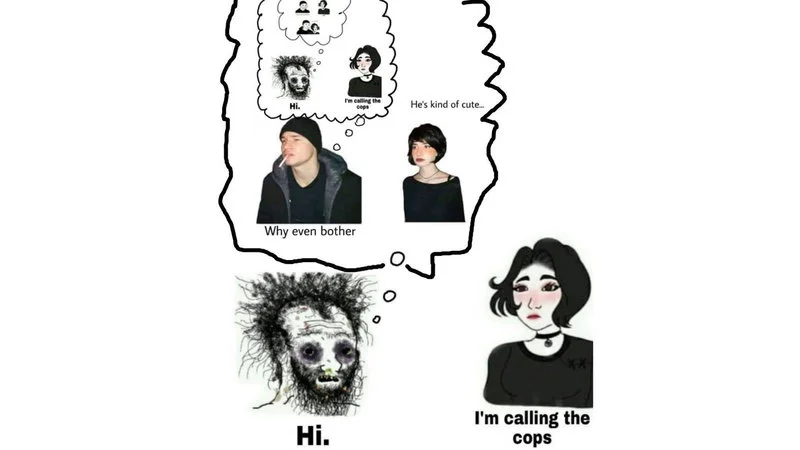
Doomer Thought Chains is a 2020 multi-panel comic template using Wojak-based Doomer and Doomer Girl characters, where each panel reveals the previous romantic scenario was imagination, stacking nested daydreams similar to Inception's structure.

Doomer Thought Chains are a multi-layered comic format built on the Wojak-based Doomer and Doomer Girl characters, where each panel reveals that the previous romantic scenario was just happening inside a character's imagination. Originating on Facebook in January 2020, the format parodies the earnest Doomer-meets-Doomer Girl memes by stacking nested daydreams on top of each other, similar to the dream-within-a-dream structure of the film *Inception*1. The format burned bright and fast, producing increasingly absurd multi-level edits over the course of a single week.

TL;DR

Doomer Thought Chains are a multi-layered comic format built on the Wojak-based Doomer and Doomer Girl characters, where each panel reveals that the previous romantic scenario was just happening inside a character's imagination.

Overview

Doomer Thought Chains take the familiar Wojak-style Doomer character and his imagined love interest, Doomer Girl, and stack their interactions into recursive layers. In the simplest version, a panel shows the Doomer having a romantic moment with Doomer Girl, only for the next panel to reveal that the entire scene was a fantasy. The real punchline comes when *that* reveal is itself revealed to be another layer of imagination, and so on. Each new level typically shows a sadder or more pathetic version of the dreamer, with the outermost layer being the harshest reality check1.

The humor sits at the intersection of self-deprecating millennial/zoomer dating anxiety and the absurdist escalation that comes from nesting four, five, or even more fantasy layers. The format rewards creators who can push the nesting to ridiculous extremes while keeping each layer visually distinct.

The Doomer Girl character first appeared on January 2, 2020, when an unknown artist posted the design. The image spread across Reddit, Twitter, and Facebook the same day1. Within 48 hours, creators were already pairing Doomer Girl with the existing Doomer Wojak in romantic scenarios.

On January 4, 2020, Facebook user Andrew Pigeon posted what appears to be the first "imagined interaction" edit. In it, the Doomer pictures a scene with Doomer Girl, but the final panel reveals he was left on read. The post picked up over 670 reactions and 2,300 shares in two weeks1.

The specific format that launched the Thought Chain trend came six days later. On January 10, 2020, Facebook user Sahaza HR posted a comic where an unkempt Wojak imagined himself *as* the Doomer from the original Doomer Girl meme. The twist: when this fantasy-Doomer approached Doomer Girl in "reality," she called the police1. That single edit collected over 3,900 reactions and 10,000 shares within a week, and it established the core mechanic of nesting one fantasy inside another.

Origin & Background

Platform
Facebook (meme format), Wojak community (source characters)
Key People
Andrew Pigeon, Sahaza HR
Date
2020

The Doomer Girl character first appeared on January 2, 2020, when an unknown artist posted the design. The image spread across Reddit, Twitter, and Facebook the same day. Within 48 hours, creators were already pairing Doomer Girl with the existing Doomer Wojak in romantic scenarios.

On January 4, 2020, Facebook user Andrew Pigeon posted what appears to be the first "imagined interaction" edit. In it, the Doomer pictures a scene with Doomer Girl, but the final panel reveals he was left on read. The post picked up over 670 reactions and 2,300 shares in two weeks.

The specific format that launched the Thought Chain trend came six days later. On January 10, 2020, Facebook user Sahaza HR posted a comic where an unkempt Wojak imagined himself *as* the Doomer from the original Doomer Girl meme. The twist: when this fantasy-Doomer approached Doomer Girl in "reality," she called the police. That single edit collected over 3,900 reactions and 10,000 shares within a week, and it established the core mechanic of nesting one fantasy inside another.

How It Spread

The chain format exploded the very next day. On January 11, 2020, the Facebook page "I love uzbekistan" posted the first known two-level Doomer Thought Chain, earning over 1,500 reactions and 4,900 shares. That same day, the Facebook page "Hotdogs Run This Page" raised the stakes with a three-level version, pulling in over 1,000 reactions and 1,800 shares.

The format jumped platforms almost immediately. On January 12, Twitter user @BlancLauz posted a fan-art rendition of a two-level thought chain that went massively viral, hitting 17,400 retweets and 104,900 likes. By January 13, Facebook group Autofellatio shared a four-level chain that got 2,000 reactions and 2,200 shares. The escalation race was on.

iFunny got in on the action too. On January 14, user NoelSplinterCell posted an extended "The Game" edit of the format that received over 7,700 smiles. The meme also appeared on Twitter and other platforms throughout mid-January 2020, though the bulk of viral activity was concentrated in that single explosive week from January 10-17.

How to Use This Meme

The Doomer Thought Chain template follows a nesting structure:

1

Start with the fantasy. Draw or edit a panel showing the Doomer in a romantic or idealized interaction with Doomer Girl.

2

Pull back one level. Add a panel showing that the previous scene was just a daydream. The "real" character is typically sadder, lonelier, or more disheveled than the fantasy version.

3

Stack more levels. Each new pull-back reveals the previous "reality" was itself a fantasy. The character at each outer layer is usually worse off than the one before.

4

End with the harshest reality. The outermost panel is the cruelest punchline. Common endings include getting left on read, police being called, or just sitting alone in the dark.

Cultural Impact

Doomer Thought Chains arrived at the tail end of the early Doomer/Doomer Girl wave and served as a self-aware commentary on it. While the original Doomer Girl memes played the romance straight, the Thought Chains turned the format into a joke about how disconnected the fantasies were from reality. The nesting mechanic also anticipated and likely influenced later multi-layer meme formats that play with recursive framing.

The format's one-week explosion is a textbook example of how meme formats can go through their entire lifecycle at high speed on Facebook. From origin to escalation contest to exhaustion, the whole arc played out in roughly ten days.

Fun Facts

The entire format went from inception to peak virality in under a week, with the most creative edits all dropping between January 11 and 14, 2020.

Sahaza HR's "calling the police" comic that started the trend got shared over 10,000 times, making it one of the most viral single Doomer edits from that period.

@BlancLauz's fan-art tweet outperformed the original Facebook posts by a massive margin, hitting nearly 105,000 likes.

The format name references the 2010 Christopher Nolan film *Inception*, though creators never settled on a single name for the trend.

Derivatives & Variations

Multi-level escalation edits:

Creators competed to add as many nesting levels as possible, with some chains reaching five or more layers of fantasy[1].

"The Game" crossover edit:

An iFunny version incorporated the classic internet mind game "The Game" into the thought chain structure, blending two distinct meme traditions[1].

Fan-art versions:

Some creators redrew the template in their own art styles rather than using the standard Wojak editing approach, like @BlancLauz's viral Twitter rendition.

Frequently Asked Questions

References (1)

  1. 1

DoomerThoughtChains

2020Multi-panel comic / exploitable templatedead

Also known as: Doomer Inception Memes · Doomer Dream Chains

Doomer Thought Chains is a 2020 multi-panel comic template using Wojak-based Doomer and Doomer Girl characters, where each panel reveals the previous romantic scenario was imagination, stacking nested daydreams similar to Inception's structure.

Doomer Thought Chains are a multi-layered comic format built on the Wojak-based Doomer and Doomer Girl characters, where each panel reveals that the previous romantic scenario was just happening inside a character's imagination. Originating on Facebook in January 2020, the format parodies the earnest Doomer-meets-Doomer Girl memes by stacking nested daydreams on top of each other, similar to the dream-within-a-dream structure of the film *Inception*. The format burned bright and fast, producing increasingly absurd multi-level edits over the course of a single week.

TL;DR

Doomer Thought Chains are a multi-layered comic format built on the Wojak-based Doomer and Doomer Girl characters, where each panel reveals that the previous romantic scenario was just happening inside a character's imagination.

Overview

Doomer Thought Chains take the familiar Wojak-style Doomer character and his imagined love interest, Doomer Girl, and stack their interactions into recursive layers. In the simplest version, a panel shows the Doomer having a romantic moment with Doomer Girl, only for the next panel to reveal that the entire scene was a fantasy. The real punchline comes when *that* reveal is itself revealed to be another layer of imagination, and so on. Each new level typically shows a sadder or more pathetic version of the dreamer, with the outermost layer being the harshest reality check.

The humor sits at the intersection of self-deprecating millennial/zoomer dating anxiety and the absurdist escalation that comes from nesting four, five, or even more fantasy layers. The format rewards creators who can push the nesting to ridiculous extremes while keeping each layer visually distinct.

The Doomer Girl character first appeared on January 2, 2020, when an unknown artist posted the design. The image spread across Reddit, Twitter, and Facebook the same day. Within 48 hours, creators were already pairing Doomer Girl with the existing Doomer Wojak in romantic scenarios.

On January 4, 2020, Facebook user Andrew Pigeon posted what appears to be the first "imagined interaction" edit. In it, the Doomer pictures a scene with Doomer Girl, but the final panel reveals he was left on read. The post picked up over 670 reactions and 2,300 shares in two weeks.

The specific format that launched the Thought Chain trend came six days later. On January 10, 2020, Facebook user Sahaza HR posted a comic where an unkempt Wojak imagined himself *as* the Doomer from the original Doomer Girl meme. The twist: when this fantasy-Doomer approached Doomer Girl in "reality," she called the police. That single edit collected over 3,900 reactions and 10,000 shares within a week, and it established the core mechanic of nesting one fantasy inside another.

Origin & Background

Platform
Facebook (meme format), Wojak community (source characters)
Key People
Andrew Pigeon, Sahaza HR
Date
2020

The Doomer Girl character first appeared on January 2, 2020, when an unknown artist posted the design. The image spread across Reddit, Twitter, and Facebook the same day. Within 48 hours, creators were already pairing Doomer Girl with the existing Doomer Wojak in romantic scenarios.

On January 4, 2020, Facebook user Andrew Pigeon posted what appears to be the first "imagined interaction" edit. In it, the Doomer pictures a scene with Doomer Girl, but the final panel reveals he was left on read. The post picked up over 670 reactions and 2,300 shares in two weeks.

The specific format that launched the Thought Chain trend came six days later. On January 10, 2020, Facebook user Sahaza HR posted a comic where an unkempt Wojak imagined himself *as* the Doomer from the original Doomer Girl meme. The twist: when this fantasy-Doomer approached Doomer Girl in "reality," she called the police. That single edit collected over 3,900 reactions and 10,000 shares within a week, and it established the core mechanic of nesting one fantasy inside another.

How It Spread

The chain format exploded the very next day. On January 11, 2020, the Facebook page "I love uzbekistan" posted the first known two-level Doomer Thought Chain, earning over 1,500 reactions and 4,900 shares. That same day, the Facebook page "Hotdogs Run This Page" raised the stakes with a three-level version, pulling in over 1,000 reactions and 1,800 shares.

The format jumped platforms almost immediately. On January 12, Twitter user @BlancLauz posted a fan-art rendition of a two-level thought chain that went massively viral, hitting 17,400 retweets and 104,900 likes. By January 13, Facebook group Autofellatio shared a four-level chain that got 2,000 reactions and 2,200 shares. The escalation race was on.

iFunny got in on the action too. On January 14, user NoelSplinterCell posted an extended "The Game" edit of the format that received over 7,700 smiles. The meme also appeared on Twitter and other platforms throughout mid-January 2020, though the bulk of viral activity was concentrated in that single explosive week from January 10-17.

How to Use This Meme

The Doomer Thought Chain template follows a nesting structure:

1

Start with the fantasy. Draw or edit a panel showing the Doomer in a romantic or idealized interaction with Doomer Girl.

2

Pull back one level. Add a panel showing that the previous scene was just a daydream. The "real" character is typically sadder, lonelier, or more disheveled than the fantasy version.

3

Stack more levels. Each new pull-back reveals the previous "reality" was itself a fantasy. The character at each outer layer is usually worse off than the one before.

4

End with the harshest reality. The outermost panel is the cruelest punchline. Common endings include getting left on read, police being called, or just sitting alone in the dark.

Cultural Impact

Doomer Thought Chains arrived at the tail end of the early Doomer/Doomer Girl wave and served as a self-aware commentary on it. While the original Doomer Girl memes played the romance straight, the Thought Chains turned the format into a joke about how disconnected the fantasies were from reality. The nesting mechanic also anticipated and likely influenced later multi-layer meme formats that play with recursive framing.

The format's one-week explosion is a textbook example of how meme formats can go through their entire lifecycle at high speed on Facebook. From origin to escalation contest to exhaustion, the whole arc played out in roughly ten days.

Fun Facts

The entire format went from inception to peak virality in under a week, with the most creative edits all dropping between January 11 and 14, 2020.

Sahaza HR's "calling the police" comic that started the trend got shared over 10,000 times, making it one of the most viral single Doomer edits from that period.

@BlancLauz's fan-art tweet outperformed the original Facebook posts by a massive margin, hitting nearly 105,000 likes.

The format name references the 2010 Christopher Nolan film *Inception*, though creators never settled on a single name for the trend.

Derivatives & Variations

Multi-level escalation edits:

Creators competed to add as many nesting levels as possible, with some chains reaching five or more layers of fantasy[1].

"The Game" crossover edit:

An iFunny version incorporated the classic internet mind game "The Game" into the thought chain structure, blending two distinct meme traditions[1].

Fan-art versions:

Some creators redrew the template in their own art styles rather than using the standard Wojak editing approach, like @BlancLauz's viral Twitter rendition.

Frequently Asked Questions

References (1)

  1. 1