Eurovision
Published August 19, 2026
Eurovision is an annual song competition run by the European Broadcasting Union where member countries submit original songs and vote for each other's entries to crown a winner. Launched in 1956, it pulls hundreds of millions of viewers each year and carries a long reputation for bloc voting and deliberately broad pop.
Overview
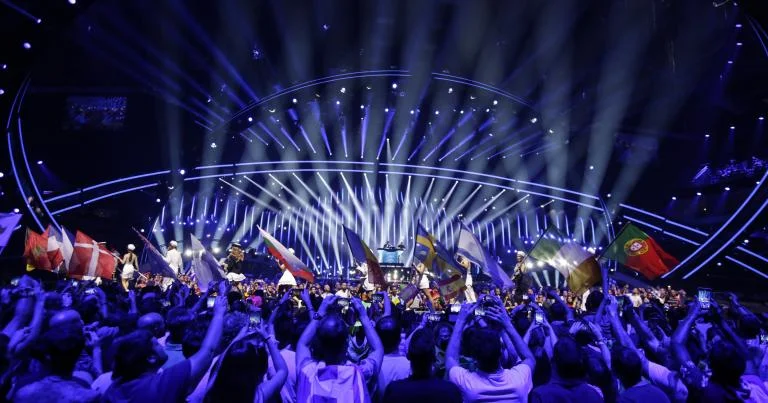
Eurovision is an annual televised song competition organized by the European Broadcasting Union, where member countries each send one original song and viewers plus national juries vote to pick a winner1. It is one of the longest-running shows on television and pulls in hundreds of millions of international viewers every May3.
The format itself has grown into the meme. Countries lean into camp staging, key changes, pyrotechnics, and English-language power ballads engineered to please the widest possible audience, which is why winners are so often accused of being bland pop by design3. The other half of the fun is the scoreboard, where predictable neighbor-to-neighbor voting has fed decades of 'douze points' jokes and bloc-voting memes3.
Gallery
Origin & Background
How It Spread
How to Use This Meme
Beyond watching, Eurovision is used online as a shorthand for anything gloriously over-the-top: fans live-tweet the semi-finals with running jokes about key changes, wind machines, and 'douze points', build bracket predictions and bloc-voting maps, and share reaction clips of the more chaotic staging moments like Lordi's monsters or Netta's chickens2. Common convention on Eurovision Twitter and the subreddit is to pick a 'personal winner' separate from the actual scoreboard and defend it during the results show4.
Frequently Asked Questions
References (6)
- 1
- 2
- 3
- 4
- 5
- 6