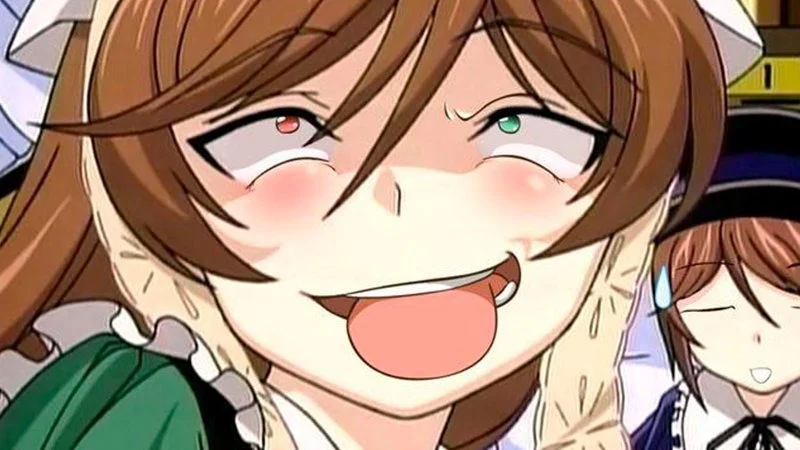
Ahegao Face
Published March 10, 2026 · Updated March 23, 2026
Also known as: アヘ顔
Ahegao (アヘ顔) is an exaggerated facial expression from Japanese hentai manga and anime, defined by rolled-back eyes, a protruding tongue, and flushed cheeks meant to depict overwhelming pleasure. The term appeared in Japanese pornographic magazines as early as the 1990s and crossed into mainstream Western meme culture through the 2016 "ahegao challenge" on Instagram, a surge of ahegao-printed clothing, and Belle Delphine's adoption of the expression in 20181.
Overview
Ahegao is a drawing convention in Japanese hentai comics where a character, usually female, displays extreme sexual pleasure through a wildly distorted facial expression1. The signature features are unmistakable: eyes rolled back or crossed, tongue lolling out, drool running down the chin, and bright red cheeks3. The exaggeration is the entire point. The face signals that pleasure is so intense the character has lost all voluntary control of their expression.
Outside hentai, the look was adopted as a meme format, cosplay pose, and fashion statement. E-girls, cosplayers, and femboys regularly recreate the face for photos and videos, typically played for laughs or ironic provocation2.
Gallery
Origin & Background
How It Spread
How to Use This Meme
Ahegao shows up in a few different meme contexts:
Reaction image: Screenshots or drawings of ahegao faces get dropped as exaggerated reactions to something extremely satisfying. The humor comes from the absurd overreaction to something mundane.
Cosplay and selfie pose: People imitate the expression for photos or TikToks, typically adding crossed eyes, tongue out, and the double peace sign2. Often played for comedy or ironic shock value rather than genuine eroticism.
Fashion provocation: Wearing an ahegao-print hoodie or shirt in public is itself the meme. The pornographic imagery operates as a dare, conversation starter, or deliberate test of social boundaries.
Template edits: The Hirame collage and similar compilations get remixed with different faces swapped in for crossover jokes or parody mashups.
Cultural Impact
Fun Facts
Related Japanese terms for similar expressions include "ikigao" (orgasmic face), "acmegao" (from the French word "acmé" meaning orgasm), and "yogarigao" (satisfaction face)3.
Ahegao-like exaggerated faces sometimes appear in non-pornographic anime and manga, borrowing the distorted style for comedic effect with no sexual context3.
The 2008 doujinshi anthology "A-H-E" was the first publication to organize ahegao as its own dedicated genre, with major publishers following in the 2010s3.
A Chinese company trademarked the word "Ahegao" in the United States before any Japanese publisher did, sparking a legal challenge from FAKKU3.
Derivatives & Variations
Ahegao Double Peace:
The face paired with a two-handed peace sign, which became its own meme format in Japanese communities. First documented in the 2010 game *Futa Letter*[3].
Ahegao Hoodies and Clothing:
Collage prints on apparel, kicked off by Hirame's 2015 artwork. FAKKU produced the best-known Western commercial version[3].
Ahegao Challenge (2016):
A social media trend where users posted themselves mimicking the expression, primarily spreading through Instagram[2].
Belle Delphine's Ahegao Content:
The internet personality's regular use of the face from 2018 onward became a recognizable subset of the trend and brought it to mainstream audiences[3].
Frequently Asked Questions
References (5)
- 1Ahegaoencyclopedia
- 2Ahegao Face - Urban Dictionarydictionary
- 3Ahegao Face - Know Your Memeencyclopedia
- 4Ero guroencyclopedia
- 5Suehiro Maruoencyclopedia