Google Search Suggestions
Published August 25, 2026
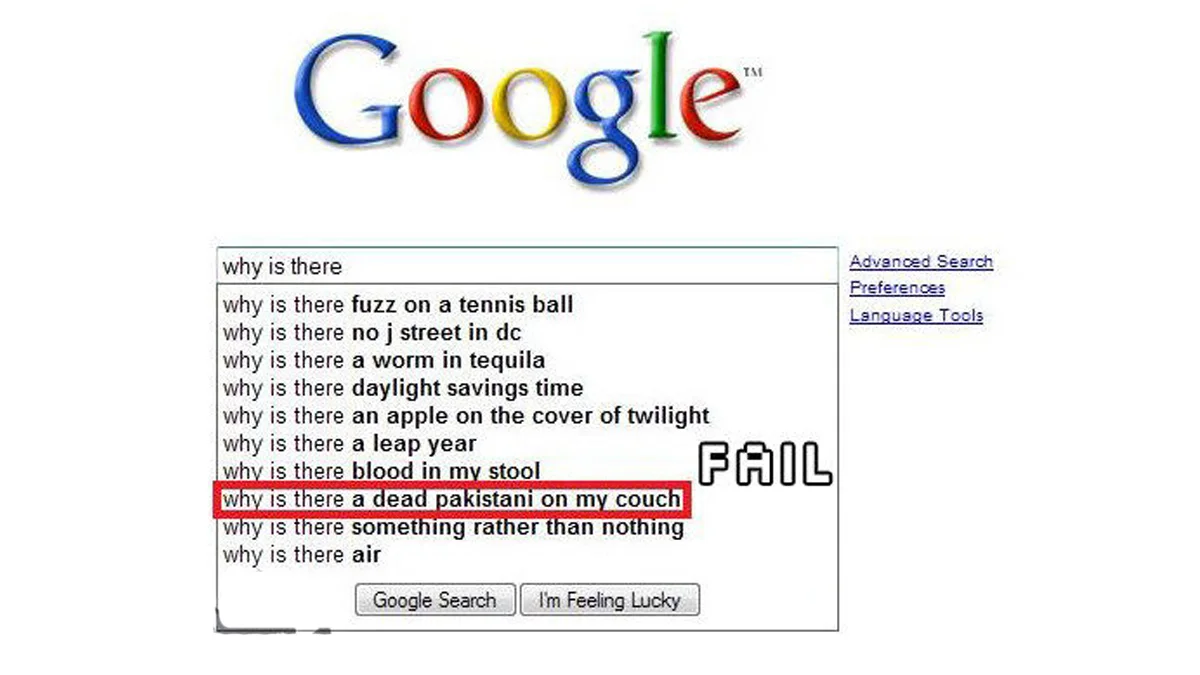
Google Search Suggestions are the autocomplete completions Google surfaces as users type into its search box, and screenshots of the odder ones became a widely shared meme format starting in 2009. The comedy works because every suggestion is real data about what other users have already searched for, which produced a decade of listicles, Photoshop parodies, and one influential UN Women ad campaign.
Overview
Google Search Suggestions is the autocomplete feature that surfaces real-time query completions as users type into Google's search box1. The meme form comes from screenshotting the strange, funny, or embarrassing suggestions the algorithm produces based on what other people actually search for7. Because the completions are pulled from aggregate popular queries, the format doubles as accidental comedy and unintentional sociological data5.
Screenshots of real suggestions became a staple of listicles, image macros, and Twitter jokes, with typical formats showing a search box with a common opening phrase like 'why is my' or 'is it normal to' followed by four or five bizarre completions2. The deadpan Google interface delivers the punchline on its own, no caption required7.
Gallery
Origin & Background
How It Spread
How to Use This Meme
The typical format shows a screenshot of a Google search box with a common query stem typed in, followed by four or five suggestions that are either funny in isolation or funny because someone actually searched for them enough times to influence the algorithm7. Common opening stems include 'why is my,' 'is it normal to,' 'can I,' and 'is my [partner or family member].' Photoshopped versions keep the same visual template but swap the real completions for jokes aimed at the searcher, such as fake suggestions that call the user out or reveal something embarrassing4. Some creators also edit the query text itself to set up a more absurd punchline.
Cultural Impact
Fun Facts
Google originally released the feature under the 'Google Suggest' name inside Google Labs before rolling it out to the main site1
Users who found the completions distracting could disable them via the Query Suggestions preference while signed in, or by appending &complete=0 to a search URL3
The UN Women ad's fine print listed the search date as 'actual Google search on 09/03/13' and reproduced results that also appeared on the U.S. version of Google5
BuzzFeed's 'The 19 Dumbest Things That Google Is Forced To Suggest' opened with the line 'Google gave us this super-cool, insanely powerful tool to help us find anything we want in the universe and this is what you did with it'7
Google added autocomplete to Image Search on April 7, 2009, about eight months after the main search rollout3
Derivatives & Variations
UN Women 'The Autocomplete Truth' ad campaign (September 2013) by Christopher Hunt at Ogilvy & Mather Dubai, built entirely on real search suggestions for phrases like 'women should' to draw attention to global sexism[5]
John Green's 'Is my b' Vlogbrothers video (April 11, 2011) answering the top autocompletes for that specific stem[8]
Photoshopped fake-suggestion screenshots that mock the searcher instead of answering the query, popularized by College Humor's November 2009 parody image[4]
BuzzFeed's 'The 19 Dumbest Things That Google Is Forced To Suggest' listicle format (2013), which pushed the joke into a whole subgenre of Google-generated content[7]
Frequently Asked Questions
References (8)
- 1
- 2
- 3
- 4
- 5
- 6
- 7
- 8