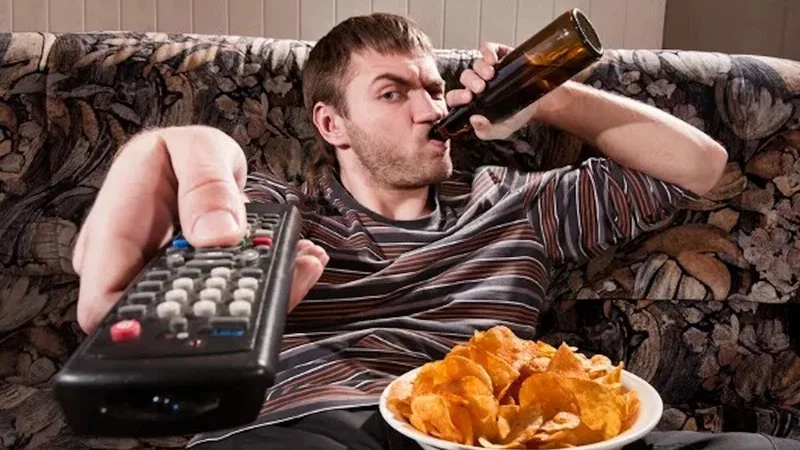
Guy Sipping Beer On A Couch Stock Image
Published March 30, 2026
Also known as: Couch Potato Sipping Beer
Guy Sipping Beer on a Couch Stock Image is a stock photograph of a man lounging on a couch with potato chips, a beer, and a TV remote that became a viral reaction image and redraw meme in late 2024. Originally uploaded to Shutterstock in 2011, the photo spent over a decade as generic editorial filler before X users turned it into a relatable symbol of lazy contentment and a popular artist challenge format3.
Overview
The image shows a man in a striped T-shirt slouched on a couch. He's got a plate of potato chips in his lap, a beer bottle raised to his lips, and his other arm extended toward an off-screen television while clicking a remote. It's the visual dictionary definition of "couch potato," and that's exactly how stock photo buyers used it for years. The composition hits every cliché of sedentary living: junk food, alcohol, passive entertainment, zero motivation to move3.
What makes it work as a meme is the man's total commitment to doing nothing. There's no guilt in his posture, no half-hearted attempt to look productive. He's fully locked in to an evening of absolutely zero responsibilities, and that energy is what turned a generic stock photo into something people actually wanted to share3.
Gallery
Origin & Background
How It Spread
How to Use This Meme
The meme works in two main formats:
As a reaction image: Post the original stock photo (or a cropped version) with a caption describing a situation where you've given up or settled into doing nothing. The tone is typically self-deprecating but comfortable. Common setups include job searching, waiting for something, avoiding responsibilities, or embracing a lazy day. The caption usually starts with "Me when..." or "Me after..." to frame the relatable scenario.
As a redraw challenge: Artists recreate the exact pose and composition with a character of their choice. The subject sits on a couch, holds a drink in one hand, points a remote with the other, and has snacks in their lap. The humor often comes from placing a character who's normally active, heroic, or dignified into this supremely unbothered position.
Cultural Impact
Fun Facts
The photographer Nomad_soul uploaded at least two versions from the same photoshoot within the same week in February 20113.
The photo was used for over a decade in serious health journalism before anyone thought to make it a meme12.
The viral reaction post dropped on Christmas Day 2024, when a huge portion of the audience was literally sitting on couches doing the exact thing depicted in the image3.
The redraw challenge turned a stock photo about unhealthy habits into a celebration of fan art creativity3.
Derivatives & Variations
Hylics Wayne Redraw:
X user @nurtleteckye's fan art of the Hylics character Wayne in the couch potato pose, one of the first and most popular redraws with 19,000 likes in a day[3].
OC/Fave Redraws:
A broad wave of artist redraws featuring original characters and fandom favorites in the stock photo's pose, sparked by @art_retr0's December 29 post[3].
Job Market Reaction Edits:
Variations on @Melodic_Lemons3's original caption applying the image to unemployment, seasonal laziness, and burnout scenarios[3].
Frequently Asked Questions
References (4)
- 1
- 2
- 3
- 4