Happy Happy Joy Joy
Published August 27, 2026
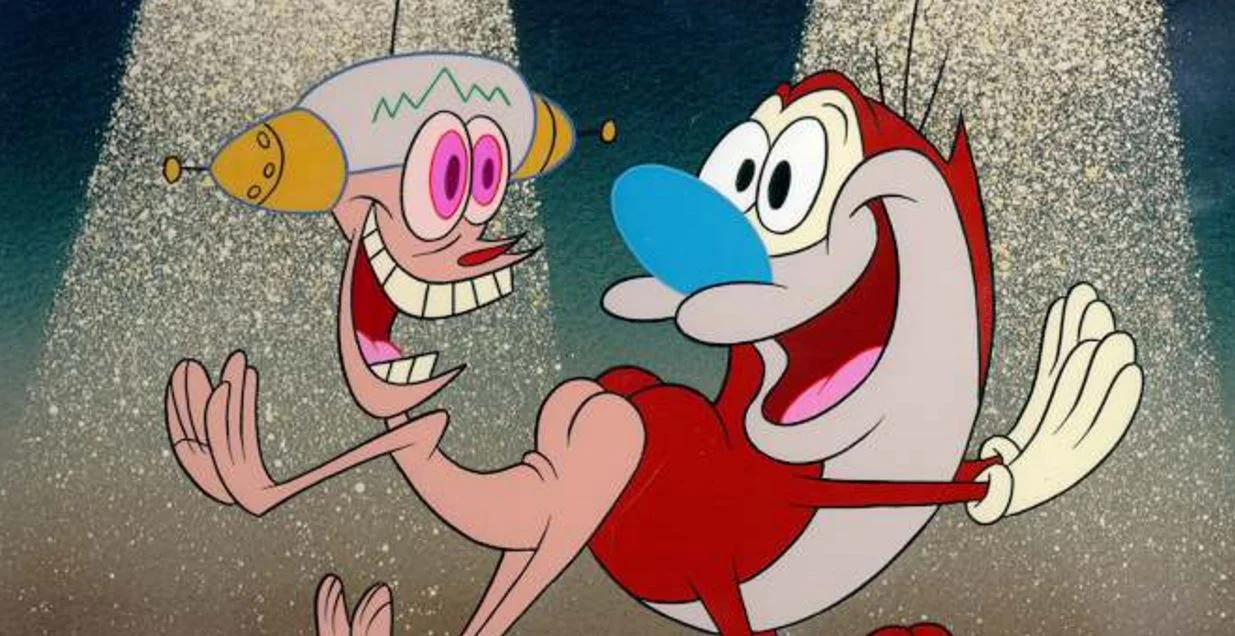
Happy Happy Joy Joy is a manic novelty song from the 1991 Ren & Stimpy episode 'Stimpy's Invention,' where Stimpy plays a record to brainwash Ren into forced cheerfulness. The unhinged chirp of the chorus turned into one of the defining audio-quote memes of early Nickelodeon animation, drifting online as sarcastic slang for anything too aggressively upbeat.
Overview
The bit works as sarcastic shorthand for suffocating good vibes. Urban Dictionary entries define it as an adjective for something 'overly happy and/or cheerful,' typically used by people who aren't feeling it themselves 5. When someone quotes 'Happy Happy Joy Joy' online, they usually mean the opposite of what the words say 4.
Musically the song is a stomping novelty march with brassy horns and a chorus that just loops the title in Stimpy's braying voice 1. In the episode it plays while Ren is strapped to a chair being forced to smile, which gave the tune a permanent undertone of coercion rather than actual joy 2. That mismatch between sound and picture is why the phrase still gets quoted whenever a scene, jingle, or personality feels aggressively wholesome 3.
Origin & Background
Happy Happy Joy Joy debuted in 'Stimpy's Invention,' an episode of The Ren & Stimpy Show that aired on Nickelodeon in 1991 2. The plot has Stimpy build a 'Happy Helmet' to fix Ren's foul mood, then play a record by fictional artist Stinky Whizzleteats to drill the song into Ren's brain 2. The actual vocals were performed by composer Christopher Reccardi, credited on-screen as Whizzleteats 4.
How It Spread
How to Use This Meme
People typically drop 'Happy Happy Joy Joy' as a comment on something that feels forced or excessively upbeat, often paired with a link to the original scene 1. Common convention is to use it sardonically rather than sincerely, matching the show's original framing of coerced cheer via the Happy Helmet 2.