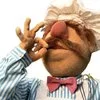
Italian Chef Kiss
Published March 31, 2026
Also known as: Chef's Kiss · Chef Kiss · Italian Chef Finger Kiss
The Italian chef kiss is a gesture-turned-internet-shorthand where someone brings their fingertips together, kisses them, and spreads their hand apart to signal that something is perfect. Rooted in an actual Italian hand signal meaning "al bacio" (as good as a kiss), it became one of the internet's go-to reactions for praising or sarcastically overpraising content starting around 2015-20161. The text version, typically written as \*chef kiss\* or \*chef's kiss\* between asterisks, spread across Twitter and beyond as a universal seal of approval for anything from genuinely excellent content to spectacularly terrible takes2.
Overview
The Italian chef kiss works as both a physical gesture and a text-based reaction. In its visual form, it shows a stereotypical chef, usually with a white toque and mustache, pressing fingers to pursed lips and releasing them outward in a flourish of approval. Online, people more often type it out: \*chef kiss\*, \*chef's kiss\*, or occasionally spell out "Italian chef finger-kiss" for maximum effect1.
The gesture carries a specific meaning: whatever is being discussed is so perfect, so exquisitely crafted, that it deserves the same appreciation a chef gives to a flawless dish. The twist is that internet users apply it equally to things that are genuinely excellent and things that are catastrophically bad. A clever headline gets a \*chef kiss\*. A political dumpster fire also gets a \*chef kiss\*2. The irony is baked in.
Gallery
Origin & Background
How It Spread
How to Use This Meme
The chef kiss works in two main formats:
Text form: Type \*chef kiss\* or \*chef's kiss\* between asterisks, usually at the end of a sentence or as a standalone reaction. The asterisks signal a physical action, like stage directions in a script.
- "Zap Brannigan reading Trump quotes is the best thing ever. \*Chef kiss\*"1 - "Next time, sprinkle about a tsp of sugar on that bad boy before you heat it. \*chef finger kiss\*"1
Image form: Reply with a picture of the Swedish Chef poser, the Discourse Chef illustration, or any chef-like figure making the kiss gesture. Often paired with a caption.
The tonal range is what makes the meme flexible: - Genuine praise: "This cinematography? \*chef kiss\*" - Sarcastic admiration for chaos: "The entire discourse today? \*chef kiss\*" - Appreciation for absurdity: something so perfectly terrible it loops back around to being art
As the AV Club put it, borrowing from Hathaway's advice: "Like a good seasoning, you'll want to use it sparingly, as adding too much will ruin the effect"2.
Cultural Impact
Fun Facts
The Swedish Chef from The Muppets was never meant to be Italian. Jim Henson developed the character's mock-Swedish speech by listening to practice tapes on his daily commute, babbling about how to make a chicken sandwich in fake Swedish while stopped at traffic lights5.
The Swedish Chef's "poser" doll has articulated fingers, unlike the actual puppet, which uses a puppeteer's real human hands extending from the sleeves. This is why the doll can make the kiss gesture but the real Muppet cannot1.
Chef Boyardee's real name was Ettore Boiardi. He changed it to "Hector Boyardee" and became an early example of personal branding in the food industry1.
The terms "authentic" and "real" are frequently used to market Italian food in the United States despite the absence of genuine Italian ingredients or chefs, raising questions about what "authentic" Italian food actually means in an American context4.
None of the likely real-world inspirations for the Swedish Chef were Italian. The character was based on parodies of television chefs, including German American Chef Tell and Swedish chef Lars "Kuprik" Bäckman5.
Derivatives & Variations
Swedish Chef reaction images:
The Muppet "poser" photo became one of the most widely shared visual versions of the chef kiss, appearing on licensed merchandise including a Hot Wheels toy van[1].
Discourse Chef:
A cartoon illustration of a winking, OK-signing chef that carried the same approval energy and spread as an alternative reaction image on Twitter and Reddit[2].
Emoji combinations:
Before a dedicated emoji existed, users experimented with pairing a smiley face and the OK hand sign to approximate the gesture digitally[2].
Chef Boyardee references:
The real Ettore Boiardi behind the canned pasta brand became a frequent footnote in chef kiss discussions, blurring the line between real Italian cooking and its American cartoon version[1].
Frequently Asked Questions
References (6)
- 1
- 2
- 3
- 4Henry Kissingerencyclopedia
- 5Swedish Chef - Wikipediaencyclopedia
- 6