Kazoo Instrumental Covers

2008Musical cover / comedic videosemi-active

Also known as: Kazoo Covers · Kazoo Music

Kazoo Instrumental Covers are YouTube videos from 2008 featuring comedic kazoo renditions of famous songs like "The Final Countdown," using the cheap plastic instrument's obnoxious buzzing for absurdist comedy.

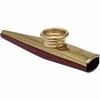
Kazoo Instrumental Covers are comedic musical tributes to well-known songs performed on the kazoo, a cheap plastic membranophone that turns any hum into an obnoxious buzzing drone. The format took off on YouTube in late 2008 when creators started uploading kazoo renditions of rock hits like "The Final Countdown" and "Enter Sandman," leaning into the instrument's inherent absurdity for laughs3. The trend has produced waves of viral moments across platforms, from multi-track YouTube productions to Izzy Humair's chain of 20 kazoos blasting Owl City on Twitter in 20171.

TL;DR

Kazoo Instrumental Covers are comedic musical tributes to well-known songs performed on the kazoo, a cheap plastic membranophone that turns any hum into an obnoxious buzzing drone.

Overview

The premise is dead simple: take a song everyone knows, play it on a kazoo, and let the instrument's cheap buzzy tone do the comedy. The kazoo works by vibrating a membrane when the player hums into it, producing a sound somewhere between a party favor and a distressed bee. YouTube creators figured out early that covering dramatic, overproduced songs on this $2 instrument created an irresistible contrast3. The format expanded beyond single-kazoo covers into elaborate multi-track recordings, kazoo-hybrid instruments, and stacked chains of kazoos played simultaneously.

Much like the ironic use of airhorns in pop song mashups, kazoo covers thrive on the gap between the original song's grandeur and the kazoo's total lack of it3.

The kazoo itself has a long history. Similar hide-covered, voice-changing wind instruments were used for ceremonial purposes in Africa for centuries. The most common origin story credits Alabama Vest, an African-American man from Macon, Georgia, with inventing the device around 1840, though no documentation supports this3. The earliest documented kazoo belongs to Warren Herbert Frost, who received U.S. patent #270,543 on January 9, 18833. The instrument became a fixture in country music and novelty acts throughout the 20th century. Kazoobie Kazoos, a manufacturer based in Beaufort, South Carolina, has operated kazoos.com since 1997 and sold over 20 million kazoos worldwide as of 20262.

The meme format's YouTube origin traces to October 7, 2008, when a creator called Crouts0 uploaded a cover of Europe's 1986 hit "The Final Countdown" using a Kazookeylele, a custom hybrid instrument combining a ukulele and a kazoo3. The video hit over 5.7 million views and established the template: pick a recognizable song, play it badly on a kazoo, watch people lose it.

Origin & Background

Platform
YouTube
Key People
Crouts0, Mister Tim, Izzy Humair
Date
2008

The kazoo itself has a long history. Similar hide-covered, voice-changing wind instruments were used for ceremonial purposes in Africa for centuries. The most common origin story credits Alabama Vest, an African-American man from Macon, Georgia, with inventing the device around 1840, though no documentation supports this. The earliest documented kazoo belongs to Warren Herbert Frost, who received U.S. patent #270,543 on January 9, 1883. The instrument became a fixture in country music and novelty acts throughout the 20th century. Kazoobie Kazoos, a manufacturer based in Beaufort, South Carolina, has operated kazoos.com since 1997 and sold over 20 million kazoos worldwide as of 2026.

The meme format's YouTube origin traces to October 7, 2008, when a creator called Crouts0 uploaded a cover of Europe's 1986 hit "The Final Countdown" using a Kazookeylele, a custom hybrid instrument combining a ukulele and a kazoo. The video hit over 5.7 million views and established the template: pick a recognizable song, play it badly on a kazoo, watch people lose it.

How It Spread

The success of Crouts0's "Final Countdown" cover opened the floodgates. On December 18, 2008, YouTube comedian Mister Tim uploaded a multi-track kazoo cover of Metallica's "Enter Sandman," layering multiple kazoo recordings to approximate the song's heavy guitar riffs. That video pulled in over three million views within five years.

The format spread steadily on YouTube and SoundCloud throughout the early 2010s, with creators using multi-tracking, multi-panning, and video editing to push kazoo covers into increasingly absurd territory. YouTuber OneyNG built a following partly through Dragon Ball theme song kazoo covers, bringing the format into anime fan communities.

In July 2008, before the YouTube trend even kicked off, a congregation of Christian youth groups at the EFCA Challenge Conference set a Guinness World Record for the largest kazoo band performance, putting the instrument on the radar in a completely different context.

The meme saw a major second wave in July 2017 when Izzy Humair, a 17-year-old from Hong Kong spending her summer in New York, started posting multi-kazoo covers on Twitter. Humair's trick was connecting multiple kazoos end-to-end, "like a kazoo human-centipede" as New York Magazine described it, then playing songs through the entire chain. Her cover of "Mr. Sandman" used 13 kazoos; "Fireflies" by Owl City went through 20. She told Select All she'd bought a party pack from Party City on a whim and noticed the kazoos stacked together, changing the sound. The videos racked up shares and press coverage, giving the kazoo cover format a new lease on life outside YouTube.

How to Use This Meme

Creating a kazoo cover typically follows a simple formula:

1

Pick a well-known song. The more dramatic or overproduced the original, the funnier the kazoo version. Power ballads, metal anthems, Broadway showstoppers, and epic movie themes all work well.

2

Play it on kazoo. Hum the melody into the kazoo. No musical training required, just lungs and commitment. As Humair advised, "Make sure to really hum and warm up before. The kazoo won't sound well unless you give it your all".

3

Record and share. A phone recording is fine. The lo-fi quality often adds to the charm.

Cultural Impact

Kazoo covers tapped into a broader internet tradition of performing serious music on inappropriate instruments, sitting alongside recorder covers, melodica versions, and rubber chicken renditions. The format's low barrier to entry made it popular for casual creators. A kazoo costs almost nothing, and the instrument requires no skill beyond humming.

The trend brought enough attention to the kazoo industry that manufacturers like Kazoobie Kazoos, which runs a brick-and-mortar Kazoo Museum displaying over 150 antique instruments covering 160 years of American kazoo history, saw their products reach over 35 countries. New York Magazine covered Humair's viral Twitter moment in 2017, treating it as a genuine feel-good internet story.

The format also crossed into gaming and anime fan communities through creators like OneyNG, whose Dragon Ball kazoo covers brought the joke into established fandom spaces.

Fun Facts

Izzy Humair's inspiration was entirely accidental. She noticed kazoos stacked together in their Party City packaging and wondered if it would change the sound.

The Kazoo Museum in Beaufort, South Carolina offers free admission and factory tours, displaying instruments spanning 160+ years of American kazoo history.

The earliest kazoo patent was issued in 1883, but the YouTube meme format didn't take off until 125 years later.

Humair planned to cover "Africa" by Toto as her next kazoo video, calling it "a classic for sure".

Kazoobie Kazoos has sold over 20 million kazoos worldwide and ships to over 35 countries.

Derivatives & Variations

Kazookeylele covers

— A hybrid ukulele-kazoo instrument used in Crouts0's original viral video, spawning its own sub-genre of hybrid instrument covers[3].

Multi-kazoo chain videos

— Izzy Humair's format of connecting 10-20+ kazoos end-to-end and playing through the whole chain, distinct from the standard single-kazoo cover[1].

Multi-track kazoo orchestras

— Full song reproductions using layered kazoo recordings to cover every instrumental part, pioneered by Mister Tim's "Enter Sandman"[3].

Anime theme kazoo covers

— OneyNG's Dragon Ball kazoo covers created a niche for anime opening and ending theme renditions[3].

Frequently Asked Questions

KazooInstrumentalCovers

2008Musical cover / comedic videosemi-active

Also known as: Kazoo Covers · Kazoo Music

Kazoo Instrumental Covers are YouTube videos from 2008 featuring comedic kazoo renditions of famous songs like "The Final Countdown," using the cheap plastic instrument's obnoxious buzzing for absurdist comedy.

Kazoo Instrumental Covers are comedic musical tributes to well-known songs performed on the kazoo, a cheap plastic membranophone that turns any hum into an obnoxious buzzing drone. The format took off on YouTube in late 2008 when creators started uploading kazoo renditions of rock hits like "The Final Countdown" and "Enter Sandman," leaning into the instrument's inherent absurdity for laughs. The trend has produced waves of viral moments across platforms, from multi-track YouTube productions to Izzy Humair's chain of 20 kazoos blasting Owl City on Twitter in 2017.

TL;DR

Kazoo Instrumental Covers are comedic musical tributes to well-known songs performed on the kazoo, a cheap plastic membranophone that turns any hum into an obnoxious buzzing drone.

Overview

The premise is dead simple: take a song everyone knows, play it on a kazoo, and let the instrument's cheap buzzy tone do the comedy. The kazoo works by vibrating a membrane when the player hums into it, producing a sound somewhere between a party favor and a distressed bee. YouTube creators figured out early that covering dramatic, overproduced songs on this $2 instrument created an irresistible contrast. The format expanded beyond single-kazoo covers into elaborate multi-track recordings, kazoo-hybrid instruments, and stacked chains of kazoos played simultaneously.

Much like the ironic use of airhorns in pop song mashups, kazoo covers thrive on the gap between the original song's grandeur and the kazoo's total lack of it.

The kazoo itself has a long history. Similar hide-covered, voice-changing wind instruments were used for ceremonial purposes in Africa for centuries. The most common origin story credits Alabama Vest, an African-American man from Macon, Georgia, with inventing the device around 1840, though no documentation supports this. The earliest documented kazoo belongs to Warren Herbert Frost, who received U.S. patent #270,543 on January 9, 1883. The instrument became a fixture in country music and novelty acts throughout the 20th century. Kazoobie Kazoos, a manufacturer based in Beaufort, South Carolina, has operated kazoos.com since 1997 and sold over 20 million kazoos worldwide as of 2026.

The meme format's YouTube origin traces to October 7, 2008, when a creator called Crouts0 uploaded a cover of Europe's 1986 hit "The Final Countdown" using a Kazookeylele, a custom hybrid instrument combining a ukulele and a kazoo. The video hit over 5.7 million views and established the template: pick a recognizable song, play it badly on a kazoo, watch people lose it.

Origin & Background

Platform
YouTube
Key People
Crouts0, Mister Tim, Izzy Humair
Date
2008

The kazoo itself has a long history. Similar hide-covered, voice-changing wind instruments were used for ceremonial purposes in Africa for centuries. The most common origin story credits Alabama Vest, an African-American man from Macon, Georgia, with inventing the device around 1840, though no documentation supports this. The earliest documented kazoo belongs to Warren Herbert Frost, who received U.S. patent #270,543 on January 9, 1883. The instrument became a fixture in country music and novelty acts throughout the 20th century. Kazoobie Kazoos, a manufacturer based in Beaufort, South Carolina, has operated kazoos.com since 1997 and sold over 20 million kazoos worldwide as of 2026.

The meme format's YouTube origin traces to October 7, 2008, when a creator called Crouts0 uploaded a cover of Europe's 1986 hit "The Final Countdown" using a Kazookeylele, a custom hybrid instrument combining a ukulele and a kazoo. The video hit over 5.7 million views and established the template: pick a recognizable song, play it badly on a kazoo, watch people lose it.

How It Spread

The success of Crouts0's "Final Countdown" cover opened the floodgates. On December 18, 2008, YouTube comedian Mister Tim uploaded a multi-track kazoo cover of Metallica's "Enter Sandman," layering multiple kazoo recordings to approximate the song's heavy guitar riffs. That video pulled in over three million views within five years.

The format spread steadily on YouTube and SoundCloud throughout the early 2010s, with creators using multi-tracking, multi-panning, and video editing to push kazoo covers into increasingly absurd territory. YouTuber OneyNG built a following partly through Dragon Ball theme song kazoo covers, bringing the format into anime fan communities.

In July 2008, before the YouTube trend even kicked off, a congregation of Christian youth groups at the EFCA Challenge Conference set a Guinness World Record for the largest kazoo band performance, putting the instrument on the radar in a completely different context.

The meme saw a major second wave in July 2017 when Izzy Humair, a 17-year-old from Hong Kong spending her summer in New York, started posting multi-kazoo covers on Twitter. Humair's trick was connecting multiple kazoos end-to-end, "like a kazoo human-centipede" as New York Magazine described it, then playing songs through the entire chain. Her cover of "Mr. Sandman" used 13 kazoos; "Fireflies" by Owl City went through 20. She told Select All she'd bought a party pack from Party City on a whim and noticed the kazoos stacked together, changing the sound. The videos racked up shares and press coverage, giving the kazoo cover format a new lease on life outside YouTube.

How to Use This Meme

Creating a kazoo cover typically follows a simple formula:

1

Pick a well-known song. The more dramatic or overproduced the original, the funnier the kazoo version. Power ballads, metal anthems, Broadway showstoppers, and epic movie themes all work well.

2

Play it on kazoo. Hum the melody into the kazoo. No musical training required, just lungs and commitment. As Humair advised, "Make sure to really hum and warm up before. The kazoo won't sound well unless you give it your all".

3

Record and share. A phone recording is fine. The lo-fi quality often adds to the charm.

Cultural Impact

Kazoo covers tapped into a broader internet tradition of performing serious music on inappropriate instruments, sitting alongside recorder covers, melodica versions, and rubber chicken renditions. The format's low barrier to entry made it popular for casual creators. A kazoo costs almost nothing, and the instrument requires no skill beyond humming.

The trend brought enough attention to the kazoo industry that manufacturers like Kazoobie Kazoos, which runs a brick-and-mortar Kazoo Museum displaying over 150 antique instruments covering 160 years of American kazoo history, saw their products reach over 35 countries. New York Magazine covered Humair's viral Twitter moment in 2017, treating it as a genuine feel-good internet story.

The format also crossed into gaming and anime fan communities through creators like OneyNG, whose Dragon Ball kazoo covers brought the joke into established fandom spaces.

Fun Facts

Izzy Humair's inspiration was entirely accidental. She noticed kazoos stacked together in their Party City packaging and wondered if it would change the sound.

The Kazoo Museum in Beaufort, South Carolina offers free admission and factory tours, displaying instruments spanning 160+ years of American kazoo history.

The earliest kazoo patent was issued in 1883, but the YouTube meme format didn't take off until 125 years later.

Humair planned to cover "Africa" by Toto as her next kazoo video, calling it "a classic for sure".

Kazoobie Kazoos has sold over 20 million kazoos worldwide and ships to over 35 countries.

Derivatives & Variations

Kazookeylele covers

— A hybrid ukulele-kazoo instrument used in Crouts0's original viral video, spawning its own sub-genre of hybrid instrument covers[3].

Multi-kazoo chain videos

— Izzy Humair's format of connecting 10-20+ kazoos end-to-end and playing through the whole chain, distinct from the standard single-kazoo cover[1].

Multi-track kazoo orchestras

— Full song reproductions using layered kazoo recordings to cover every instrumental part, pioneered by Mister Tim's "Enter Sandman"[3].

Anime theme kazoo covers

— OneyNG's Dragon Ball kazoo covers created a niche for anime opening and ending theme renditions[3].

Frequently Asked Questions