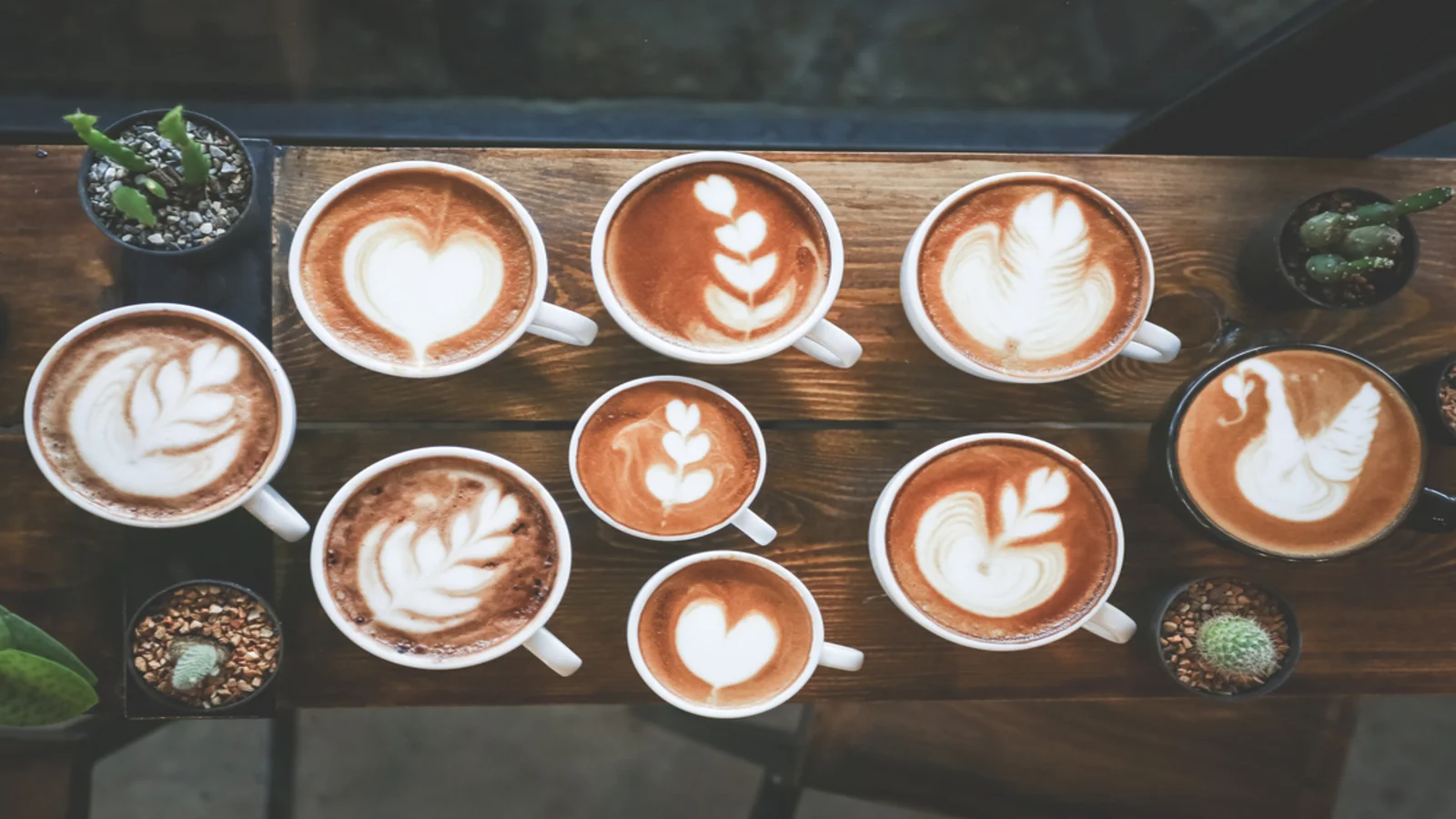
Latte Art
Published September 5, 2026
Latte Art, also called Barista Art or Coffee Art, is the craft of pouring or etching patterns into the microfoam surface of an espresso drink. Seattle barista David Schomer refined the signature rosette pattern in 1992, and a wave of 2000s YouTube tutorials pushed the technique from cafe counters into a globally viral coffee craze.
Overview
Latte Art has two main techniques. Free pouring builds hearts, rosettes and tulips by pouring steamed milk directly into a shot of espresso, while etching uses a thin tool to draw finer detail on top of the foam6. Poured designs hold their shape longer because the crema stays intact, whereas etched work breaks down as the foam settles.
The rosette became the pattern every trainee barista learns first, and later work pushed into three dimensions. Japanese barista Kazuki Yamamoto, working out of Osaka, models Hello Kitty, Vault Boy from Fallout and other pop culture figures out of sculpted steamed milk sitting on top of cappuccino1.
Gallery
Origin & Background
How It Spread
How to Use This Meme
A typical Latte Art pour starts with well-textured microfoam and a fresh shot of espresso. Baristas hold the milk pitcher close to the crema, angle the pour, and move through the cup to draw hearts, tulips or rosettes on the surface. Common convention is to finish poured designs with a fast pull-through stroke, while more detailed work often uses a thin pick or skewer to etch fine lines into the foam after the base pour4.
Frequently Asked Questions
References (7)
- 1
- 2
- 3
- 4
- 5
- 6
- 7