Learn To Code
Published August 9, 2026
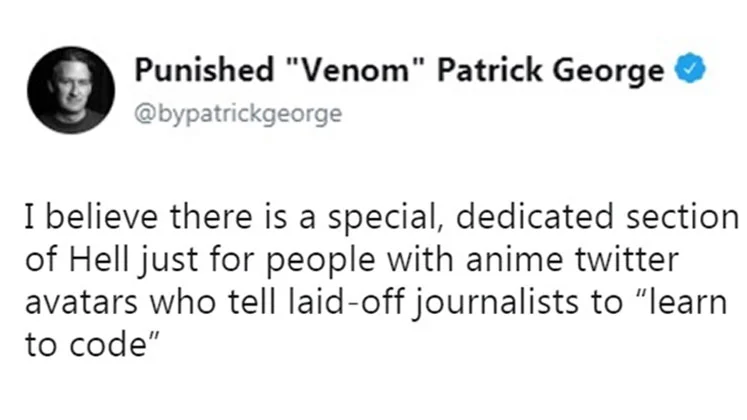
Learn To Code is a mocking two-word reply weaponized on Twitter in late January 2019 against journalists who had just been laid off from BuzzFeed, HuffPost, and Gannett. The phrase reused years of coverage suggesting out-of-work coal miners should retrain in software, and turned into a coordinated harassment wave that drew Twitter suspensions and even resurfaced during Joe Biden's 2020 campaign.
Overview
"Learn to Code" is a three-word taunt aimed at journalists who lost their jobs, throwing back at them the same advice the press had spent years giving to unemployed coal miners in Appalachia1. The joke works on two levels: it mocks the target's sudden unemployment, and it flips the condescension of a media class that had confidently told blue-collar workers to retrain for the tech economy2.
The format is simple. A user quote-tweets or replies to a laid-off reporter with the phrase, sometimes as a bare "learn to code," sometimes with the #LearnToCode hashtag, sometimes attached to screenshots of the outlet's earlier coding-bootcamp coverage3. Its punch comes from context rather than wordplay, which is why Twitter's moderation team eventually treated targeted use of it as harassment rather than commentary4.
Gallery
Origin & Background
How It Spread
How to Use This Meme
Typical use is a reply or quote-tweet of a bare "learn to code" aimed at someone announcing they lost a media job, often paired with the #LearnToCode hashtag or a screenshot of that outlet's earlier coverage recommending coding bootcamps to laid-off workers3. Because Twitter treated targeted deployment as harassment in 2019, most surviving uses now show up as ironic commentary about the moderation fight rather than direct replies4.
Cultural Impact
Fun Facts
BuzzFeed itself published a satirical "Should You Learn to Code?" quiz in 2014, five years before the reply-guy version was aimed at its own staff6.
Kentucky entrepreneur Rusty Justice was actually training former coal miners as web developers at Bit Source in Pikeville when Bloomberg said it could not be done4.
Talia Lavin, one of the writers who documented the harassment for The New Republic, had lost both her Village Voice and HuffPost Opinion columns to shutdowns within roughly six months1.
Twitter cited the hashtag #LearnToCode by name when it suspended user @Paul94Mck, a rare case of a platform pinning an enforcement action to one specific slogan5.
Joe Biden's "anybody who can go down 3,000 feet in a mine can learn to program" line at a December 30, 2019 New Hampshire rally revived the meme almost a year after the original layoff wave5.
Frequently Asked Questions
References (9)
- 1
- 2
- 3
- 4
- 5
- 6
- 7
- 8
- 9