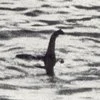
Loch Ness Monster
Published March 23, 2026
Also known as: Nessie · Nessiteras rhombopteryx
The Loch Ness Monster, better known as Nessie, is a legendary cryptid said to inhabit Scotland's Loch Ness. The modern legend took off in 1933 when a local couple reported seeing an enormous creature in the lake, and a famous photograph in 1934 (later exposed as a hoax) turned Nessie into a global sensation. Online, the monster is one of the internet's most referenced cryptids, kept alive by YouTube "sighting" videos, the South Park "tree fiddy" gag, and a never-ending cycle of searches and debunkings.
Overview
Nessie is typically described as a large, long-necked creature with one or more humps breaking the water's surface, often compared to a plesiosaur, a marine reptile that went extinct around 65.5 million years ago1. Loch Ness itself is the perfect monster habitat on paper: roughly 38 kilometers long, up to 230 meters deep, and holding more freshwater than all the lakes in England and Wales combined9. Dark, peat-stained water reduces underwater visibility to almost nothing, making it easy to imagine something hiding in the depths2.
The scientific community has consistently explained alleged sightings as hoaxes, wishful thinking, or misidentification of ordinary objects like boats, logs, swimming deer, or large eels1. In 2018, researchers conducted a DNA survey of the loch and found no evidence of a plesiosaur or any large unknown animal, though results did show significant amounts of eel DNA9. This left open the theory that Nessie might be an oversized European eel, but nothing remotely close to a prehistoric reptile1.
None of that has slowed down Nessie's cultural presence. The creature was estimated to contribute nearly $80 million annually to Scotland's tourism economy in the early 2000s1. Online, the monster is a fixture of cryptid compilations, blurry-photo jokes, and the iconic South Park bit where the Loch Ness Monster shows up disguised as various people to beg for "$3.50"5.
Gallery
Origin & Background
How It Spread
How to Use This Meme
Nessie shows up in memes through several common formats:
Blurry sighting parody: Take a low-quality, out-of-focus photo of any vaguely shaped object in water (a log, a duck, a pool noodle) and caption it as a breaking Loch Ness Monster sighting. The humor comes from mimicking the breathless "discovery" framing with obviously mundane subjects.
Tree fiddy bait-and-switch: Write or tell a long, increasingly detailed story that builds toward a meaningful conclusion. The punchline: one character turns out to be the Loch Ness Monster, who "needed about tree fiddy." Typically deployed in comment threads and story-format posts to troll readers who got invested in the narrative.
Stock Ness Monster reference: Use the generic idea that any lake, river, or body of water might harbor its own Nessie-like creature. Common when news outlets report "mysterious" objects spotted in water, or when foggy/blurry water footage surfaces online.
Cryptid comparison reaction: When any large, unidentified object appears in water footage, whether sincere or obviously fake, compare it directly to Nessie. The Alaska Ice Monster and Iceland sea serpent videos both followed this pattern naturally.
Cultural Impact
Full History
Fun Facts
Circus owner Bertram Mills's £20,000 reward for Nessie's capture in 1933 would be worth roughly £2 million today. His circus animals were watered on the banks of Loch Ness, and the "monster's" head-and-neck shape looked a lot like an elephant's trunk3.
In 1975, four firemen built a 309-foot papier-mâché "lady monster" to attract what they assumed was a male Nessie. The recorded mating call was accidentally that of a male walrus, and then a sudden wind smashed the model into a jetty3.
Italian journalist Francesco Gasprini claimed in 1959 that he had invented the modern Nessie story in 1933 while working as a London correspondent for a Milan newspaper, fabricating eyewitness accounts to fill a slow news day. He planned to "kill off" the monster but the story got away from him14.
Robert Rines's counter-anagram for Nessiteras rhombopteryx was "Yes, both pix are monsters, R," defending his own underwater photographs14.
Loch Ness is the largest freshwater body by volume in Great Britain and never freezes, thanks to a thermocline effect where cooler water sinks and is replaced by warmer water from below9.
Derivatives & Variations
Tree Fiddy / $3.50 copypasta:
Originating from South Park's 1999 episode, this became a standalone internet format where users end elaborate stories with the Loch Ness Monster asking for $3.50. Widely used on Reddit, 4chan, and comment sections across the web[5].
Stock Ness Monster (media trope):
TV Tropes' term for the widespread fiction trope of a mysterious, plesiosaur-like lake monster, directly modeled after Nessie. Spans hundreds of works across all media[16].
Not the Nessie (plot device):
The specific sub-trope where the "monster" is revealed to be a disguised submarine or mechanical fake, directly inspired by the Surgeon's Photograph hoax[16].
Alaska Ice Monster (2016):
A viral video from the Chena River in Fairbanks, Alaska, where a strange object drew direct Nessie comparisons from CBS News, Fox News, and other outlets[12].
Iceland Sea Serpent video (2012):
A viral YouTube clip purporting to show a large serpent swimming through frozen waters in Iceland, drawing over 5.3 million views and immediate Nessie comparisons[5].
Nessiteras rhombopteryx anagram:
Sir Peter Scott's 1975 scientific name for Nessie, which doubles as the anagram "Monster hoax by Sir Peter S," became an internet favorite for its self-defeating cleverness[14].
Frequently Asked Questions
References (28)
- 1
- 2
- 3
- 4Loch Ness Monster - Know Your Memeencyclopedia
- 5Loch Ness Monsterencyclopedia
- 6Loch Ness Monster - Urban Dictionarydictionary
- 7Loch Ness Monster - Wikipediaencyclopedia
- 8
- 9
- 10
- 11
- 12
- 13
- 14
- 15
- 16
- 17
- 18The Surgeon’s Photoarticle
- 19
- 20
- 21Not the Nessie - TV Tropesarticle
- 22
- 23
- 24
- 25
- 26
- 27Viral – UPROXXsocial
- 28Loch Ness Monster Factsarticle