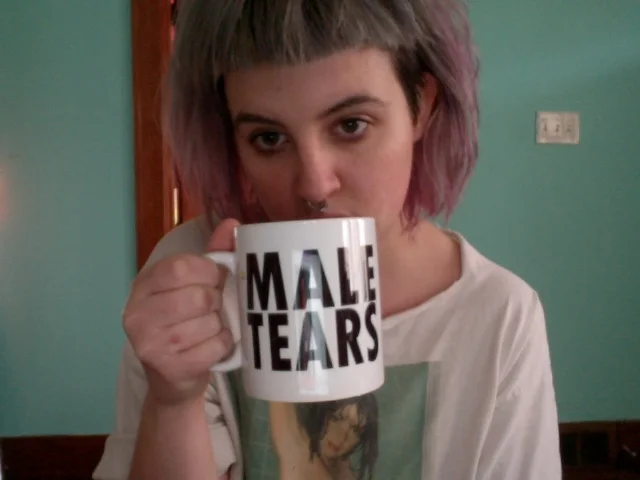
Male Tears
Published August 1, 2026
Male Tears is a feminist reaction image and catchphrase used to mock men who whine about being oppressed or victims of reverse sexism. It started on a French Tumblr blog in August 2012 and hit mainstream news in July 2014 after Guardian columnist Jessica Valenti tweeted a photo of herself in an 'I Bathe In Male Tears' sweatshirt.
Overview
Male Tears works on two tracks. Online it is a reaction-image tag: GIFs and screenshots of male fictional characters crying, dropped into Tumblr and Twitter replies whenever a man complains about feminism, mansplaining accusations, or the idea of misandry1. Offline it is a piece of feminist novelty merch, printed on mugs, T-shirts, and sweatshirts and photographed by the buyer as a public gesture1.
Slate writer Amanda Hess grouped the whole thing under the label 'ironic misandry,' the mid-2010s Tumblr habit of feminist women embracing the man-hating stereotype hurled at them and playing it to absurd extremes1. Time writer Jessica Bennett described the same tone as an 'inside, inside joke' aimed at feminists who already got the setup2. The point of Male Tears is that flatness: the harder someone insists it is literal misandry, the more it works as a joke, which is why the format kept generating new fights every time it broke into a mainstream audience3.
Gallery
Origin & Background
How It Spread
How to Use This Meme
Two formats sit under the same tag. The image version is a reply move: when a man complains in a thread about feminism, being generalized about, or being asked to stop mansplaining, drop in a GIF or screenshot of a male character crying and caption it 'male tears'1. The merch version is a photo pose: buy a mug or T-shirt printed with 'Male Tears' or 'I Bathe in Male Tears,' take a picture of yourself using it deadpan, and post it, often as a reply to an actual harasser1. The joke depends on playing it flat rather than winking, which is what Slate identified as the whole logic of the ironic-misandry style1.
Cultural Impact
Frequently Asked Questions
References (7)
- 1
- 2
- 3
- 4
- 5
- 6
- 7