Meme Elitism

2009cultural movementclassic

Published September 6, 2026

Meme Elitism is an online ideology built around opposition to memes crossing over into mainstream media and non-underground spaces. Rooted in users from pre-Web 2.0 spaces like Usenet and early imageboards, the stance flared up in the late 2000s as TV networks and social platforms began repurposing internet humor, later fueling organized raids on Know Your Meme itself.

Overview

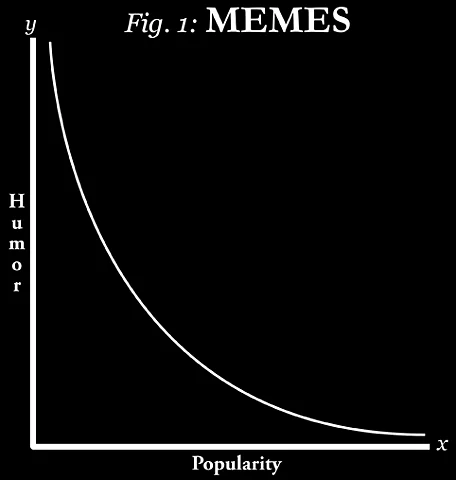
Meme Elitism treats certain older online communities as the rightful arbitrators of what counts as a meme, with adherents pushing back whenever mainstream outlets, TV networks, or advertising campaigns pull from imageboard humor1. The belief overlaps with broader online frameworks about mainstreaming, including TV Tropes' 'It's Popular, Now It Sucks'1 and the older 'Selling Out' idea, along with Kathy Sierra's Kool-Aid Point concept3. When mass media adopts a meme for commercial reasons, elitists often say the meme has 'Jumped the Shark' and lost its original meaning3.

Adherents typically have ties to communities that existed before Web 2.0, and see themselves as the ones deciding what a meme can and cannot be3. Common targets include the flood of Advice Dog spinoffs, where the low bar to making a derivative draws complaints that anyone can crank one out and call it a meme2.

Origin & Background

Platform
Imageboards / Know Your Meme (documentation)
Date
2009

Elitism has been baked into online communities since the Usenet newsgroup era, but the specific stance against meme popularization took shape in the late 2000s as social media and mainstream media began pulling from imageboard content3. Know Your Meme itself documents the ideology as a countermovement to the growing influence of Web 2.0 platforms on internet culture3. The exact origin is diffuse rather than tied to a single person or post, since it grew out of a shared attitude across imageboards, chan sites, and older wiki communities that predated Facebook and Twitter's dominance.

How It Spread

The tension came to a head in October 2009 when Adult Swim aired a Courage Wolf message on its late-night block, one of the first times a TV network directly borrowed an imageboard format2. The clip drew complaints from users who already viewed most Advice Dog spinoffs as 'forced' when made by outsiders3.

Another flashpoint hit when RocketBoom, Know Your Meme's former owner, released a video called 'GIMME PIZZA: MEME OVERLOAD,' packed with references based on the Gimme Pizza format3. To elitists, stuffing so many memes into a single mainstream-style video was exactly the kind of 'meme overload' they opposed3. Around October 2010, anonymous users launched a coordinated campaign called 'Operation: Stop Their Scheme,' with threads on 711chan and rockstarchan gathering information on KYM staff, planning pranks, and organizing DDoS attacks against the site5. Encyclopedia Dramatica later noted the raids failed to leave a real dent5.

Similar splits happened elsewhere: after leadership decisions former Encyclopedia Dramatica editors called the 'Sell-out,' users set up a mirror at Encyclopedia Dramatica.ch, then Encyclopedia Dramatica.se, to keep the old version of the site and its community alive5. The pattern of established communities forking away from a 'sold-out' original became one of the clearest signatures of Meme Elitism in action1.

How to Use This Meme

Meme Elitism is not a template you post, it is a stance you take. In practice, people express it by calling out mainstream adoption of a meme, labeling a format 'dead' once it hits Facebook, TV, or a brand account, or pointing to a specific incident like the Adult Swim Courage Wolf clip2 as proof that outsiders ruin memes. The typical vocabulary borrows from adjacent concepts like 'Jumped the Shark,' 'Selling Out,' and 'It's Popular, Now It Sucks'1.

Frequently Asked Questions