My Life Is Over
Published March 30, 2026
Also known as: Jinsei Owata · Owata · 人生オワタ · \(^o^)/
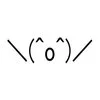
My Life Is Over\(^o^)/ (人生オワタ\(^o^)/, "Jinsei Owata") is a Japanese Shift-JIS emoticon that pairs a cheerful smiling face with arms raised in celebration to express profound despair and hopelessness. Originating on 2channel in late 2005, the emoticon flipped the meaning of a previously positive text art into a darkly ironic symbol of defeat, and it quickly became one of the most recognizable emoticons in Japanese internet culture.
Overview
The emoticon \(^o^)/ depicts a stick figure with a smiling face (^o^) and both arms raised (\ and /). On its own, it looks like a person celebrating or cheering. The meme's dark twist is that this happy-looking face is paired with the phrase "人生オワタ" (Jinsei Owata), meaning "My life is over." The contrast between the cheerful expression and the devastating context is the core joke: it represents someone smiling through total despair because there's nothing left to do but laugh and throw your hands up3.
Users typically attach the emoticon to statements about personal failure or disaster. "I failed my exam\(^o^)/," "I got dumped\(^o^)/," and "I messed everything up at work\(^o^)/" are all standard uses3. The emoticon itself is often shortened to just "Owata" in casual conversation.
Gallery
Origin & Background
How It Spread
How to Use This Meme
The format is straightforward. Take any statement about something going wrong in your life and append \(^o^)/ to the end.
Common patterns include: - Personal failure: "Slept through my alarm on the day of the interview\(^o^)/" - Romantic disaster: "Got rejected again\(^o^)/" - Work catastrophe: "Accidentally replied-all to the whole company\(^o^)/"
The key is the contrast between the cheerful emoticon and the bleak content. The worse the situation, the funnier the pairing. The tone is always self-deprecating rather than genuinely distressed. Think of it as the text equivalent of laughing through tears.
Cultural Impact
Fun Facts
The original 1999 use of \(^o^)/ on 2channel was a sincere love confession about a dating sim character, about as far from "my life is over" as you can get13.
The JARO public service announcement incident in 2007 is often cited as proof that Owata had completely replaced the emoticon's original meaning within just two years3.
*Comic Party*, the game that inspired the first known 2channel thread with \(^o^)/, is itself about otaku culture and dōjinshi creation, making the emoticon's origins deeply embedded in Japanese internet fandom2.
The emoticon's simplicity (just seven characters) is credited as a major factor in its rapid spread across 2channel boards3.
Frequently Asked Questions
References (5)
- 1
- 2My Life Is Over - Know Your Memeencyclopedia
- 36-7 memeencyclopedia
- 4Comic Partyencyclopedia
- 5Aokigaharaencyclopedia