Myers Briggs Type Indicator Mbti

1962Personality quiz / chart template / identity memeactive

Also known as: MBTI · 16 Personalities · Myers-Briggs

Myers-Briggs Type Indicator MBTI is a 2010s personality-sorting meme that categorizes people into 16 four-letter types, offering merciless identity-based roasts across Tumblr, TikTok, and fandom communities.

The Myers-Briggs Type Indicator (MBTI) is a personality classification system from the 1940s that found a massive second life online as the basis for meme templates, fandom quizzes, and identity-based humor. Starting with Tumblr charts in the early 2010s and exploding across TikTok (53 million+ posts tagged #mbtimemes), MBTI memes sort all of human behavior into 16 four-letter types and then roast each one mercilessly1. The framework's scientific credibility is widely questioned by psychologists, but that hasn't slowed its popularity as the internet's favorite personality sorting system3.

TL;DR

The Myers-Briggs Type Indicator (MBTI) is a personality classification system from the 1940s that found a massive second life online as the basis for meme templates, fandom quizzes, and identity-based humor.

Overview

MBTI memes take the 16 personality types from the Myers-Briggs questionnaire and turn them into a template for sorting literally anything. The test categorizes people along four binary axes: introversion/extraversion, sensing/intuition, thinking/feeling, and judging/perceiving, producing four-letter codes like INTJ, ENFP, or ISFJ4. Online, these codes became shorthand for entire personality archetypes, spawning an ecosystem of charts, reaction images, and type-specific humor.

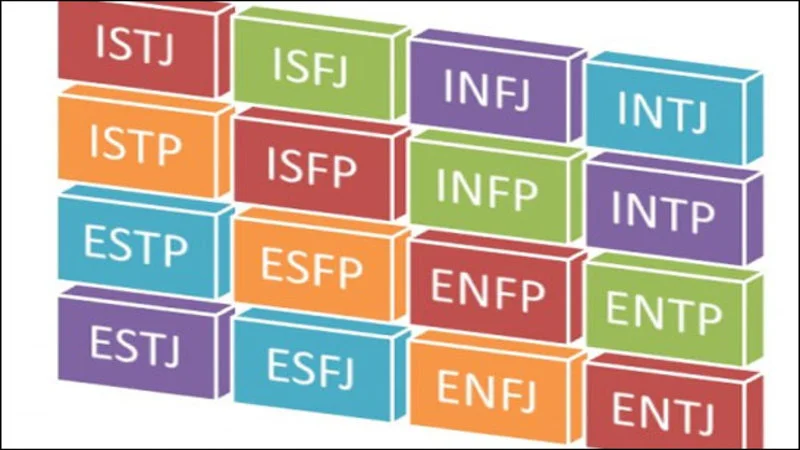
The typical MBTI meme is a 4x4 grid assigning fictional characters, behaviors, aesthetics, or absurd scenarios to each of the 16 types. On Tumblr, fans built custom MBTI charts for every franchise imaginable5. On TikTok, creators film type-specific skits where INTJs are scheming masterminds, INFPs are crying over fictional characters, and ENTPs play devil's advocate about everything1. The humor works because each type gets a fixed caricature that fans of that type recognize (and argue about) endlessly.

The underlying test was developed during World War II by Katharine Cook Briggs and her daughter Isabel Briggs Myers, who drew on Carl Jung's 1921 book *Psychological Types*4. Neither had formal psychology training. Briggs started researching personality in 1917 after noticing stark differences between her family members and her future son-in-law. The mother-daughter team built the indicator to help women entering the wartime workforce find suitable jobs3. It was first published in 1962 through the Educational Testing Service4.

The earliest known MBTI web resource launched in 1998 at personalitypage.com5. One of the first notable online discussions came from journalist Malcolm Gladwell in September 2004, who criticized the test for having "a large problem with consistency" and argued that its creators "did not actually understand Jung at all"5.

The meme format kicked off on June 14, 2006, when a blogger named Peter posted a career-oriented MBTI chart with female actresses matched to personality types, calling MBTI "more or less a more credible form of astrology"5.

Origin & Background

Platform
PersonalityPage.com (earliest web resource, 1998), Tumblr (viral fandom charts), TikTok (modern meme explosion)
Key People
Katharine Cook Briggs, Isabel Briggs Myers, Unknown
Date
1962 (test published), ~2006 (earliest online meme usage), ~2013 (fandom chart explosion)

The underlying test was developed during World War II by Katharine Cook Briggs and her daughter Isabel Briggs Myers, who drew on Carl Jung's 1921 book *Psychological Types*. Neither had formal psychology training. Briggs started researching personality in 1917 after noticing stark differences between her family members and her future son-in-law. The mother-daughter team built the indicator to help women entering the wartime workforce find suitable jobs. It was first published in 1962 through the Educational Testing Service.

The earliest known MBTI web resource launched in 1998 at personalitypage.com. One of the first notable online discussions came from journalist Malcolm Gladwell in September 2004, who criticized the test for having "a large problem with consistency" and argued that its creators "did not actually understand Jung at all".

The meme format kicked off on June 14, 2006, when a blogger named Peter posted a career-oriented MBTI chart with female actresses matched to personality types, calling MBTI "more or less a more credible form of astrology".

How It Spread

MBTI's journey from niche psychometric tool to meme powerhouse followed a clear platform trajectory.

Tumblr Era (2013-2016): On April 6, 2013, the blog "A Little Bit of Personality" launched, dedicated to typing fictional characters into MBTI categories. Tumblr's #mbti tag exploded with custom fandom charts, where users would sort characters from any show, game, or book series into the 16 types. This "which character are you?" format turned the personality system into a participatory fandom activity.

Reddit & Facebook (2016-2019): Reddit's r/mbtimemes community grew into one of the largest personality-meme hubs, eventually surpassing 109,000 active members. The subreddit standardized many of the type stereotypes that later migrated to other platforms. Facebook groups for individual types (INFJ groups were especially large) became spaces where people shared type-specific humor.

TikTok Explosion (2020-present): The real meme breakout happened on TikTok, where over 53 million posts carry the #mbtimemes tag. Short-form video gave creators a way to act out type stereotypes rather than just chart them. INTJ villain edits, INFP crying compilations, and ENTP debate compilations became entire content genres. Research found that 67% of young adults said memes influenced their interest in taking a formal personality assessment.

Pop Culture Integration: MBTI typing spread beyond meme pages into mainstream entertainment analysis. Publications like Truity now routinely type characters from hit shows. The White Lotus Season 3 characters got full MBTI breakdowns, with Belinda typed as ISFJ and Chelsea as ENFJ, complete with Enneagram and Big Five cross-references. Even BTS members updating their MBTI types became news.

How to Use This Meme

MBTI memes come in several standard formats:

The 4x4 Character Chart: Pick a theme (Harry Potter characters, types of drunk people, breakfast foods, whatever). Create a grid with the 16 types and assign one item to each cell. Post it and watch people argue about whether their type was accurately represented. The Tumblr #mbti chart tag has thousands of these.

Type-Specific Skits: Film yourself acting out the stereotypical behavior of a type. INTJs typically get the "cold genius" treatment. ENFPs get "chaotic golden retriever energy." INFPs are usually depicted crying over something trivial but emotionally devastating.

The "As an [TYPE]" Post: Write a relatable observation and tag it with your four-letter code. This creates in-group recognition where other people of the same type pile on with "this is so accurate" responses.

Character Typing Debates: Post your MBTI analysis of a fictional character and defend it against all challengers. These debates can run for days. The key is picking a typing that's defensible but slightly provocative.

Common conventions: Intuitives (N types) tend to get more meme attention than Sensors (S types). INTJ and INFP are the most frequently memed types. ISFJ and ISTJ get the least meme content.

Cultural Impact

Despite (or because of) its scientific problems, MBTI became one of the internet's dominant frameworks for talking about personality. An estimated 50 million people have taken the test, and over 10,000 businesses, 2,500 colleges, and 200 government agencies in the U.S. use it.

The test's reliability is poor. Studies show that retaking the test after just five weeks gives a roughly 50% chance of landing in a different personality type. Professional psychologists have criticized it for over three decades. The framework assumes personality falls into mutually exclusive categories (you're either introverted or extroverted, never a mix), when most people score somewhere in the middle. University of Pennsylvania professor Adam Grant put it bluntly: "There is no evidence behind it".

Psychologist David Pittenger found "no evidence to show a positive relation between MBTI type and success within an occupation" and attributed the test's popularity to "the beguiling nature of the horoscope-like summaries of personality and steady marketing". The perceived accuracy of results relies on the Barnum Effect, where people accept vague, generally applicable descriptions as uniquely true about themselves.

None of this stopped the internet. Dr. Jennifer Wu's 2024 study on digital identity formation found that personality memes help people "try on" different aspects of their identity, giving vocabulary to experiences they couldn't previously describe. A socially anxious teenager might discover the concept of "inferior Fe" through INTP memes and suddenly have language for their struggles with emotional expression.

The economics of MBTI content also drive the stereotypes. Creators discovered that type-specific content generates higher engagement than general personality posts, pushing portrayals to become increasingly exaggerated to cut through crowded feeds.

Fun Facts

The "Intuitive Bias" in MBTI meme spaces means N types (INTJ, INFP, ENTP, etc.) get dramatically more meme content than S types (ISFJ, ESTJ, etc.), even though Sensors make up an estimated 70% of the population.

Katherine Cook Briggs started her personality research in 1917 after meeting her future son-in-law and finding his personality bafflingly different from her family's.

Isabel Briggs Myers typed herself as INFP and was particularly fascinated by introversion, which motivated her to make Jung's complex theories accessible to the general public.

About 50% of test-takers get a different result when retaking the MBTI just five weeks later, which psychologists consider a serious reliability problem but the internet considers a personality arc.

The original test was designed to help women find wartime factory jobs during WWII. It now primarily helps people make TikToks about why their type can't do the dishes.

Derivatives & Variations

16Personalities website:

A modernized, free MBTI-style test that added cartoon mascots to each type and drove a massive wave of new meme material[1].

Cognitive function memes:

Deeper MBTI fans create memes about the eight Jungian cognitive functions (Ti, Te, Fi, Fe, Ni, Ne, Si, Se) rather than just the four-letter types, producing more niche and "accurate" humor[1].

MBTI x Enneagram crossover charts:

Combine the 16 MBTI types with the 9 Enneagram types for even more granular personality sorting[6].

MBTI astrology comparisons:

A recurring meme format that compares MBTI typing to astrology, usually with both fans and critics of each system arguing about which is more valid[5].

Fictional character typing databases:

Community-maintained wikis and databases like Personality Database where users vote on the MBTI types of thousands of fictional characters[1].

K-pop MBTI tracking:

Fans track K-pop idols' MBTI results and react when artists "change types" on retest, which happens frequently enough to become its own meme genre[3].

Frequently Asked Questions

MyersBriggsTypeIndicatorMbti

1962Personality quiz / chart template / identity memeactive

Also known as: MBTI · 16 Personalities · Myers-Briggs

Myers-Briggs Type Indicator MBTI is a 2010s personality-sorting meme that categorizes people into 16 four-letter types, offering merciless identity-based roasts across Tumblr, TikTok, and fandom communities.

The Myers-Briggs Type Indicator (MBTI) is a personality classification system from the 1940s that found a massive second life online as the basis for meme templates, fandom quizzes, and identity-based humor. Starting with Tumblr charts in the early 2010s and exploding across TikTok (53 million+ posts tagged #mbtimemes), MBTI memes sort all of human behavior into 16 four-letter types and then roast each one mercilessly. The framework's scientific credibility is widely questioned by psychologists, but that hasn't slowed its popularity as the internet's favorite personality sorting system.

TL;DR

The Myers-Briggs Type Indicator (MBTI) is a personality classification system from the 1940s that found a massive second life online as the basis for meme templates, fandom quizzes, and identity-based humor.

Overview

MBTI memes take the 16 personality types from the Myers-Briggs questionnaire and turn them into a template for sorting literally anything. The test categorizes people along four binary axes: introversion/extraversion, sensing/intuition, thinking/feeling, and judging/perceiving, producing four-letter codes like INTJ, ENFP, or ISFJ. Online, these codes became shorthand for entire personality archetypes, spawning an ecosystem of charts, reaction images, and type-specific humor.

The typical MBTI meme is a 4x4 grid assigning fictional characters, behaviors, aesthetics, or absurd scenarios to each of the 16 types. On Tumblr, fans built custom MBTI charts for every franchise imaginable. On TikTok, creators film type-specific skits where INTJs are scheming masterminds, INFPs are crying over fictional characters, and ENTPs play devil's advocate about everything. The humor works because each type gets a fixed caricature that fans of that type recognize (and argue about) endlessly.

The underlying test was developed during World War II by Katharine Cook Briggs and her daughter Isabel Briggs Myers, who drew on Carl Jung's 1921 book *Psychological Types*. Neither had formal psychology training. Briggs started researching personality in 1917 after noticing stark differences between her family members and her future son-in-law. The mother-daughter team built the indicator to help women entering the wartime workforce find suitable jobs. It was first published in 1962 through the Educational Testing Service.

The earliest known MBTI web resource launched in 1998 at personalitypage.com. One of the first notable online discussions came from journalist Malcolm Gladwell in September 2004, who criticized the test for having "a large problem with consistency" and argued that its creators "did not actually understand Jung at all".

The meme format kicked off on June 14, 2006, when a blogger named Peter posted a career-oriented MBTI chart with female actresses matched to personality types, calling MBTI "more or less a more credible form of astrology".

Origin & Background

Platform
PersonalityPage.com (earliest web resource, 1998), Tumblr (viral fandom charts), TikTok (modern meme explosion)
Key People
Katharine Cook Briggs, Isabel Briggs Myers, Unknown
Date
1962 (test published), ~2006 (earliest online meme usage), ~2013 (fandom chart explosion)

The underlying test was developed during World War II by Katharine Cook Briggs and her daughter Isabel Briggs Myers, who drew on Carl Jung's 1921 book *Psychological Types*. Neither had formal psychology training. Briggs started researching personality in 1917 after noticing stark differences between her family members and her future son-in-law. The mother-daughter team built the indicator to help women entering the wartime workforce find suitable jobs. It was first published in 1962 through the Educational Testing Service.

The earliest known MBTI web resource launched in 1998 at personalitypage.com. One of the first notable online discussions came from journalist Malcolm Gladwell in September 2004, who criticized the test for having "a large problem with consistency" and argued that its creators "did not actually understand Jung at all".

The meme format kicked off on June 14, 2006, when a blogger named Peter posted a career-oriented MBTI chart with female actresses matched to personality types, calling MBTI "more or less a more credible form of astrology".

How It Spread

MBTI's journey from niche psychometric tool to meme powerhouse followed a clear platform trajectory.

Tumblr Era (2013-2016): On April 6, 2013, the blog "A Little Bit of Personality" launched, dedicated to typing fictional characters into MBTI categories. Tumblr's #mbti tag exploded with custom fandom charts, where users would sort characters from any show, game, or book series into the 16 types. This "which character are you?" format turned the personality system into a participatory fandom activity.

Reddit & Facebook (2016-2019): Reddit's r/mbtimemes community grew into one of the largest personality-meme hubs, eventually surpassing 109,000 active members. The subreddit standardized many of the type stereotypes that later migrated to other platforms. Facebook groups for individual types (INFJ groups were especially large) became spaces where people shared type-specific humor.

TikTok Explosion (2020-present): The real meme breakout happened on TikTok, where over 53 million posts carry the #mbtimemes tag. Short-form video gave creators a way to act out type stereotypes rather than just chart them. INTJ villain edits, INFP crying compilations, and ENTP debate compilations became entire content genres. Research found that 67% of young adults said memes influenced their interest in taking a formal personality assessment.

Pop Culture Integration: MBTI typing spread beyond meme pages into mainstream entertainment analysis. Publications like Truity now routinely type characters from hit shows. The White Lotus Season 3 characters got full MBTI breakdowns, with Belinda typed as ISFJ and Chelsea as ENFJ, complete with Enneagram and Big Five cross-references. Even BTS members updating their MBTI types became news.

How to Use This Meme

MBTI memes come in several standard formats:

The 4x4 Character Chart: Pick a theme (Harry Potter characters, types of drunk people, breakfast foods, whatever). Create a grid with the 16 types and assign one item to each cell. Post it and watch people argue about whether their type was accurately represented. The Tumblr #mbti chart tag has thousands of these.

Type-Specific Skits: Film yourself acting out the stereotypical behavior of a type. INTJs typically get the "cold genius" treatment. ENFPs get "chaotic golden retriever energy." INFPs are usually depicted crying over something trivial but emotionally devastating.

The "As an [TYPE]" Post: Write a relatable observation and tag it with your four-letter code. This creates in-group recognition where other people of the same type pile on with "this is so accurate" responses.

Character Typing Debates: Post your MBTI analysis of a fictional character and defend it against all challengers. These debates can run for days. The key is picking a typing that's defensible but slightly provocative.

Common conventions: Intuitives (N types) tend to get more meme attention than Sensors (S types). INTJ and INFP are the most frequently memed types. ISFJ and ISTJ get the least meme content.

Cultural Impact

Despite (or because of) its scientific problems, MBTI became one of the internet's dominant frameworks for talking about personality. An estimated 50 million people have taken the test, and over 10,000 businesses, 2,500 colleges, and 200 government agencies in the U.S. use it.

The test's reliability is poor. Studies show that retaking the test after just five weeks gives a roughly 50% chance of landing in a different personality type. Professional psychologists have criticized it for over three decades. The framework assumes personality falls into mutually exclusive categories (you're either introverted or extroverted, never a mix), when most people score somewhere in the middle. University of Pennsylvania professor Adam Grant put it bluntly: "There is no evidence behind it".

Psychologist David Pittenger found "no evidence to show a positive relation between MBTI type and success within an occupation" and attributed the test's popularity to "the beguiling nature of the horoscope-like summaries of personality and steady marketing". The perceived accuracy of results relies on the Barnum Effect, where people accept vague, generally applicable descriptions as uniquely true about themselves.

None of this stopped the internet. Dr. Jennifer Wu's 2024 study on digital identity formation found that personality memes help people "try on" different aspects of their identity, giving vocabulary to experiences they couldn't previously describe. A socially anxious teenager might discover the concept of "inferior Fe" through INTP memes and suddenly have language for their struggles with emotional expression.

The economics of MBTI content also drive the stereotypes. Creators discovered that type-specific content generates higher engagement than general personality posts, pushing portrayals to become increasingly exaggerated to cut through crowded feeds.

Fun Facts

The "Intuitive Bias" in MBTI meme spaces means N types (INTJ, INFP, ENTP, etc.) get dramatically more meme content than S types (ISFJ, ESTJ, etc.), even though Sensors make up an estimated 70% of the population.

Katherine Cook Briggs started her personality research in 1917 after meeting her future son-in-law and finding his personality bafflingly different from her family's.

Isabel Briggs Myers typed herself as INFP and was particularly fascinated by introversion, which motivated her to make Jung's complex theories accessible to the general public.

About 50% of test-takers get a different result when retaking the MBTI just five weeks later, which psychologists consider a serious reliability problem but the internet considers a personality arc.

The original test was designed to help women find wartime factory jobs during WWII. It now primarily helps people make TikToks about why their type can't do the dishes.

Derivatives & Variations

16Personalities website:

A modernized, free MBTI-style test that added cartoon mascots to each type and drove a massive wave of new meme material[1].

Cognitive function memes:

Deeper MBTI fans create memes about the eight Jungian cognitive functions (Ti, Te, Fi, Fe, Ni, Ne, Si, Se) rather than just the four-letter types, producing more niche and "accurate" humor[1].

MBTI x Enneagram crossover charts:

Combine the 16 MBTI types with the 9 Enneagram types for even more granular personality sorting[6].

MBTI astrology comparisons:

A recurring meme format that compares MBTI typing to astrology, usually with both fans and critics of each system arguing about which is more valid[5].

Fictional character typing databases:

Community-maintained wikis and databases like Personality Database where users vote on the MBTI types of thousands of fictional characters[1].

K-pop MBTI tracking:

Fans track K-pop idols' MBTI results and react when artists "change types" on retest, which happens frequently enough to become its own meme genre[3].

Frequently Asked Questions