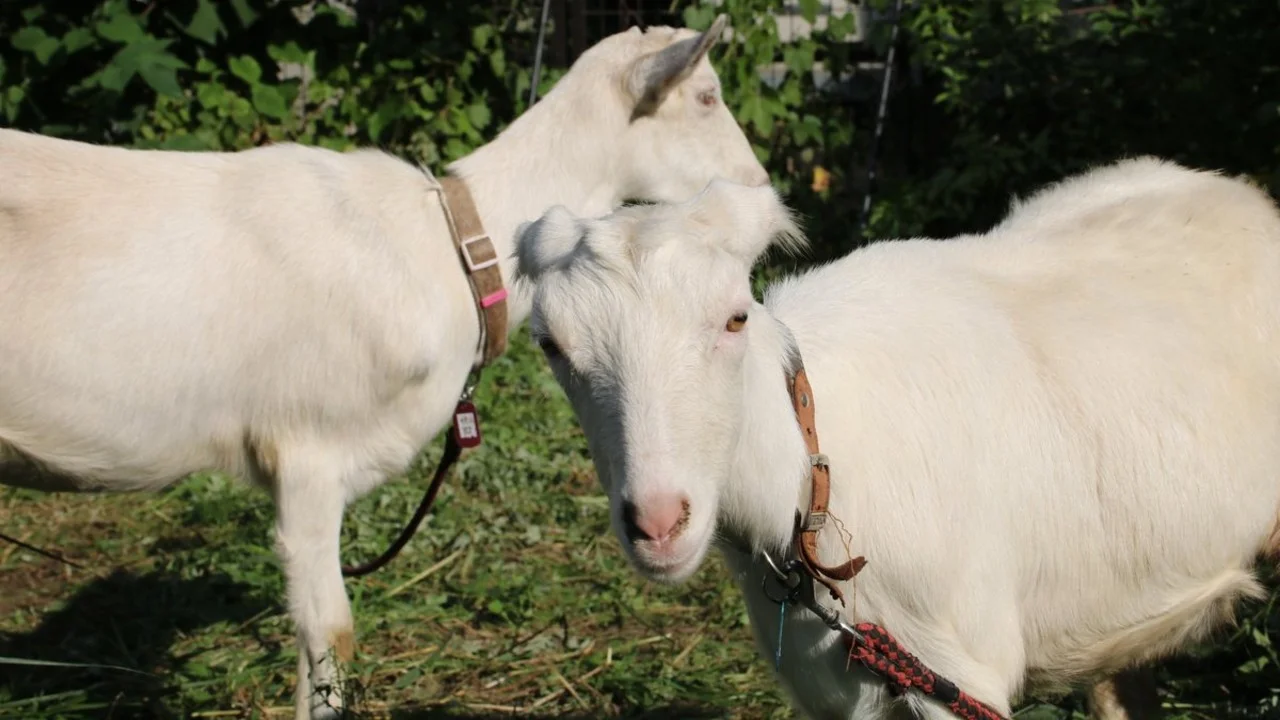
Nagi and Pokke
Published October 24, 2026
Nagi and Pokke are two goats hired by Japan Rail in October 2026 to graze an overgrown lot next to Yotsuya Station in central Tokyo. News of the arrangement went viral on X in late October, where English-speaking users began captioning clips of the pair as the 'official mascots' of JR, Japan's largest railway company. By October 23, 2026, Instagram reposts of the goats were drawing thousands of likes a day.
Overview
Posts about Nagi and Pokke typically feature short clips or photos of the two goats chewing weeds inside a fenced lot by Yotsuya Station, with Yamanote line trains visible in the background1. The humor leans on the gap between the goats' pastoral job and their location in central Shinjuku, one of Tokyo's densest commercial districts.
A running joke on X treats Nagi and Pokke as formal JR employees or corporate mascots. English-language users captioned video of the pair with lines calling them 'the official mascots of JR, japan's largest railway company'2. Instagram reposts picked up the same angle, with viewers reacting to the goats as named individuals rather than anonymous livestock3. Know Your Meme catalogued the story on October 23, 2026 as the clips reached English-speaking users4.
Gallery
Origin & Background
How It Spread
Timeline
2026-10-20
Japan Rail deployed Nagi and Pokke at a lot by Yotsuya Station; X account @fuuuukatsu posted a TV news clip that collected over 15,000 likes in three days[1].
2026-10-22
X user @ren_Nevermind reshared video of the goats, calling them 'the official mascots of JR, japan's largest railway company'[2].
2026-10-23
The @ghantaa Instagram page posted the story and drew over 6,000 likes in under a day; Know Your Meme published its entry the same day[3][4].
How to Use This Meme
There is no fixed template. The common convention is to repost a photo or clip of Nagi and Pokke with a caption treating them as JR staff, mascots, or coworkers. English-language posts often lean on the mismatch between the goats and the Shinjuku skyline, while Japanese posts often focus on the names of the two animals individually.