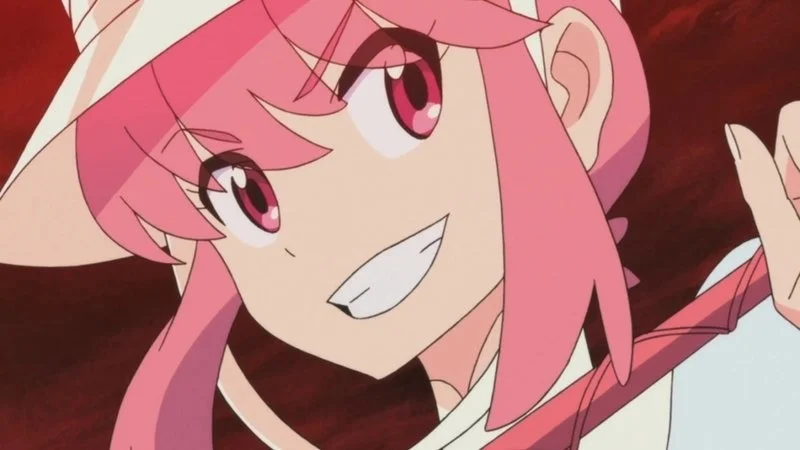
Nani
Published March 10, 2026 · Updated March 23, 2026
Also known as: Nani Sore · Omae Wa Mou Shindeiru / Nani
"Nani" (何) is the Japanese word for "what" that became one of the internet's most recognizable anime-derived catchphrases. The word picked up meme status through two main routes: the dramatic "Omae wa mou shindeiru" / "Nani?!" exchange shared across anime fan communities1, and the squeaky "Nani Sore" line from the 2013 anime Kill la Kill2. Both versions turned a simple Japanese word into a go-to expression of exaggerated shock on YouTube, Tumblr, and beyond.
Overview
"Nani" works as both a standalone reaction word and part of a call-and-response format. At its core, it's a Japanese exclamation of surprise that anime fans adopted as internet shorthand for "What?!"3. The word itself is common in Japanese and can refer to people, places, and media across many contexts2, but online, it took on a life of its own.
Two specific uses gave the word its meme power. The first pairs "Nani?!" with "Omae wa mou shindeiru" ("You are already dead"), a line from martial arts anime. One speaker delivers the death sentence, and the target responds with a stunned "Nani?!" before disaster strikes3. The second major variant is "Nani Sore" ("What does that mean?"), a catchphrase from the character Nonon Jakuzure in Kill la Kill, delivered in a distinctively squeaky tone that made it irresistible for remixing1.
Gallery
Origin & Background
How It Spread
How to Use This Meme
"Nani" fits several formats:
As a standalone reaction: Respond "Nani?!" to any surprising, confusing, or absurd statement. The word typically replaces "What?!" for comedic anime flavor, often typed in all caps or with extra punctuation.
In the call-and-response format: One person says "Omae wa mou shindeiru" ("You are already dead"), and the other responds "Nani?!" in disbelief3. Video edits commonly follow the "Nani" with an explosion, bass-boosted audio, or some other dramatic effect.
As a "Nani Sore" clip: Use the phrase or the close-up Nonon screenshot when something is confusing or needs explaining. The squeaky delivery makes it popular for audio remixes and video edits1.
In everyday text: Some people drop "Nani" into casual conversation as an exaggerated reaction, often with self-aware humor about the anime reference.
Fun Facts
"Nani Sore" translates more precisely to "What does that mean?" rather than a simple "What?"1
The word "Nani" appears across many unrelated contexts outside of memes, including as a name for actors, footballers, politicians, musicians, towns, and even a Disney character from Lilo & Stitch2
The one-hour loop of "Nani Sore" was uploaded just one month after the original clip, a sign of how fast the Kill la Kill fanbase latched onto the line
Urban Dictionary definitions for "Nani" often double as commentary about Western anime fans adopting Japanese vocabulary into everyday speech3
Derivatives & Variations
One-hour loops:
Extended loop videos of the "Nani Sore" audio appeared within weeks of the original clip, created for background listening or comedic endurance[1]
"When I'm Bored" remixes:
Electronic music edits incorporating the "Nani Sore" phrase into beat-driven tracks, with AverageScrandyDandy's 180,000+ view version being an early example[1]
Nonon face edits:
The extreme close-up screenshot became an exploitable template applied to other characters, including a Rarity/Nonon crossover that gained over 1,000 Tumblr notes[1]
Sound effect buttons:
Instant sound sites hosting the audio for one-click playback, shared across Tumblr and Facebook[1]
Frequently Asked Questions
References (3)
- 1Naniencyclopedia
- 2Nani - Urban Dictionarydictionary
- 3Nani - Know Your Memeencyclopedia