Nelson Mandela's Death

2013eventclassic

Published September 8, 2026

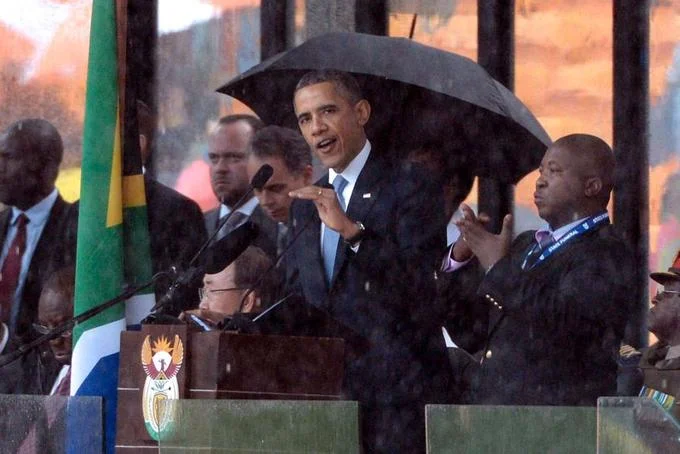
On December 5, 2013, Nelson Mandela died at age 95 at his home in Johannesburg after a long respiratory illness1. The global memorial service that followed produced two viral moments that dominated online discussion for weeks: a fake sign language interpreter standing beside world leaders, and a funeral selfie involving Barack Obama, David Cameron and Helle Thorning-Schmidt7.

Overview

The Mandela memorial on December 10, 2013 turned into a source of viral internet moments almost immediately. Two stories broke out of the wall-to-wall coverage: interpreter Thamsanqa Jantjie, who signed nonsense next to Obama and other heads of state, and the 'funeral selfie' snapped by Denmark's Prime Minister on her phone during the service26.

The interpreter clip spread through news uploads, Twitter jokes and outrage from the deaf community, which called it a 'mockery of South African sign language'4. Jantjie later said he was hallucinating and seeing angels because of schizophrenia, a defence that only kept the story trending5. The selfie image was reshared with captions mocking the three leaders for grinning at what was billed as a solemn state funeral7.

Origin & Background

Platform
Twitter (viral spread)
Date
2013

Mandela, the first Black president of South Africa, died at around 20:50 local time on December 5, 2013 at his Houghton, Johannesburg home, surrounded by family1. President Jacob Zuma announced the death on national television, and tributes poured in through Twitter from Barack Obama, Samuel L. Jackson, Tyra Banks and Barbara Walters within hours3. The New York Times called his passing a moment that left 'South Africa without its moral center'2.

Both viral moments came out of the FNB Stadium memorial five days later. Jantjie's fake signing was flagged live by deaf viewers watching the broadcast on December 10, and the selfie was taken during the same ceremony on Helle Thorning-Schmidt's mobile phone6.

How It Spread

Within 24 hours the interpreter story jumped from a local complaint to a global news cycle. The New York Times ran an 'impostor' piece2, and The Guardian traced Jantjie's history of violent behaviour and time in a mental health facility4. Associated Press picked up his own explanation that he had been seeing angels during the ceremony5. South African deputy minister Hendrietta Bogopane-Zulu defended his basic qualifications while admitting 'a mistake happened'3.

The selfie broke on the same day. RTÉ News reported the online backlash against Obama, Cameron and Thorning-Schmidt for posing during a memorial7. Thorning-Schmidt defended the shot in The Daily Telegraph, saying 'when we meet heads of state and government, we too are just people who have fun'6. Cameron told The Guardian he was only being polite when asked to join in8. Both images kept circulating for years afterward as reaction templates on Twitter and Facebook whenever a public figure was caught smiling at a solemn event.

How to Use This Meme

There is no fixed template here. The interpreter clip is typically posted with captions about nonsense gestures or hallucination jokes, while the funeral selfie is often reshared as a reaction image whenever a politician is photographed smiling at an inappropriate moment.

Frequently Asked Questions